
The Unseen Pillar of a Thriving WordPress Site: Regular Updates
In the dynamic world of web development, a WordPress website is never truly "finished." It's an evolving entity that requires ongoing care and attention, much like a garden needs regular tending. At the heart of this care lies the critical practice of keeping your WordPress core, themes, and plugins updated. Neglecting this fundamental aspect of site maintenance SEO can lead to a cascade of problems, from security vulnerabilities to compatibility issues and performance degradation.
For both seasoned developers and those just starting their journey with WordPress for Beginners, understanding the "why" and "how" of updates is paramount. This guide will walk you through the essential process to update WordPress plugins and manage your theme updates WordPress, ensuring your site remains secure, fast, and fully functional.
Why Regular WordPress Updates Are Non-Negotiable
It's easy to postpone updates, especially when your site appears to be running smoothly. However, this complacency often comes at a high cost. Regular updates are vital for several key reasons:
- Enhanced Security: This is arguably the most critical reason. Software vulnerabilities are constantly discovered, and developers release updates containing crucial WordPress security patch fixes to close these loopholes. An outdated plugin or theme is an open invitation for malicious actors to exploit your site.
- Improved Performance: Developers frequently optimize code, leading to faster loading times and more efficient resource utilization. Keeping your components current means your site benefits from these performance enhancements, which directly impacts user experience and, consequently, your search engine rankings.
- New Features and Functionality: Updates often introduce exciting new features, improvements to existing ones, and better integration with other tools. This allows you to leverage the latest capabilities without needing to switch plugins or themes.
- Bug Fixes: No software is perfect. Updates address bugs, glitches, and compatibility issues that might be causing unexpected behavior on your site. Resolving these ensures a smoother experience for both you and your visitors.
- Compatibility: As WordPress core evolves, so do the requirements for themes and plugins. Regular updates ensure all components work harmoniously together, preventing conflicts that can break your site's functionality or appearance.
How to Safely Update WordPress Plugins
Updating plugins is a straightforward process, but it requires a methodical approach to prevent potential issues. Before you begin, always remember the golden rule: backup your website!
Step 1: The Indispensable Backup
Seriously, do not skip this. A complete backup of your WordPress files and database is your safety net. If an update goes awry, you can revert your site to its previous working state. Many hosting providers offer backup solutions, or you can use a dedicated backup plugin. For those looking to dive deeper into site management, exploring resources like WordPress Mastery: The Ultimate Beginner can provide valuable insights.
Step 2: Updating from the WordPress Dashboard
This is the most common and recommended method:
- Log in to your WordPress admin area.
- Navigate to Dashboard > Updates. Here you'll see a list of available updates for your WordPress core, themes, and plugins.
- Alternatively, go to Plugins > Installed Plugins. Any plugin with an available update will display a notification below its name.
- Select the plugins you wish to update (it's often wise to update one by one, especially major ones, to isolate potential issues).
- Click the "Update Plugins" button.
WordPress will download and install the new versions. Once complete, you'll see a success message.
Step 3: Manual Plugin Updates (When Necessary)
Sometimes, the dashboard update fails, or you might need to update a plugin that isn't from the WordPress.org repository (e.g., a premium plugin). In such cases, a manual update via FTP/SFTP is required:
- Download the latest version of the plugin from its source (e.g., BanglaDock for premium GPL plugins like the WooCommerce Customer Order Coupons CSV Import Suite or the WPForms Pro Bundle + All Addons).
- Connect to your website using an FTP/SFTP client (e.g., FileZilla).
- Navigate to
/wp-content/plugins/. - Deactivate the plugin you're updating from your WordPress dashboard.
- Delete the old plugin folder from the
pluginsdirectory via FTP. - Upload the new plugin folder (unzipped) to the
pluginsdirectory. - Go back to your WordPress dashboard, activate the plugin, and clear any caching.
Managing Theme Updates WordPress
Theme updates, much like plugin updates, are crucial for security, features, and compatibility. However, they come with a crucial consideration: customizations.
The Importance of Child Themes
If you've made any direct modifications to your theme's files (e.g., functions.php, style.css), updating the theme directly will overwrite all your changes. This is where child themes become indispensable. A child theme inherits the functionality and styling of a parent theme, allowing you to make customizations safely. When the parent theme updates, your child theme's customizations remain intact.
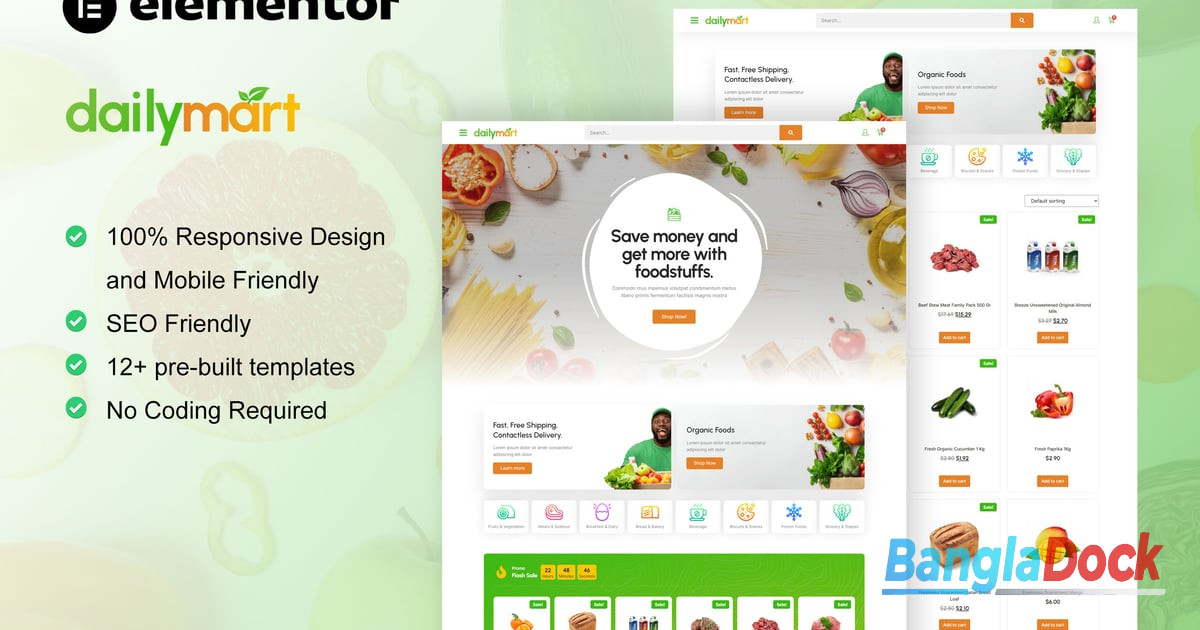
If you're using a template kit like DailyMart – Grocery Store Elementor Template Kit, ensure that both Elementor and the kit itself are kept updated, and any custom CSS or functions are handled through Elementor's custom code features or a child theme if applicable.
Updating Themes from the WordPress Dashboard
- Backup your entire site. (Yes, again!)
- Log in to your WordPress admin area.
- Navigate to Dashboard > Updates.
- Alternatively, go to Appearance > Themes. Any theme with an available update will display a notification.
- Select the theme(s) and click "Update Themes."
Manual Theme Updates (Via FTP)
Similar to plugins, manual theme updates are needed for premium themes or when dashboard updates fail:
- Download the latest theme version.
- Connect via FTP/SFTP to
/wp-content/themes/. - If you're using a child theme, you can simply upload the new parent theme folder, overwriting the old one. If you haven't used a child theme and have made direct edits, you'll need to manually re-apply those edits after the update, which is why child themes are so vital.
- Clear any caching.
Site Maintenance SEO: The Hidden Benefits of Updates
Regular updates are more than just technical chores; they are a cornerstone of effective site maintenance SEO. Search engines prioritize websites that are secure, fast, and provide a good user experience. Here’s how updates contribute to your SEO efforts:
- Security & Trust: A secure site is a trustworthy site. Google penalizes compromised sites, and users are wary of visiting them. Regular WordPress security patch updates prevent breaches, maintaining your site's integrity and search engine trust.
- Speed & Performance: Updated plugins and themes often bring performance optimizations, leading to faster page load times. Speed is a direct ranking factor for Google, and a quicker site improves user engagement, reducing bounce rates.
- Mobile-Friendliness: Theme updates frequently include improvements for responsiveness and mobile compatibility, which is crucial for SEO as mobile-first indexing is the standard.
- Bug-Free Experience: Updates fix bugs that could hinder site functionality, like broken forms (e.g., if you're using WPForms Pro Bundle + All Addons, ensuring it's updated prevents submission issues) or display errors, ensuring visitors have a smooth experience, which search engines favor.
Common Mistakes to Avoid During WordPress Updates
Even with the best intentions, developers can make mistakes. Be mindful of these common pitfalls:
- Skipping Backups: This is the cardinal sin. Always, always back up before any major change.
- Updating Without Testing: Especially on live sites, updates can cause conflicts. Test on a staging environment first if possible, or at least perform a quick check of critical functionalities after updating.
- Ignoring Update Notifications: Procrastination is dangerous. The longer you wait, the higher the risk of security breaches or major compatibility issues when you finally do update.
- Modifying Core Plugin/Theme Files: Never edit files directly within a plugin or parent theme. Use hooks, filters, or child themes for customizations.
- Updating Everything Simultaneously: While convenient, updating all plugins and themes at once makes troubleshooting difficult if something breaks. Update core first, then themes, then plugins, ideally one by one or in small batches.
Troubleshooting Common Update Issues
Despite best practices, issues can arise. Here’s how to approach them:
- White Screen of Death (WSOD): This often indicates a fatal PHP error.
- Solution: Deactivate all plugins via FTP (rename the
pluginsfolder toplugins_old). If the site comes back, reactivate plugins one by one to find the culprit. Check yourwp-config.phpfordefine('WP_DEBUG', true);to see error messages.
- Solution: Deactivate all plugins via FTP (rename the
- Plugin/Theme Conflicts: A new update might conflict with another plugin or your theme.
- Solution: Deactivate plugins one by one to identify the conflict. If it's a theme issue, temporarily switch to a default WordPress theme (like Twenty Twenty-Four).
- Broken Functionality/Appearance: Parts of your site look or behave incorrectly.
- Solution: Clear all caches (browser, WordPress, server-side). Revert to your backup if the issue persists and you can't identify the cause. Contact the plugin/theme developer for support.
- Update Failed Message: Often due to file permissions or server resource limits.
- Solution: Check file permissions (should generally be 755 for folders and 644 for files). Increase PHP memory limit if needed (consult your hosting provider). Try a manual update via FTP.
Best Practices for Seamless WordPress Updates and Site Maintenance
To keep your WordPress site running smoothly and securely, integrate these practices into your regular routine:
- Regular Backups: Implement an automated backup schedule for both files and databases. Store backups off-site.
- Staging Environment: For critical or complex sites, use a staging environment to test all updates before pushing them to live. Many hosting providers offer this feature.
- Scheduled Maintenance: Designate a specific time each week or month for updates and checks. This makes site maintenance SEO a consistent habit.
- Choose Reputable Sources: Only use themes and plugins from trusted developers. Sources like BanglaDock offer clean, secure premium GPL WordPress themes and plugins, minimizing risks.
- Delete Unused Items: Deactivate and delete any themes or plugins you're not actively using. They pose potential security risks and can clutter your database.
- Monitor Your Site: Keep an eye on your site's error logs and performance metrics. Tools like Google Search Console can alert you to critical issues.
- Stay Informed: Follow official WordPress news, security advisories, and developer blogs to stay ahead of potential issues.
Mastering the art of updating WordPress plugins and handling theme updates WordPress is fundamental to maintaining a healthy, secure, and high-performing website. By embracing these practices, you not only protect your digital asset but also ensure it continues to serve your audience effectively and rank well in search results.
Frequently Asked Questions
How often should I update WordPress plugins and themes?
Ideally, you should check for updates at least once a week. Critical security updates should be applied immediately upon release. Regular checks ensure you don't miss important bug fixes, performance enhancements, and crucial WordPress security patch releases that protect your site.
What should I do if a WordPress update breaks my site?
First, don't panic. The immediate step is to restore your site from the most recent backup you made *before* the update. If a backup isn't immediately available, try deactivating plugins one by one (or switching to a default theme) to identify the conflicting component. If you can't resolve it, contact the plugin/theme developer or your hosting provider for support.
Can I enable automatic updates for WordPress plugins and themes?
Yes, WordPress offers options for automatic updates, and many plugins and themes also have this feature. While convenient, it's generally recommended for less critical sites or for minor updates. For crucial websites, a manual or semi-automatic approach with prior backups and testing (ideally on a staging site) is safer to prevent unexpected issues from breaking your live site.