
How to verify if a GPL download source is safe and legitimate in 2025
Downloading GPL-licensed WordPress themes and plugins can be perfectly legitimate, but legitimacy and safety are not the same thing. A file may be distributed under the GPL and still be packaged with hidden malware, spam injections, outdated code, or manipulated update logic. That is why developers, site owners, and agencies need a repeatable process for checking whether a GPL download source is trustworthy before anything reaches production.
In 2025, the risk is less about the GPL itself and more about the supply chain around it. A download site can claim “clean GPL files” while offering poorly maintained archives, altered packages, or no meaningful support. If you manage client websites, WooCommerce stores, membership platforms, or lead-generation funnels, a bad plugin source can create security incidents, data leaks, broken updates, and unnecessary cleanup work.
If you want a broader legal and technical overview, start with GPL Licenses Explained in 2025: A Beginner-Friendly Guide to Open Source Rules. If you are comparing risk levels between GPL, cracked, and nulled distributions, the related guide Cracked, Nulled, or GPL WordPress Themes and Plugins: What’s Safe to Use in 2025? adds useful context.
Understand the first check: GPL-legal does not automatically mean safe
The GNU General Public License allows redistribution of software under specific open-source terms. That means someone can legally redistribute many WordPress themes and plugins if they comply with the license conditions. What the GPL does not guarantee is code integrity, secure packaging, timely updates, or responsible handling of customer data.
When evaluating a source, separate these three questions:
- Is the redistribution legally plausible? The project or file must actually be GPL or include GPL-covered components.
- Is the source operationally trustworthy? The site should show signs of real maintenance, transparent policies, and safe delivery practices.
- Is the downloaded file technically clean? You still need to inspect the package before installation.
This distinction matters because many users assume a “GPL download” is automatically safer than a nulled package. That assumption leads to preventable compromises.
What a legitimate GPL download source should look like
Clear business identity and contact details
A legitimate provider usually has a visible business identity, contact information, support channels, and consistent branding across product pages and help content. Anonymous operators, thin product pages, and broken support forms are warning signs.
Consistent update practices
Check whether the source regularly refreshes versions and documents release changes. A provider that distributes WordPress plugins without reflecting recent upstream releases may be repackaging old files or abandoning maintenance. Outdated files are a practical security risk even when the original software is reputable.
Transparent product descriptions
Look for accurate details about what is included, what support is offered, and whether automatic updates are available. Trustworthy sources do not hide limitations behind vague sales copy. For example, if you are sourcing tools for form building, a listing such as WPForms Pro Bundle + All Addons should clearly describe the package and intended use, not just promise “premium for free.”
Secure site delivery
The source website itself should use HTTPS correctly, avoid suspicious redirects, and load without aggressive pop-ups or forced download flows. If the checkout or account area behaves oddly, treat that as a supply-chain risk.
A practical verification checklist before you download
Use the following checklist before trusting any GPL source in 2025:
- Inspect the domain reputation: Search the brand name with terms like “malware,” “infected files,” “support issue,” and “GPL scam.”
- Review update frequency: Compare listed versions against the official developer changelog when possible.
- Check the archive format: A normal plugin or theme package should not include unrelated executables, random encrypted loaders, or deeply obfuscated PHP files.
- Read the support and refund pages: Thin or copied policy pages often signal low-trust operations.
- Test on staging first: Never install first on a live WordPress site.
- Scan the file locally: Use endpoint security tools and WordPress-focused malware scanners as part of your workflow.
If you prefer a cleaner source selection process, BanglaDock is worth reviewing for secure GPL WordPress themes and plugins with a more structured product catalog and maintenance-oriented presentation.
Technical steps to verify a GPL plugin or theme after download
1. Unzip and inspect the file structure
Before uploading anything to WordPress, extract the archive locally. A standard plugin or theme usually has a predictable folder structure. Red flags include:
- Hidden PHP files placed in image or asset directories
- Unexpected admin users scripts or install hooks unrelated to the product’s function
- Encoded or heavily obfuscated code without a valid reason
- External call-home logic to suspicious domains
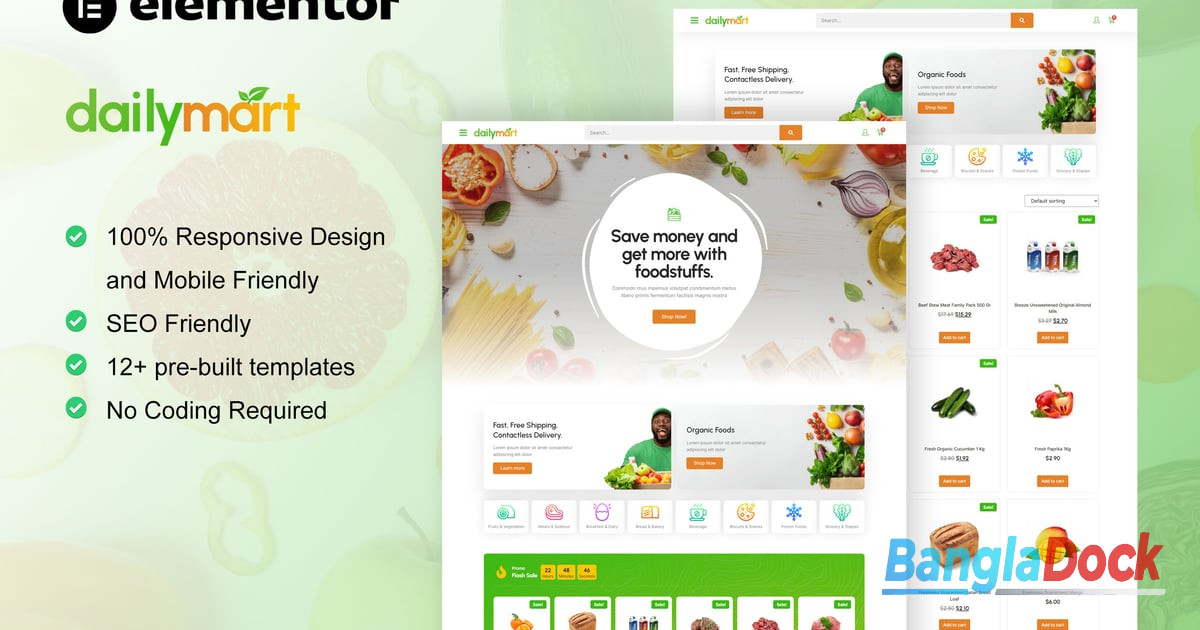
An illustrative example: if you download an Elementor template kit such as DailyMart – Grocery Store Elementor Template Kit, you should expect template files, assets, and documentation. You should not expect hidden PHP backdoors or unrelated server-side scripts.
2. Compare version and changelog data
Cross-check the version number against the original vendor site or public changelog. If the source claims to offer the latest build but distributes an older package, that is a credibility problem. For security-sensitive plugins, even a minor version gap may matter.
3. Review the code for suspicious patterns
Developers can run a quick review with familiar search patterns. Look for functions and constructs commonly abused in compromised files, such as unexpected use of base64, dynamic evaluation, remote include patterns, or hidden admin account creation. A single match does not prove compromise, but it does justify deeper inspection.
4. Test in a disposable staging environment
Create a temporary WordPress install, preferably in a container or isolated staging site. Activate the plugin or theme and observe:
- Unexpected outbound requests
- New database entries unrelated to the product
- Silent installation of companion code
- Admin notices pushing unknown domains or forced authentication loops
This matters for business plugins too. If you are evaluating a WooCommerce add-on like WooCommerce Customer Order Coupons CSV Import Suite, activation should align with the feature set. It should not alter unrelated store settings or inject promotional code into frontend templates.
5. Monitor file integrity after activation
After installation, compare file hashes or at least take a baseline snapshot of the plugin directory. If files begin changing without a legitimate update event, investigate immediately.
Common mistakes that make unsafe GPL downloads look trustworthy
- Judging the site by design alone: A polished storefront does not prove clean files.
- Assuming “GPL” means “vendor-approved”: Redistribution may be legal without any relationship to the original author.
- Skipping changelog checks: Old versions often hide behind “latest” labels.
- Installing directly on production: This turns verification into incident response.
- Ignoring outbound network activity: Many compromised packages reveal themselves through unusual remote requests.
- Trusting bundled files blindly: Add-ons, templates, and import packs can carry risk too.
Real-world use cases where source verification matters
Agency workflow for client maintenance
Agencies often manage many WordPress sites with different plugin stacks. In that environment, one unsafe source can affect multiple clients. A verification checklist should be part of procurement, not just incident handling. That includes keeping records of where each package came from, which version was installed, and whether it passed staging review.
WooCommerce stores handling customer data
Ecommerce sites have a lower margin for error because plugins may interact with orders, coupons, customer profiles, and payment workflows. Any tampered extension can expose sensitive data or disrupt checkout behavior.
Freelancers building rapid-launch websites
Freelancers sometimes move fast under budget constraints and are tempted by any source that promises premium products immediately. That is exactly when consistent verification matters most. Saving time on sourcing can cost far more in cleanup, reputation damage, and emergency redevelopment.
Troubleshooting: what to do if you suspect the GPL source is unsafe
If a downloaded theme or plugin feels suspicious, stop the deployment process and work through these diagnostic steps:
- Pause installation: Do not activate the package on a live website.
- Scan the extracted files: Use your local security tools and any trusted WordPress malware scanner you already rely on.
- Check recent file changes: Review timestamps and compare package contents with the expected structure.
- Inspect network behavior: In staging, watch for calls to unknown domains during activation or configuration.
- Review administrator accounts: Make sure no new users or privileges appear unexpectedly.
- Replace with a trusted source: If anything looks wrong, discard the package and obtain a fresh copy elsewhere.
If a site was already exposed, rotate passwords, audit database changes, review scheduled tasks, and inspect uploads and plugin directories for persistence mechanisms. In higher-risk cases, restoring from a known-clean backup and reapplying vetted packages is often faster than trying to trust a partially cleaned environment.
Best practices for choosing a safe GPL download source in 2025
- Maintain a shortlist of trusted providers instead of browsing random GPL directories each time.
- Use staging for every new package even if the provider has been reliable before.
- Track versions and source URLs in your project documentation.
- Prefer providers with clear support policies and consistent catalog management.
- Re-scan packages after updates because a previously safe source can degrade over time.
- Educate clients and team members so nobody uploads unverified files from ad-heavy download sites.
How to make the final trust decision
A safe and legitimate GPL download source should pass both business and technical checks. You want a provider that looks real, maintains its catalog, delivers files consistently, and does not ask you to trust vague promises. Then you want the package itself to survive inspection: sane structure, expected functionality, no hidden payloads, and predictable behavior in staging.
For WordPress professionals, the best approach is not blind trust in a label like “GPL,” “premium,” or “clean files.” The right approach is a repeatable review process backed by controlled testing. If you need a curated starting point for premium GPL WordPress assets, BanglaDock can fit into that workflow alongside your own staging, code review, and file integrity checks.
That process takes a bit more time upfront, but it is still far cheaper than recovering a compromised WordPress site, rebuilding a broken store, or explaining to a client why a plugin from a questionable source damaged their business.
Frequently Asked Questions
Is downloading GPL WordPress themes and plugins legal?
It can be legal when the software is distributed under the GNU General Public License or includes GPL-covered components that allow redistribution under the license terms. Legal redistribution does not guarantee safety, support, clean files, or approval from the original developer, so you still need to verify the source and inspect the package before use.
How can I tell if a GPL download source is unsafe?
Common warning signs include outdated versions presented as current releases, missing business details, broken support pages, suspicious redirects, malware reports from other users, heavily obfuscated code inside the package, and unexpected outbound requests after activation. The safest approach is to test every file in staging and review both the provider and the package itself.
What should I do before installing a GPL plugin or theme on a live site?
Download the file from a provider you have vetted, extract it locally, inspect the folder structure, compare the version with the original changelog, scan it with trusted security tools, and test it in an isolated staging environment. Only move it to production after you confirm that activation, updates, file behavior, and network activity match the product’s expected function.