
Cracked, Nulled, or GPL WordPress Themes and Plugins: What’s Actually Safe in 2025?
If you run a WordPress site long enough, you will eventually face the same question: should you install a cracked theme, a nulled plugin, or a GPL-licensed product from a third-party provider? In 2025, the answer still depends on one thing above all else: where the file comes from and whether you can verify its integrity.
Many site owners confuse these terms, and that confusion leads to malware infections, broken updates, licensing disputes, and support headaches. The safest path is not simply “free” versus “paid.” The real distinction is tampered versus clean, and unknown source versus trusted distributor.
For developers, freelancers, and business owners who want cost control without taking unnecessary security risks, a trusted GPL marketplace such as BanglaDock for clean, secure premium GPL WordPress themes and plugins is fundamentally different from random download sites offering “free premium” ZIP files.
What Do Cracked, Nulled, and GPL Mean?
Cracked WordPress themes and plugins
A cracked WordPress plugin or theme is typically a commercial product that has had its licensing checks, activation flow, or usage restrictions bypassed. In practice, cracked files are often modified versions of the original code. That modification may be obvious, or it may be hidden inside obfuscated PHP, injected JavaScript, or remote loader code.
From a security and maintenance perspective, cracked files are the highest-risk option because they are intentionally altered.
Nulled WordPress themes and plugins
A nulled item usually refers to a premium WordPress product that has been edited to remove purchase validation or account verification. In the WordPress ecosystem, “nulled” is often used as a catch-all term for files redistributed without authorization from the original seller, even when the project itself is GPL-licensed.
The problem is not only legal or ethical. A nulled package may include hidden admin users, spam links, malware droppers, tracking code, or backdoors that only activate under certain conditions.
GPL WordPress themes and plugins
GPL stands for the GNU General Public License, the license that covers WordPress core and influences much of the WordPress plugin and theme ecosystem. In plain terms, GPL software can usually be legally redistributed if the code is genuinely licensed under the GPL. That does not mean every GPL download site is safe or reliable.
If you want a stronger foundation on licensing, see GPL Licenses Explained in 2025: A Beginner-Friendly Guide to Open Source Rules and GPL vs MIT, Apache, and Other Open Source Licenses: Key Differences Explained (2025).
What Is Safe to Use in 2025?
The short answer is simple:
- Cracked themes and plugins: not safe
- Nulled themes and plugins from unknown sources: not safe
- Clean GPL themes and plugins from a trusted source: can be safe, if verified and maintained properly
The reason this matters more in 2025 is that WordPress sites are increasingly connected to payment gateways, CRM systems, email platforms, analytics tools, and customer data. A single compromised plugin can expose your admin account, inject phishing content, create SEO spam pages, or break checkout flows.
For agencies and store owners, the cost of recovering a hacked site almost always outweighs the money saved on an unsafe download.
Why Cracked and Nulled Files Are Risky
Hidden malware and backdoors
The most common threat is malicious code inserted into PHP files, theme functions, or bundled assets. Some infections are obvious; others only trigger when a visitor matches certain conditions, making them difficult to detect during casual testing.
Silent SEO spam
One of the worst outcomes is not a full site crash. It is a quiet infection that inserts spam links, cloaked pages, fake redirects, or malicious structured content into your site. Your rankings can fall before you even realize the problem exists.
Broken update paths
Modified files often fail when upstream developers change the codebase. Even if a nulled plugin seems to work today, future updates may overwrite changes, trigger fatal errors, or leave your site stuck on an insecure version.
No support or accountability
When a plugin breaks checkout, form delivery, caching, or template output, unsupported files become expensive very quickly. There is no dependable vendor relationship, no changelog trust, and no predictable maintenance cycle.
When GPL WordPress Products Are a Practical Option
GPL distribution can be a sensible option when the provider is transparent about sourcing, scans files for malware, preserves original code integrity, and publishes clean downloads without hidden modifications.
This is especially useful for freelancers building test environments, agencies maintaining multiple client sites, and startups trying to control software costs while staying inside WordPress norms.
Illustrative examples of legitimate use cases include:
- Building a staging site with premium form or WooCommerce extensions before committing to a broader stack
- Testing template kits and niche storefront layouts for a client proof-of-concept
- Maintaining a toolbox of commonly used plugins for rapid deployment across internal or client projects
For example, if you need reliable form-building features across multiple sites, a curated GPL source for WPForms Pro Bundle + All Addons for advanced WordPress form workflows is a very different proposition from downloading a “free premium forms plugin” from an anonymous file-sharing page.
How to Evaluate Whether a GPL Provider Is Trustworthy
Not all GPL vendors are equal. A provider can be legal in theory and still be poor in practice. Use this checklist before installing anything:
- Reputation: Look for a consistent site history, real product catalog, and transparent business presence
- File hygiene: Check whether downloads are described as clean, untouched, and malware-scanned
- Update cadence: Verify that products are updated after upstream releases
- Product detail quality: Reliable vendors usually provide version information, documentation context, and compatibility notes
- Support expectations: Understand whether you are getting file access only or additional guidance on installation and usage
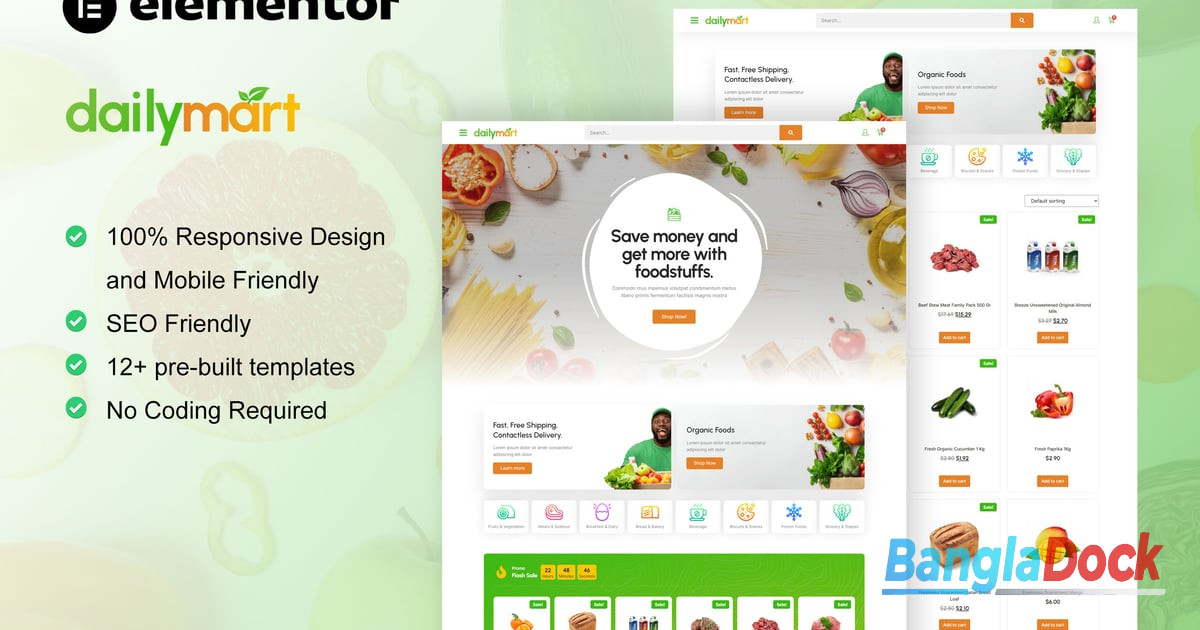
If you are sourcing GPL products for production use, a catalog that includes practical tools like WooCommerce Customer Order Coupons CSV Import Suite for structured coupon and order import workflows or design assets like DailyMart – Grocery Store Elementor Template Kit for WooCommerce grocery storefront builds should also show signs of ongoing curation rather than random file dumping.
Common Mistakes to Avoid
- Assuming GPL means risk-free: The license does not guarantee a clean file
- Installing directly on a live site: Always test on staging first
- Ignoring file integrity checks: Scan archives and inspect suspicious code patterns
- Using abandoned products: A clean plugin that is no longer maintained can still become unsafe over time
- Confusing lack of activation with full functionality: Some features may rely on vendor APIs, cloud services, or official support channels
Best Practices for Safe Use in Production
- Use a staging environment before every new plugin or theme deployment
- Scan files locally with malware tools and inspect modified PHP if anything looks unusual
- Track versions and changelogs so you know exactly what was installed and when
- Run security monitoring with file integrity alerts, login auditing, and scheduled backups
- Limit plugin count to reduce attack surface and maintenance complexity
- Buy direct when support is business-critical such as payment, subscriptions, booking, or compliance-heavy systems
Troubleshooting and Diagnostic Steps
If you suspect a theme or plugin from any source is unsafe or unstable, use a structured diagnostic process.
1. Check for unexpected file changes
Compare plugin and theme files against the original package if possible. Look for encoded PHP, unexplained include statements, remote requests, or newly created admin-related files.
2. Review outbound requests and redirects
Use your browser developer tools, server logs, or a WordPress activity monitor to identify calls to suspicious domains, hidden scripts, or strange redirect behavior.
3. Inspect SEO symptoms
Search your domain for indexed spam pages, odd title tags, foreign-language pages you did not create, or unexplained canonical changes.
4. Test update behavior on staging
Apply updates in a staging environment and review fatal errors, warning notices, broken layouts, or missing settings screens.
5. Audit users and scheduled tasks
Check for unknown administrator accounts, suspicious cron jobs, or plugins creating recurring tasks you did not configure.
Real-World Use Cases: When to Avoid, When to Proceed
Avoid entirely
If you are running an eCommerce store, membership site, LMS, client portal, or lead-generation site collecting personal data, cracked and nulled files from unverified sources should be off the table. These projects have too much operational and reputational exposure.
Proceed carefully with trusted GPL sources
For developers building prototypes, demo stores, layout experiments, and internal staging environments, clean GPL-distributed files can be a practical choice when sourced from a reputable provider and validated properly.
Buy directly from the original author when support matters most
If your stack depends on official API access, license-key validation, premium cloud features, or guaranteed vendor support, purchasing directly from the original developer remains the strongest option.
The Practical Verdict for 2025
In 2025, the safe choice is not “nulled versus GPL” in the abstract. The safe choice is clean, verified, maintained code from a source you can trust. Cracked files are unsafe because they are intentionally altered. Nulled files from unknown websites are unsafe because you cannot rely on their integrity. GPL WordPress themes and plugins from reputable distributors can be a workable solution, especially for developers and site builders who know how to evaluate, test, and monitor what they install.
If you want the cost flexibility of GPL without the chaos of random download sites, start with BanglaDock’s secure library of premium GPL WordPress themes and plugins and treat every install the way a professional does: verify it, stage it, update it, and monitor it.
Frequently Asked Questions
Are GPL WordPress themes and plugins legal to use in 2025?
In many cases, yes. WordPress and much of its ecosystem are built around GPL licensing, which generally allows redistribution of GPL-covered code. The legal question and the safety question are separate, though. A GPL product can be legal to redistribute and still be unsafe if the file has been modified, bundled with malware, or distributed by an untrustworthy source.
What is the difference between a nulled plugin and a clean GPL plugin?
A nulled plugin is usually a premium product that has been altered to remove activation or licensing checks, and it often comes from unknown or unreliable sources. A clean GPL plugin should be an unmodified redistribution of GPL-licensed code, ideally maintained and scanned by a reputable provider. The key difference is file integrity, source trust, and whether the code has been tampered with.
Should developers ever use GPL-distributed premium plugins on client projects?
They can, but only with a disciplined process. Test the plugin on staging, verify version details, scan the files, confirm compatibility, and understand any limitations around official support or vendor-hosted features. For mission-critical sites, especially stores and membership platforms, many developers still prefer to purchase directly from the original author when support, cloud integrations, or guaranteed updates are essential.