
Understanding the Open Source License Landscape
Open source software powers the modern web, but the licenses governing that code dictate how you can actually use, modify, and distribute it. Choosing the right license is a foundational decision for any developer or agency. The General Public License (GPL) stands as the most prominent and heavily debated open source license, especially within the WordPress ecosystem. However, it exists alongside a spectrum of other frameworks like MIT, Apache, and BSD, each offering vastly different freedoms and restrictions.
Grasping the nuances of GPL vs. other open source licenses prevents legal headaches and shapes how your software evolves. Whether you are building a proprietary SaaS platform or distributing free WordPress plugins, the underlying license determines your obligations to the community and your users.
What Makes the GPL License Unique?
The GNU General Public License (GPL) operates on a core principle known as copyleft. While copyright restricts distribution, copyleft uses copyright law to guarantee that derivative works remain free and open. If you modify or build upon a GPL-licensed program, you must distribute your resulting work under the exact same GPL terms. This cascading effect ensures that open source code cannot be absorbed into closed-source, proprietary products.
For WordPress developers, this is the governing law of the land. The WordPress core is licensed under GPLv2, and the official guidelines dictate that all themes and plugins should carry the same license to maintain compatibility. If you want a deeper dive into how this governs the WordPress ecosystem, our guide on What Is WordPress GPL License – Everything You Should Know breaks down the exact implications for theme and plugin distribution.
Exploring Permissive Alternatives: MIT, Apache, and BSD
While GPL enforces a cycle of openness, other licenses take a permissive approach. They place minimal restrictions on how the code is reused, allowing developers to incorporate open source components into proprietary, closed-source commercial software.
The MIT License
The MIT License is arguably the simplest and most popular permissive license. It essentially states that you can do anything you want with the code—modify it, sell it, integrate it into a larger proprietary project—as long as you include the original copyright notice and the MIT license text. There are no requirements to share your modifications or the source code of your derivative work.
Apache License 2.0
The Apache License 2.0 is similar to MIT in its permissive nature but adds a critical layer of legal protection. It explicitly grants patent rights from contributors to users, preventing scenarios where a contributor might sue users for patent infringement over code they contributed. It also requires developers to state significant changes made to the original files.
BSD Licenses (2-Clause and 3-Clause)
The BSD licenses are highly permissive, closely resembling the MIT license. The 2-Clause BSD license allows unrestricted use, distribution, and modification, requiring only the preservation of the copyright notice. The 3-Clause BSD license adds a single extra condition: you cannot use the names of the original contributors to endorse or promote your derivative product without their written permission.
GPL vs. Other Open Source Licenses: The Comparison Table
To clearly illustrate the differences between these frameworks, here is a direct comparison of their core attributes and obligations.
| Feature / Obligation | GPL (v2/v3) | MIT | Apache 2.0 | BSD (2-Clause) |
|---|---|---|---|---|
| License Type | Strong Copyleft | Permissive | Permissive | Permissive |
| Source Code Distribution | Mandatory (must provide source upon distribution) | Not required | Not required | Not required |
| Derivative Works License | Must use the same GPL license | Can use any license | Can use any license | Can use any license |
| Commercial Use | Allowed, but must keep code open | Allowed freely | Allowed freely | Allowed freely |
| Patent Protection | Explicit in GPLv3 | None | Explicit grant provided | None |
| State Changes Requirement | Required (must document modifications) | Not required | Required (must note changed files) | Not required |
| Endorsement Restriction | No | No | No | Yes (in 3-Clause) |
Real-World Technical Use Cases
Understanding the theory is one thing; seeing how these licenses impact actual development workflows solidifies the knowledge. Let us look at illustrative scenarios where choosing the right license dictates the project's trajectory.
Building a Proprietary SaaS Application
Imagine you are developing a closed-source customer analytics SaaS platform. You find a fantastic data-processing library that perfectly fits your backend. If that library is licensed under MIT or Apache 2.0, you can safely integrate it into your proprietary server-side code without exposing your business logic. If that library is GPL-licensed, distributing your SaaS (depending on how "distribution" is legally interpreted for web services under GPLv2 vs GPLv3) could legally compel you to release the source code of your entire analytics platform.
Developing WordPress Ecosystem Products
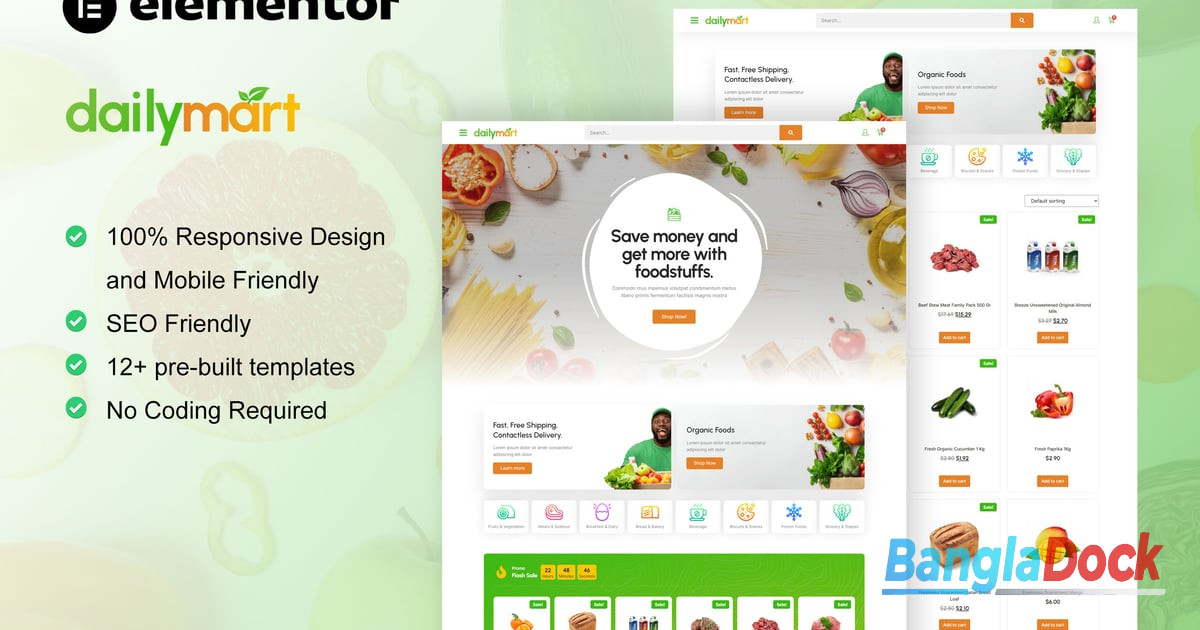
When you build for WordPress, the GPL is not just a choice; it is the standard. If you create a premium form builder, it must inherit the GPL license from WordPress core. You can still sell the software, but your buyers have the legal right to modify and redistribute the code. This is why acquiring WPForms Pro Bundle + All Addons from a reputable GPL distributor provides you with fully legitimate, community-compliant tools. Similarly, if you are spinning up a local e-commerce storefront, deploying a GPL-compliant design framework like the DailyMart – Grocery Store Elementor Template Kit ensures your site remains fully aligned with WordPress licensing standards.
Handling Digital Contracts and Signatures
For agencies managing client agreements online, integrating legally binding signature workflows is essential. A tool like WP E-Signature – Bundle with all addons operates under the WordPress GPL ecosystem, allowing developers to extend and customize the signature process for their specific agency workflows without violating proprietary boundaries, as long as the modifications respect the original copyleft terms.
Common Mistakes to Avoid
Developers frequently stumble over open source compliance, leading to severe legal and operational setbacks. Steer clear of these frequent errors:
- Assuming "Open Source" means "Do Whatever I Want": Open source does not equal public domain. Every license carries conditions. Ignoring the copyleft clauses of the GPL while incorporating that code into a proprietary plugin is a direct copyright violation.
- Mixing Incompatible Licenses: Dropping a GPL-licensed script into a larger project licensed under a restrictive proprietary framework contaminates the whole project. The GPL dictates that the entire combined work must be distributed under the GPL.
- Ignoring Patent Clauses: Using MIT-licensed code in an enterprise product might expose you to patent infringement lawsuits from the original contributors. Opting for Apache 2.0 or GPLv3 provides a clear patent grant, shielding your business.
- Removing Copyright Notices: Even the most permissive licenses (MIT, BSD) require you to retain the original author's copyright notice. Deleting these files from your production build violates the baseline requirement of the license.
Troubleshooting License Compatibility Issues
When your project pulls dependencies from multiple sources, license conflicts inevitably arise. Follow these diagnostic steps to resolve compatibility friction:
- Step 1: Audit Your Dependency Tree: Run a license audit using tools like license-checker for Node.js or wp-license-checker for WordPress. Generate a comprehensive list of every license governing your project's packages.
- Step 2: Map Compatibility Matrices: Consult the Free Software Foundation's license compatibility matrix. Verify that your permissive dependencies (MIT, BSD) can legally merge with your copyleft requirements (GPL). Fortunately, MIT and BSD code can safely be included in GPL projects, as the resulting combined work simply adopts the GPL.
- Step 3: Isolate Conflicting Code: If you discover a GPLv3 dependency but your project must remain GPLv2-only (due to WordPress core standards), you cannot combine them. You must either find a GPLv2 alternative for that dependency or architecturally separate the conflicting code into an independent, standalone process that does not create a single combined derivative work.
- Step 4: Document Your Findings: Maintain a LICENSES.md file in your repository detailing every third-party component, its license, and your justification for its inclusion. This documentation acts as your defensive shield during future audits.
Best Practices for Managing Open Source Code
Running a sustainable development operation requires proactive license management. Implement these standards across your team:
- Establish a Clear Contribution Policy: If you accept pull requests on your GitHub repository, require contributors to sign a Contributor License Agreement (CLA). This ensures you have the legal right to distribute their submissions under your chosen license.
- Choose Permissive for Utilities, Copyleft for Platforms: If you are releasing a lightweight, standalone utility class (like a date formatter), use MIT to maximize adoption. If you are releasing a full-scale framework that you want to remain free forever, use GPL to prevent corporate enclosure.
- Source from Trusted GPL Vendors: When building WordPress sites, obtaining premium plugins from unauthorized crack sites exposes you to security risks and unverified code. Instead, secure your tools from clean, secure premium GPL WordPress themes and plugins at BanglaDock, which guarantees authentic, unmodified source files under proper GPL compliance.
- Keep Design and Logic Distinct: In WordPress, the GPL applies to the PHP logic, while CSS and images can theoretically carry separate licenses. Maintaining this distinction allows you to protect your visual design assets while keeping the functional code open, a common practice among premium theme shops.
Selecting the Right Framework for Your Next Project
The battle of GPL vs. other open source licenses is not about finding an absolute winner, but about selecting the correct tool for your specific context. Permissive licenses like MIT and Apache 2.0 offer ultimate flexibility, making them ideal for widespread adoption and proprietary commercialization. The GPL sacrifices that flexibility to enforce a cycle of permanent openness, ensuring that community contributions cannot be privatized.
For WordPress developers, the GPL is the inescapable reality of the platform, fostering an ecosystem where innovation builds upon a shared foundation. When evaluating your next stack, audit your dependencies, verify your compatibility, and choose the license that aligns with your project's long-term philosophy. If you are evaluating the broader tools to build upon that foundation, exploring the Divi Builder or Elementor Pro in 2026? Complete Comparison to Choose the Best WordPress Page Builder will help you align your technical choices with your licensing strategy.
Frequently Asked Questions
Can I sell software licensed under the GPL?
Yes, you can absolutely sell GPL-licensed software. The GPL does not forbid commercial distribution; it simply requires that anyone who receives the software also receives the source code and the right to modify and redistribute it under the same GPL terms. Selling premium WordPress plugins under the GPL is a standard, legitimate business model.
Is the MIT license compatible with the GPL?
Yes, the MIT license is fully compatible with the GPL. You can take MIT-licensed code and incorporate it into a GPL-licensed project. The resulting combined work will be distributed under the GPL, but the original MIT portions retain their own license within the source files.
Why does WordPress mandate the GPL for plugins and themes?
WordPress core is licensed under the GPLv2. According to the Free Software Foundation's guidelines, when a program dynamically links to a GPL-licensed core, the combined work is considered a single derivative work. To prevent legal conflicts and maintain the open nature of the entire platform, the WordPress foundation requires themes and plugins to adopt a compatible GPL license.