

What Is the WordPress GPL License?
The WordPress GPL license is the open-source license that gives WordPress users the legal freedom to use, study, modify, and redistribute WordPress software. WordPress itself is licensed under the GNU General Public License, usually called the GPL. Because WordPress is GPL software, the PHP code in WordPress themes and plugins is generally expected to inherit the same license when it forms a derivative work of WordPress.
For site owners, developers, agencies, and WooCommerce store builders, this matters more than it may first appear. The GPL explains why you can install WordPress without paying a platform fee, why developers can build custom features on top of it, and why GPL WordPress themes and plugins can be legally redistributed under certain conditions.
The GPL is not a “free as in low quality” license. It is a freedom-focused software license. You may pay for a premium plugin, but the license still protects your ability to run, inspect, and modify the GPL-covered code. What vendors often sell is not only code access, but also updates, support, documentation, cloud services, templates, design assets, and convenience.
How the GPL Applies to WordPress Themes and Plugins
WordPress themes and plugins interact deeply with WordPress core. They use WordPress hooks, functions, APIs, database structures, admin screens, and template logic. Because of that relationship, the WordPress project considers PHP code in themes and plugins to be derivative of WordPress and therefore GPL-compatible.
This does not always mean every file inside a product is treated the same way. A commercial WordPress theme may include PHP files, JavaScript, CSS, images, fonts, icons, demo content, and design files. The PHP portion is the main area tied closely to WordPress GPL licensing. Other assets may have separate licenses depending on how the author packaged them. Professional developers should review the license file before redistributing a complete product bundle.
GPL Does Not Mean “No Commercial Business”
A common misunderstanding is that GPL software cannot be sold. That is incorrect. GPL software can be sold, bundled, and distributed commercially. A developer can charge for access to a plugin download, a theme package, a membership portal, priority support, or automatic updates.
The key point is that once someone receives GPL-covered code, they receive GPL freedoms with it. They can use it on their own projects, modify it, and redistribute it under the same GPL terms. This is one reason marketplaces for premium GPL WordPress themes and plugins exist. For example, BanglaDock focuses on clean, secure premium GPL WordPress themes and plugins for users who want access to widely used WordPress tools without losing the freedom that GPL licensing provides.
What Rights Do You Get Under the WordPress GPL?
The GPL gives users four practical freedoms. These are especially relevant when you manage multiple WordPress sites, build client projects, or customize advanced plugins.
- Freedom to run the software: You can use GPL WordPress software for personal websites, client sites, ecommerce stores, membership platforms, directories, blogs, and internal business tools.
- Freedom to study the code: Developers can inspect how a theme or plugin works, audit logic, trace hooks, and review security-sensitive functions.
- Freedom to modify the code: You can adjust templates, extend functionality, patch compatibility issues, or build custom integrations for a specific project.
- Freedom to redistribute copies: You can share GPL-covered code, including modified versions, as long as you respect the GPL terms.
These freedoms are why WordPress has such a large developer ecosystem. Agencies can build custom workflows, plugin authors can extend existing ideas, and technical site owners can avoid vendor lock-in.
What the GPL Does Not Automatically Give You
The WordPress GPL license gives important software freedoms, but it does not grant every possible service attached to a product. This distinction prevents confusion when comparing original vendor purchases with GPL marketplace downloads.
- Automatic vendor updates: A GPL copy may not include access to the original developer’s update server unless a valid license key is provided.
- Official support: The GPL does not require the original author to answer support tickets for users who obtained the software elsewhere.
- Third-party SaaS access: Cloud APIs, form delivery services, AI credits, payment dashboards, and hosted features may require separate accounts.
- Trademark rights: The GPL covers software licensing, not permission to misuse a company’s brand, logo, or trademark.
- All bundled assets: Fonts, stock images, icons, and design resources may carry separate terms.
For developers, this means GPL is powerful but not magical. You still need to manage updates carefully, source downloads responsibly, and understand which parts of a product are software code versus connected services.
Real-World WordPress GPL Use Cases
GPL licensing is not only a legal concept. It affects daily WordPress development decisions, especially when building production websites on a budget or maintaining many installs.
Building Client Sites with Premium GPL Plugins
An agency may need form builders, signature workflows, page builders, SEO tools, backup plugins, and WooCommerce extensions across multiple client websites. GPL licensing allows the agency to review and adapt code when needed, while still choosing reputable sources for clean packages.
For example, a client onboarding site might use the WPForms Pro Bundle + All Addons to create quote requests, lead forms, file uploads, surveys, and conditional logic workflows. The practical value is not just the form UI; it is the ability to build flexible business processes inside WordPress.
Launching Ecommerce and Local Delivery Websites
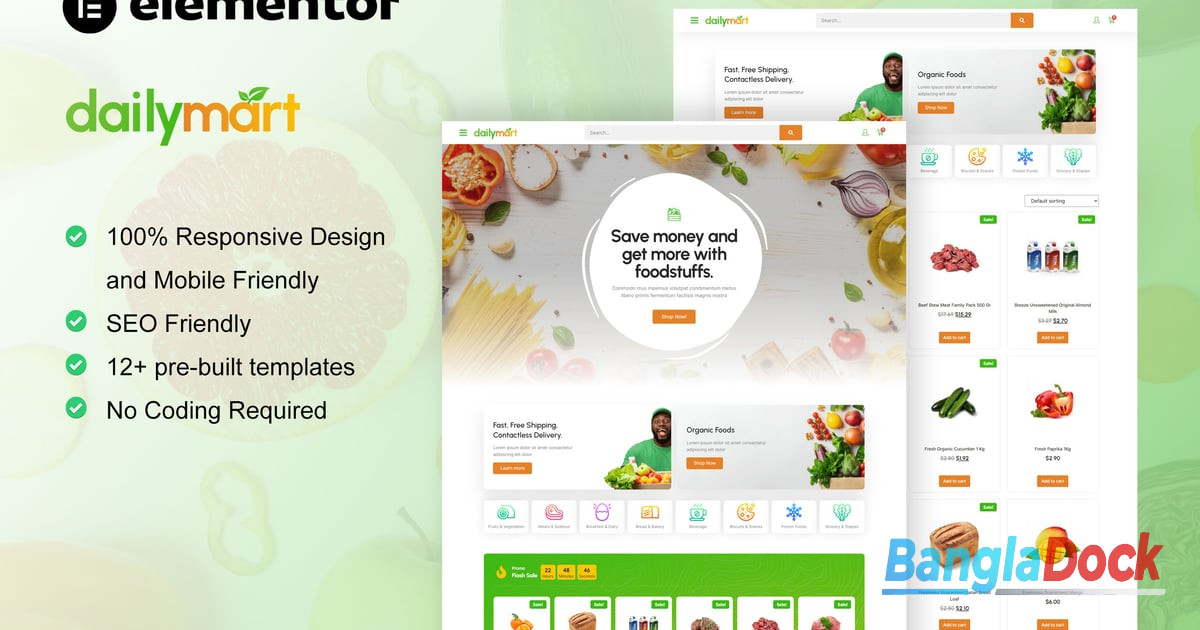
A grocery, pharmacy, or local delivery brand may need a fast visual starting point. An Elementor template kit such as DailyMart – Grocery Store Elementor Template Kit can help developers speed up layout production while still customizing colors, structure, sections, and WooCommerce presentation for the client’s needs.
GPL-friendly access is useful here because development teams often need to experiment in staging, refine layouts, and reuse proven design patterns across similar projects without rebuilding every screen from scratch.
Adding Contract and Signature Workflows
Professional service websites often need signed proposals, digital agreements, and approval workflows. A tool like WP E-Signature – Bundle with all addons can support document signing features inside a WordPress-driven business process. Before using any legal-signature workflow in production, teams should still confirm compliance requirements for their jurisdiction and industry.
GPL vs Nulled Plugins: They Are Not the Same
One of the biggest mistakes WordPress users make is confusing GPL software with nulled software. A GPL plugin can be legally redistributed. A nulled plugin is typically a modified copy where license checks have been removed, hidden code may have been inserted, or files may have been tampered with.
That difference is serious. Nulled WordPress themes and plugins can contain backdoors, spam injectors, malicious admin users, hidden redirects, or credential-stealing code. A “free premium plugin” from an unknown file-sharing site can cost far more than it saves if it compromises a WooCommerce store or client website.
A responsible GPL source should provide clean files, avoid malware modifications, and make it clear that official vendor support and license-key services may not be included. Site owners should still scan downloads, test them on staging, and keep reliable backups.
Common Mistakes to Avoid with WordPress GPL Products
- Installing files from random sources: Legal redistribution does not guarantee file integrity. Use trusted GPL providers and verify packages before production use.
- Expecting official support without a license: GPL rights do not force the original vendor to provide help desk support or license-key access.
- Ignoring update strategy: Outdated plugins can become a security risk. Plan how updates will be tested and deployed.
- Assuming every asset is GPL: Review licensing for images, fonts, icons, and bundled design materials before redistribution.
- Editing plugin core directly: Direct edits are overwritten during updates. Use child themes, custom plugins, hooks, and filters where possible.
- Using GPL as a shortcut around due diligence: Check compatibility, changelogs, PHP versions, and WordPress requirements before installing.
Best Practices for Using GPL WordPress Themes and Plugins
GPL tools can be safe and productive when handled with a professional workflow. The goal is to combine licensing freedom with disciplined development habits.
- Download from reputable sources: Choose providers that focus on clean, unmodified GPL WordPress products and maintain transparent product pages.
- Test on staging first: Never install a new theme or plugin directly on a high-traffic production website without testing.
- Keep backups before changes: Create database and file backups before updates, migrations, or major plugin changes.
- Review plugin permissions: Check what admin menus, database tables, REST endpoints, and user capabilities the plugin adds.
- Monitor update compatibility: Test updates against your WordPress version, PHP version, theme, WooCommerce setup, and active plugins.
- Document client usage: Agencies should record which GPL products are installed, their source, version, and update process.
If you are comparing builders and design workflows before choosing a GPL product stack, the guide Divi Builder or Elementor Pro in 2026? Complete Comparison to Choose the Best WordPress Page Builder is a practical next read. For WooCommerce performance planning, especially after adding checkout-related extensions, review How to Speed Up WooCommerce Cart and Checkout Pages for Instant Loading.
Troubleshooting GPL Plugin and Theme Issues
When a GPL WordPress theme or plugin causes errors, troubleshoot it the same way you would handle any production-grade WordPress issue: isolate, verify, and document. Avoid guessing based only on the last plugin installed.
Diagnostic Steps for Developers
- Check the source package: Confirm the ZIP file came from a trusted GPL provider and was not downloaded from a file-sharing mirror.
- Enable WordPress debugging safely: On staging, enable WP_DEBUG and review PHP warnings, fatal errors, and deprecated function notices.
- Test with a default theme: Switch to a clean default theme on staging to identify theme-plugin conflicts.
- Deactivate plugins one by one: Isolate conflicts by disabling non-essential plugins and retesting the failing feature.
- Review server requirements: Confirm the required PHP version, memory limit, extensions, upload limits, and WordPress version.
- Inspect browser console errors: JavaScript conflicts can break builders, form validation, modals, checkout actions, and admin screens.
- Compare versions: Check whether the installed product version matches the version expected by related addons or integrations.
If the plugin depends on an external service, API key, license server, or vendor account, a GPL download alone may not activate that hosted feature. That is not necessarily a GPL problem; it is often a product architecture issue where part of the functionality lives outside the WordPress codebase.
Is It Legal to Use GPL WordPress Plugins from Third-Party Sources?
In many cases, yes, using redistributed GPL WordPress plugins is legal when the software is genuinely GPL-covered and distributed according to GPL terms. The better question is whether the source is trustworthy, whether the package is clean, whether you understand support limitations, and whether your project needs official vendor services.
For mission-critical sites, some teams buy directly from the original vendor to get support, account access, and automatic updates. Other teams use GPL marketplaces for development, learning, staging, testing, or budget-conscious production builds. Both approaches can be valid when handled honestly and securely.
Final Thoughts on WordPress GPL Licensing
The WordPress GPL license is one of the main reasons the WordPress ecosystem is so flexible. It protects user freedom, encourages development, and gives professionals room to customize software for real business needs. At the same time, GPL does not remove the need for security discipline, reliable updates, proper testing, and respect for trademarks or separately licensed assets.
If you use GPL WordPress themes and plugins, treat them like production software: source them carefully, test them thoroughly, document them clearly, and maintain them consistently. That approach gives you the best of both worlds: open-source freedom and professional-grade reliability.
Frequently Asked Questions
Is WordPress really licensed under the GPL?
Yes. WordPress core is licensed under the GNU General Public License. This license gives users the freedom to run, study, modify, and redistribute the software. Because themes and plugins rely heavily on WordPress functions, hooks, and APIs, their PHP code is generally expected to be GPL-compatible when distributed as WordPress products.
Can I legally use premium GPL WordPress plugins without buying from the original vendor?
In many cases, yes, if the plugin code is genuinely distributed under the GPL and the source provides a clean, unmodified package. However, you may not receive official vendor support, automatic updates, license-key features, or access to connected cloud services. Always use reputable sources, scan files, test on staging, and understand what is included before using a GPL product on a live website.
Are GPL plugins the same as nulled plugins?
No. GPL plugins are legally redistributable when shared under GPL terms. Nulled plugins are often tampered copies where license checks have been removed or malicious code may have been added. Nulled software can create serious security risks, including backdoors, redirects, spam injection, and data theft. A professional WordPress workflow should avoid nulled downloads completely.