

GPL vs Nulled Plugins in 2025: Why This Comparison Still Matters
If you run a WordPress site in 2025, you have probably seen two terms appear again and again: GPL plugins and nulled plugins. They are often discussed together, but they are not the same thing. Confusing them can lead to poor purchasing decisions, site compromises, update failures, and long-term maintenance problems.
The short version is simple: a GPL plugin can be legally redistributed under the WordPress ecosystem’s licensing model, while a nulled plugin is usually a modified or redistributed premium product that has been tampered with, stripped of licensing checks, or repackaged in a risky way. That difference affects security, trust, updates, support, and your ability to run a stable production website.
For site owners, developers, agencies, and store operators, the real question is not just what these terms mean. It is which option is safer, how to verify sources, and why the decision matters for revenue, reputation, and maintainability.
What Is a GPL Plugin?
GPL stands for the GNU General Public License. WordPress itself is released under the GPL, and most plugins and themes built for WordPress inherit GPL obligations at least for the PHP code they include. In practical terms, that means the software can often be legally used, modified, and redistributed under the terms of that license.
A GPL plugin is not automatically suspicious. In many cases, it is simply a legitimate redistribution of software that respects the license terms. The real difference comes down to where it is sourced from, how it is packaged, whether the files are clean, and whether the distributor is transparent about updates and support.
That is why experienced developers do not ask only whether a plugin is GPL. They ask whether the download source is trustworthy, whether the package has been scanned, and whether the distributor has a clear update workflow.
What Is a Nulled Plugin?
A nulled plugin is usually a premium plugin or theme that has been altered to bypass license activation, bundled with hidden code, or redistributed through untrusted channels. In some cases, the functionality appears to work at first, which is why nulled software keeps circulating. The problem is what you cannot see immediately.
Nulled plugins commonly carry risks such as:
- Injected malware that creates backdoors or hidden admin users
- Obfuscated code that makes auditing and debugging difficult
- Broken update mechanisms that leave the site stuck on outdated versions
- Spam scripts or redirect payloads that damage SEO and user trust
- License bypass modifications that destabilize the plugin over time
In other words, “nulled” usually describes a trust problem, not just a pricing shortcut.
GPL vs Nulled Plugins: The Real Difference
Licensing and legal context
GPL redistribution can be legitimate under WordPress licensing norms. Nulled plugins are often tied to unauthorized modifications, deceptive redistribution practices, or bundled assets that create licensing conflicts outside the PHP code itself.
File integrity and source trust
A clean GPL package from a reputable source may be usable in a production environment after normal verification. A nulled package often fails that trust test because the code has been altered in ways that are hard to validate quickly.
Security posture
This is where the gap becomes obvious. Security professionals treat unknown, modified plugin packages as high risk. Even if a nulled plugin appears functional, hidden payloads can sit dormant until a later trigger, update, or cron execution.
Support and maintenance
With a reputable GPL distributor, you may still receive clean files and version updates, even if official vendor support is not included. With nulled plugins, support is often nonexistent, misleading, or limited to a download page that disappears later.
Which Is Safer in 2025?
Clean GPL plugins from verified sources are significantly safer than nulled plugins. That does not mean every GPL source is safe. It means the GPL model itself is not the problem. The risk comes from distributors that insert malware, alter the codebase, or fail to maintain secure delivery practices.
In 2025, WordPress security has become less forgiving of careless plugin sourcing. Hosts, malware scanners, and browser protections are better at detecting suspicious behavior, but they do not prevent all damage. A compromised plugin can still leak data, poison SEO, break checkout flows, or create hidden persistence mechanisms before anyone notices.
If you want a practical starting point for clean premium GPL WordPress downloads, BanglaDock is positioned as a source for secure premium GPL WordPress themes and plugins. The value of any GPL marketplace depends on transparent sourcing, file hygiene, and regular maintenance, so those are the factors to evaluate every time.
Why the Difference Matters for Real Websites
Ecommerce stores and checkout reliability
On WooCommerce sites, plugin integrity affects revenue directly. A compromised extension can break coupon logic, interfere with checkout sessions, or expose order data. If you manage promotions or customer incentives, a vetted tool such as WooCommerce Customer Order Coupons CSV Import Suite for WooCommerce coupon workflows is far safer than searching for random modified copies across untrusted download sites.
Lead generation and form security
Forms are one of the most sensitive components on a WordPress site. They collect contact data, user messages, and often payment-related details through integrations. A tampered forms plugin can expose submissions or inject spam. If your project needs advanced form building, using a sourced package like WPForms Pro Bundle + All Addons for secure WordPress form building is the kind of decision that reduces operational risk.
Client builds and template deployment
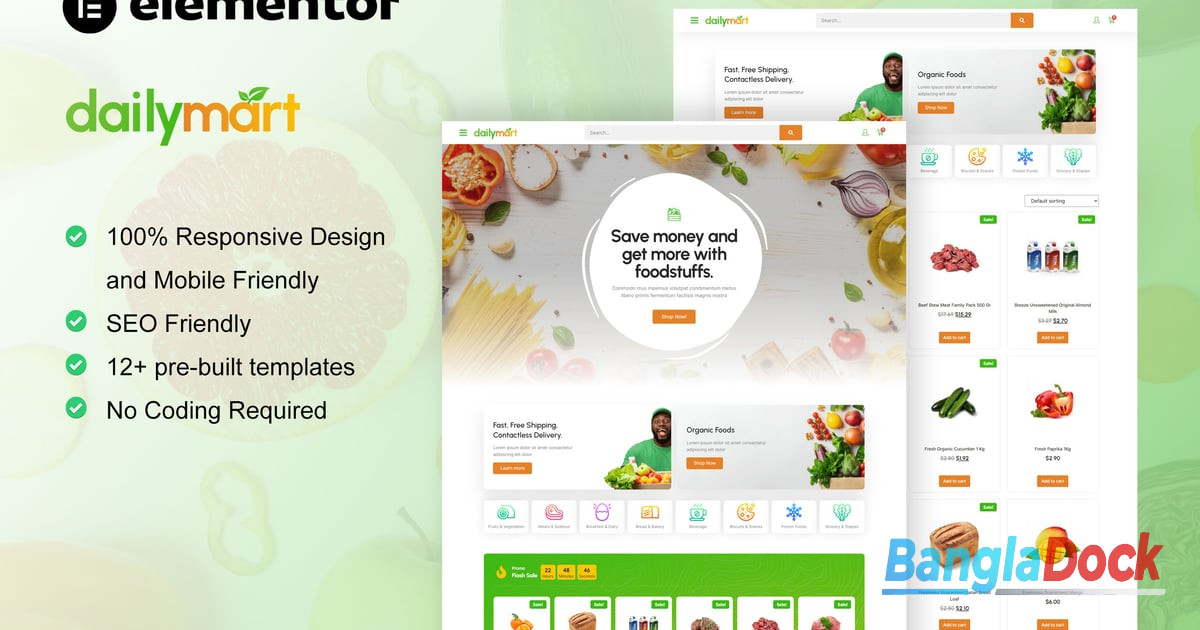
Agencies often deploy template kits and premium design assets at scale. A nulled design kit can ship tracking scripts, hidden links, or broken dependencies into every client site. For example, if you are building a grocery storefront, a sourced template such as DailyMart – Grocery Store Elementor Template Kit for WooCommerce storefront projects is a much better path than using an unverified modified archive.
Common Mistakes to Avoid
- Assuming GPL means unsafe when the actual issue is the trustworthiness of the distributor
- Assuming a working plugin is a clean plugin because malicious code often stays invisible at first
- Ignoring update paths and then discovering the site cannot receive security fixes cleanly
- Skipping malware scans on downloaded archives before installation
- Using nulled plugins on staging and then pushing them to production without realizing the risk follows the deployment pipeline
- Letting cost drive the decision alone when downtime, cleanup, and SEO recovery can cost far more
How to Evaluate a GPL Download Source
If you are considering a GPL source, use a verification workflow instead of relying on marketing claims.
Check source transparency
Look for clear contact details, update policies, product version information, and a consistent publishing history. Anonymous sites offering hundreds of premium products with no transparency deserve extra caution.
Scan the plugin package
Run local malware scans, inspect the archive structure, and review suspicious files manually. Obfuscated PHP, unexpected remote requests, and hidden admin-related hooks should trigger deeper review.
Test in a staging environment
Never install a newly sourced plugin directly on a live site. Use a staging copy and check activation behavior, database writes, outbound network requests, admin notices, and update prompts.
Review code changes after updates
For business-critical plugins, compare file changes between versions. Even a simple diff review can reveal surprising modifications.
For a deeper checklist, the related guide How to Verify if a GPL Download Source Is Safe and Legitimate in 2025 is useful as a follow-up read.
Troubleshooting: Signs a Plugin May Be Nulled or Compromised
If you already installed a plugin and suspect it may not be clean, start with a focused diagnostic process.
Warning signs inside WordPress
- Unexpected admin users or changed permissions
- Strange notices prompting external activation steps
- New scheduled tasks or unusual cron behavior
- Outbound requests to domains unrelated to the plugin vendor
- SEO spam pages, redirects, or altered header/footer output
File-level checks
- Search for base64-encoded blobs and obfuscated functions
- Inspect modified core files and `mu-plugins` directories
- Review recently changed plugin files and hidden PHP loaders
- Compare hashes or file contents against a known clean package when possible
Recovery steps
Remove the suspect plugin, restore from a clean backup if available, rotate admin passwords, review database users, and scan the full install. On ecommerce sites, also review payment, checkout, and user registration flows after cleanup.
Best Practices for Safer WordPress Plugin Use in 2025
- Use reputable GPL sources only and avoid anonymous download portals
- Keep staging and production separate for plugin evaluation and update testing
- Maintain regular backups with off-site retention before every plugin change
- Use security scanning and file monitoring as part of routine maintenance
- Document plugin sources so teams know where each premium component came from
- Prefer maintainable tooling over short-term cost savings that create long-term risk
GPL vs Nulled Plugins for Developers and Agencies
For developers, the decision is also about workflow quality. Nulled plugins introduce uncertainty into deployment pipelines, version control discussions, client support, and incident response. When a bug appears, you need confidence that the package itself is not the source of hidden modifications.
Agencies especially benefit from standardizing on trusted sources. That makes updates more predictable, onboarding easier, and security reviews more consistent across client sites.
If you want a broader comparison with a side-by-side perspective, see Nulled vs GPL Plugins in 2025: Key Differences, Risks, and Comparison Table.
Final Takeaway for 2025
The safest answer is not “free versus paid.” It is verified versus unverified. GPL plugins can be part of a legitimate WordPress workflow when they come from a trusted, transparent source and pass normal technical checks. Nulled plugins remain a high-risk choice because they often involve code tampering, hidden payloads, and broken maintenance paths.
If you manage a serious WordPress site, treat plugin sourcing as part of your security architecture. The plugin you install today affects update reliability, incident exposure, user trust, and future development speed. That is why the GPL vs nulled plugin debate still matters in 2025.
Frequently Asked Questions
Are GPL plugins legal to use on WordPress sites?
In many cases, yes. WordPress and much of its ecosystem operate under the GNU General Public License, which allows use, modification, and redistribution of GPL-covered code. The legal and practical issue is usually not the GPL itself, but whether the distributor is trustworthy and whether bundled assets, updates, and support are handled transparently.
Why are nulled plugins considered dangerous even when they seem to work?
Nulled plugins can function normally on the surface while still containing hidden malware, obfuscated code, spam injections, backdoors, or license-bypass changes that create instability later. A plugin appearing to work is not evidence that it is clean. That is why developers test unknown packages in staging and inspect source integrity before production use.
How can I tell whether a GPL plugin source is safe in 2025?
Start by checking whether the source is transparent about versions, updates, contact details, and product origin. Then scan the archive, inspect suspicious files, test the plugin in staging, and monitor for unusual network requests or admin behavior after activation. Reputable GPL sources should make it easier to verify what you are downloading and maintain consistent update quality.