

Understanding Open Source Licensing in Modern Development
Choosing an open source license dictates how your software can be used, modified, and distributed. For developers, understanding the legal boundaries of licenses like the GNU General Public License (GPL), MIT, and Apache is not just academic—it directly impacts project architecture, business models, and code compliance. Whether you are building a standalone web application or extending a platform like WordPress, the license you select or interact with shapes your operational freedom. For those looking to leverage the power of the GPL ecosystem specifically, sourcing clean, secure premium GPL WordPress themes and plugins from BanglaDock ensures a reliable starting point without legal ambiguity.
The Big Three: GPL, MIT, and Apache Explained
While dozens of open source licenses exist, three dominate the software landscape. Each carries distinct philosophies regarding code freedom and proprietary integration.
GNU General Public License (GPL)
The GPL is the most prominent copyleft license. Copyleft means that any modified version of the software must be released under the exact same GPL terms. If you distribute a derivative work, you must provide the source code to your users. This creates a viral effect, ensuring that GPL code and its derivatives remain free and open forever. The WordPress core operates under the GPL (specifically GPLv2 or later), which mandates that themes and plugins sharing derivative code must comply with the same license.
MIT License
The MIT license represents the pinnacle of permissive licensing. It allows users to do virtually anything with the code—modify it, distribute it, sublicense it, and even incorporate it into closed-source commercial products. The only requirement is preserving the original copyright notice and license text. Its simplicity makes it a favorite for JavaScript libraries, utility packages, and developer tools where maximum adoption is the primary goal.
Apache License 2.0
The Apache License is another permissive license, but it adds a layer of legal protection that MIT lacks. Like MIT, it allows commercial use and modification. However, Apache 2.0 explicitly includes a patent grant, protecting users from patent infringement lawsuits from the original creators. It also requires modified files to carry prominent notices of the changes made. Enterprise software and large corporate-backed projects heavily favor Apache 2.0 for these defensive clauses.
Open Source License Comparison Chart
The following breakdown serves as your quick-reference guide for evaluating the core differences between these licensing models. For a deeper dive into how these licenses stack up against one another, our detailed guide on GPL vs. Other Open Source Licenses (With a Comparison Table) provides extended insights.
- License Type: GPL (Copyleft) | MIT (Permissive) | Apache 2.0 (Permissive)
- Source Code Distribution Required: GPL (Yes, if you distribute the software) | MIT (No) | Apache 2.0 (No)
- Derivative Works Must Use Same License: GPL (Yes) | MIT (No) | Apache 2.0 (No)
- Commercial Use Allowed: GPL (Yes, but must remain open) | MIT (Yes) | Apache 2.0 (Yes)
- Patent Grant Included: GPL (Yes, in GPLv3) | MIT (No) | Apache 2.0 (Yes)
- Modification Notices Required: GPL (Yes, change documentation) | MIT (No) | Apache 2.0 (Yes, in modified files)
- Sublicensing Allowed: GPL (No) | MIT (Yes) | Apache 2.0 (No, but contributions under compatible licenses allowed)
- Best Use Case: GPL (Community-driven platforms like WordPress) | MIT (Lightweight libraries and tools) | Apache 2.0 (Enterprise-grade software with patent concerns)
Real-World Technical Use Cases
License theory is best understood through practical application. Consider how these licenses dictate the architecture of everyday tools.
WordPress and the GPL Ecosystem
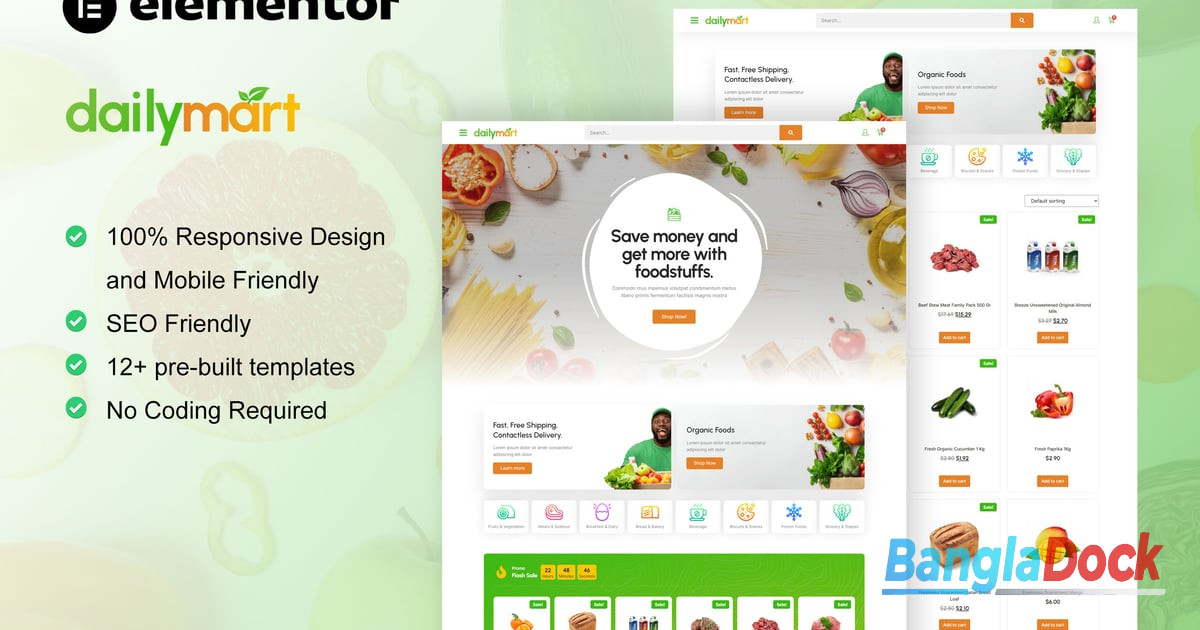
Because WordPress is GPLv2, any theme or plugin that hooks into its core functions is considered a derivative work. Developers building for this ecosystem must release their PHP code under compatible GPL terms. This allows store owners to freely modify their setups. For instance, if you are setting up an e-commerce platform, utilizing a GPL-compliant template kit such as DailyMart – Grocery Store Elementor Template Kit provides full customization freedom to alter the layout and functionality without legal restrictions. Similarly, form-building solutions like the WPForms Pro Bundle + All Addons operate under the GPL framework, ensuring developers can audit, alter, and redistribute the code to suit specific client needs. To understand the specifics of how this applies to the world's most popular CMS, read our breakdown on What Is WordPress GPL License – Everything You Should Know.
JavaScript Libraries and MIT Permissiveness
Front-end development relies heavily on MIT-licensed packages. Frameworks like React (which transitioned from BSD + Patents to MIT) and utility libraries like Lodash use MIT. This allows proprietary SaaS products to bundle these scripts without exposing their proprietary backend code. A developer can embed an MIT-licensed carousel widget into a closed-source commercial application seamlessly.
Enterprise Infrastructure and Apache 2.0
Large-scale infrastructure software—such as Kubernetes and TensorFlow—uses Apache 2.0. The patent grant provides legal safety for corporations contributing massive codebases. When a business integrates an Apache-licensed database driver into their proprietary stack, they do not risk patent litigation from the original foundation that authored the driver. Legal document handling also requires strict compliance; tools like the WP E-Signature – Bundle with all addons respect the WordPress GPL ecosystem while handling sensitive enterprise data, proving how different license philosophies intersect in real products.
Common Mistakes to Avoid When Choosing a License
Even senior developers stumble over open source compliance. Avoiding these pitfalls saves significant legal and operational headaches.
- Mixing Incompatible Licenses: Combining GPL-licensed code with proprietary or strictly permissive modules in a distributed product forces the entire work to become GPL. You cannot legally bundle a GPLv3 library into a closed-source iOS app sold on the App Store.
- Ignoring Patent Clauses: Choosing MIT over Apache 2.0 for a project where corporate contributors are involved leaves the project exposed to patent aggression. MIT offers zero patent protection.
- Assuming All Permissive Licenses Are Identical: BSD and MIT are similar, but Apache 2.0 requires tracking modifications in changed files. Failing to include change notices in an Apache-licensed fork violates the license terms.
- Confusing "Open Source" with "Public Domain": Public domain code has no copyright owner and no restrictions. Open source code retains copyright; the owner simply grants a license to use it under specific conditions.
Diagnostic Steps: Troubleshooting License Conflicts
When auditing a project for compliance, a systematic approach uncovers hidden conflicts before they escalate into legal disputes.
Step 1: Inventory Your Dependencies
Run an automated scanner like license-checker for Node.js environments or Scancode Toolkit for broader projects. Generate a full manifest of every direct and transitive dependency and its declared license.
Step 2: Check Compatibility Matrices
Map your inventory against a license compatibility matrix. Verify that your intended distribution model (e.g., proprietary SaaS, on-premise closed-source, open source fork) aligns with the most restrictive license in your dependency tree. A single GPLv3 dependency will dictate the distribution terms of your entire application.
Step 3: Review Attribution Requirements
Permissive licenses require preserving copyright notices. Audit your build process to ensure NOTICE, LICENSE, and COPYING files from Apache and MIT dependencies are bundled into your final compiled output or included within your application's about section.
Step 4: Isolate Copyleft Code
If you must use a GPL library in a proprietary product, isolate it as an independent, optional plugin or standalone service communicating via API. This architectural boundary can prevent the copyleft viral effect from infecting your core proprietary codebase, provided the integration is not deemed a single combined work.
Practical Best Practices for Developers
Maintaining a legally sound project requires proactive habits.
- Document Your Choices: Always include a
LICENSEfile in the root of your repository. Never leave a project without an explicit license; an unlicensed project defaults to exclusive copyright, meaning nobody can legally use it. - Use SPDX Identifiers: Standardize your license declarations using Software Package Data Exchange (SPDX) short identifiers (e.g.,
MIT,Apache-2.0,GPL-2.0-or-later) in your package manifests likepackage.jsonorcomposer.json. - Establish a Contribution Agreement: If you manage an open source project, require contributors to sign a Developer Certificate of Origin (DCO) or a Contributor License Agreement (CLA). This ensures you hold the necessary rights to enforce the license and defend the project.
- Automate Compliance Checks: Integrate license scanning into your CI/CD pipeline. Block merges that introduce incompatible licenses, preventing accidental compliance violations before they reach production.
Making the Right Choice for Your Project
Selecting an open source license is a strategic business decision masquerading as a legal one. If your goal is maximum adoption with zero friction, MIT delivers. If you are building enterprise-grade infrastructure where patent peace of mind is paramount, Apache 2.0 is the standard. If your mission is to guarantee that your code—and all future iterations of it—remains free and accessible to the community, GPL stands as the ultimate safeguard. Align your license with your project's philosophy, and the legal framework will naturally support your technical and commercial objectives.
Frequently Asked Questions
Can I use GPL-licensed code in my proprietary, closed-source software?
You can use GPL-licensed code internally within your organization without distributing it. However, if you distribute the combined software to others (like selling an app or providing a downloadable binary), the GPL requires you to release the source code of your entire combined work under the GPL. You cannot legally distribute a proprietary application that incorporates GPL code.
What is the main difference between the MIT and Apache 2.0 licenses?
Both are permissive licenses allowing commercial use and modification. The primary difference is legal protection. Apache 2.0 explicitly includes a patent grant, preventing the original creator from suing users for patent infringement over the licensed code. Apache 2.0 also requires users to document modifications in changed files. MIT lacks the patent clause and modification tracking requirements.
Why does WordPress use the GPL license for themes and plugins?
WordPress core is licensed under the GPL. Because WordPress themes and plugins rely on WordPress core functions, hooks, and APIs, they are considered derivative works under copyright law. The GPL license requires that derivative works be distributed under the same license terms, ensuring the entire WordPress ecosystem remains free, modifiable, and open to the community.