

GPL vs MIT, Apache, and Other Open Source Licenses: What Actually Changes?
Open source licenses all grant permission to use software, but they do not grant the same freedoms in the same way. That is where many developers, agencies, startup founders, and WordPress site owners get tripped up. The biggest difference is not whether code is “free,” but what happens when you modify it, redistribute it, bundle it into products, or mix it with other software.
When people compare GPL vs MIT, Apache, and other open source licenses, they are usually trying to answer one practical question: What am I allowed to do, and what do I need to give back? In 2025, that question matters even more because software projects now move across SaaS platforms, Git repositories, plugin marketplaces, CI pipelines, and commercial support ecosystems.
If you work with WordPress, this discussion is even more relevant. WordPress itself is licensed under the GPL, so plugin and theme distribution often intersects with GPL requirements. For a deeper WordPress-specific foundation, see WordPress GPL License Explained: What It Means and Why It Matters in 2025.
Understanding the Main License Families
Copyleft licenses
Copyleft licenses, such as the GNU General Public License (GPL), allow users to run, study, modify, and share software. The key condition is that redistributed derivative works must remain under the same license terms. That means if you distribute modified GPL software, you generally must also provide access to the corresponding source code under GPL terms.
This approach is designed to keep software freedoms intact as code gets reused and improved.
Permissive licenses
Permissive licenses, including MIT, BSD, and Apache 2.0, allow broad reuse with fewer downstream obligations. In most cases, you can modify the software, include it in proprietary projects, and redistribute it with minimal requirements such as preserving copyright notices and license text.
These licenses are popular for libraries, frameworks, developer tools, and projects that want the widest possible adoption.
GPL License Explained in Plain Terms
The GPL is often described as a “share-alike” software license. If you only use GPL software privately, you typically do not need to publish your changes. Once you distribute the software or a derivative work, the obligations become active.
That usually includes:
- Providing a copy of the GPL license
- Preserving copyright and attribution notices
- Making source code available for the distributed version
- Licensing derivative works under the GPL as well
For developers, the GPL is less about restricting use and more about protecting user freedoms after redistribution. For businesses, the main challenge is compliance planning, especially when combining GPL code with proprietary components.
MIT License: Why It Is So Popular
The MIT License is short, easy to understand, and highly permissive. It generally allows reuse, modification, distribution, sublicensing, and commercial use, as long as the copyright notice and license text stay with the software.
That simplicity makes MIT attractive for:
- JavaScript libraries and frontend tooling
- Developer SDKs and small utility packages
- Projects seeking broad corporate adoption
- Teams that do not want copyleft obligations
The tradeoff is that improvements made by downstream users do not have to be released back to the community. If your goal is maximum reuse with minimum friction, MIT is often a good fit. If your goal is keeping future distributed versions open, GPL may be better.
Apache License 2.0: The Patent Clause Difference
Apache 2.0 is also a permissive license, but it goes further than MIT in one area that matters to serious software teams: patents. Apache 2.0 includes an express patent license from contributors to users of the software. It also contains patent termination provisions in certain circumstances.
In practical terms, Apache 2.0 is often chosen when a project wants permissive reuse while offering clearer protection around patent rights. That is one reason many larger organizations prefer Apache 2.0 over MIT for shared infrastructure and enterprise-oriented projects.
Apache 2.0 also requires preservation of notices and handling of any included NOTICE file, so it has slightly more compliance overhead than MIT.
GPL vs MIT vs Apache: Key Differences at a Glance
Redistribution obligations
GPL requires derivative works that are distributed to remain under GPL terms and include source code access. MIT and Apache generally do not require releasing source code for derivative or bundled proprietary software.
Compatibility with proprietary software
MIT and Apache are typically easier to use inside proprietary products. GPL can create licensing conflicts when code is combined in a way that forms a derivative work and is then distributed.
Patent language
MIT does not include the same explicit patent framework found in Apache 2.0. GPLv3 also addresses patent-related concerns more directly than older license models, though its structure and obligations differ from Apache.
License simplicity
MIT is the easiest to read. Apache 2.0 is more detailed. GPL is longer and requires more careful compliance analysis, especially for distributed software products.
Other Open Source Licenses Worth Knowing
BSD licenses
BSD 2-Clause and BSD 3-Clause are permissive licenses similar to MIT. They are widely used in systems software, academic projects, and older foundational codebases.
LGPL
The Lesser GPL is often used for libraries. It is less strict than GPL in some linking scenarios, though the exact legal interpretation can be technical. It aims to allow wider adoption while preserving some copyleft protections.
MPL 2.0
The Mozilla Public License is a file-level copyleft license. It sits between strong copyleft and permissive licensing. If you modify MPL-covered files, those files usually need to remain under MPL, but unrelated files in the same project may use different licenses.
Real-World Technical Use Cases
Use GPL when community openness must persist
If you are building a WordPress plugin, theme framework, or self-hosted application and want redistributed improvements to stay open, GPL is a logical choice. This matters in ecosystems where third parties regularly fork, customize, and resell software.
For WordPress professionals sourcing legitimate GPL assets, BanglaDock is a useful reference point for clean, secure premium GPL WordPress themes and plugins.
Use MIT for maximum library adoption
If you maintain a helper package, API client, or frontend component library and want developers to integrate it anywhere with little licensing friction, MIT is often the easiest path.
Use Apache 2.0 when patent clarity matters
If your project may be adopted by enterprises, infrastructure vendors, or larger contributor communities, Apache 2.0 can be a stronger fit because of its explicit patent terms.
Illustrative WordPress examples
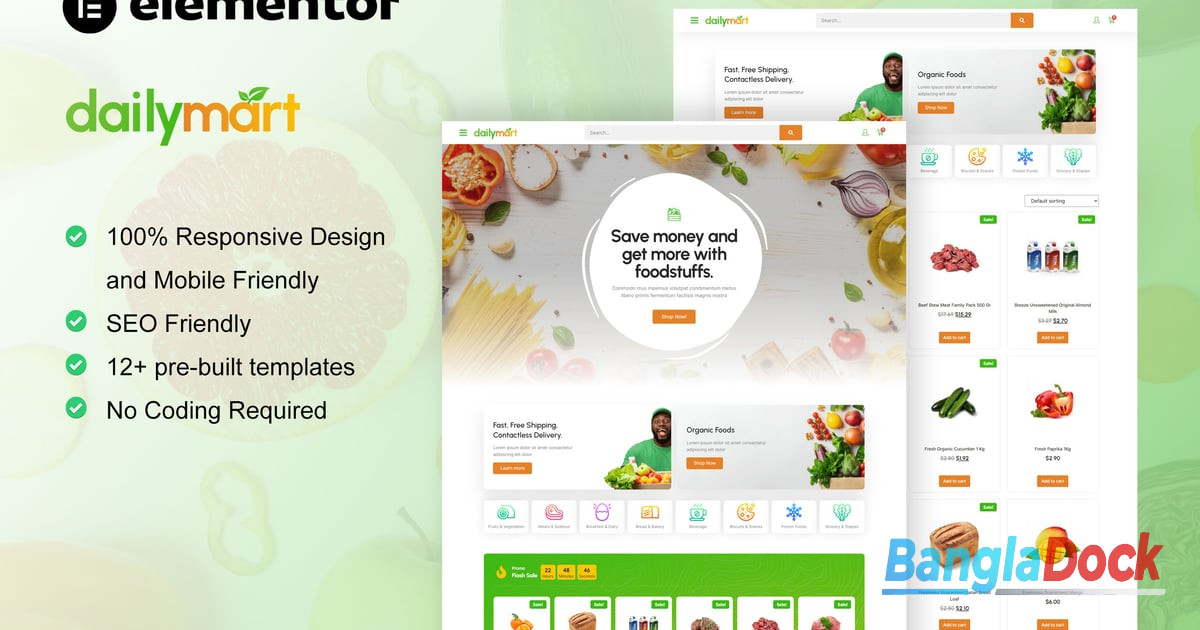
An illustrative scenario: a site builder using DailyMart – Grocery Store Elementor Template Kit may care less about source code relicensing and more about whether bundled assets and extensions align with the broader WordPress GPL ecosystem. Another illustrative scenario: a store owner automating coupon imports with WooCommerce Customer Order Coupons CSV Import Suite or building complex forms with WPForms Pro Bundle + All Addons should review plugin licensing before redistributing customized versions to clients or reselling deployment packages.
Common Mistakes to Avoid
- Assuming “open source” means all licenses work the same way
- Using GPL code inside a distributed proprietary product without legal review
- Forgetting to include license text, copyright notices, or NOTICE files
- Thinking private internal use triggers the same obligations as redistribution
- Ignoring non-code assets such as fonts, images, and bundled libraries with different licenses
- Relying on community forum advice instead of reading the actual license terms
Troubleshooting License Questions
1. Identify whether you are using, modifying, or distributing
Start with the workflow. Running software internally is different from shipping a modified plugin to customers. Many compliance mistakes happen because teams skip this first step.
2. Check whether components are actually compatible
Review each dependency license, not just the main repository license. A project may be MIT-licensed overall while bundling assets or libraries under different terms.
3. Determine whether your combination creates a derivative work
This is often the hardest question and sometimes requires legal advice. Plugin architectures, static linking, bundled distributions, and deeply integrated code can raise different issues.
4. Review source code and notice obligations before release
Before distributing builds, confirm that required license texts, attribution notices, and source code offers are handled correctly. Automating this check in CI can help.
5. Document your internal policy
Teams should maintain a simple license policy for engineers, release managers, and procurement staff. That reduces inconsistent decisions across repositories.
Best Practices for Developers and Agencies
- Choose a license early and document the reason in the repository
- Keep a software bill of materials or dependency inventory for each release
- Store third-party license texts alongside source code or release artifacts
- Separate proprietary assets from open source code where possible
- Run periodic audits for plugins, themes, libraries, and container images
- Ask counsel for edge cases involving GPL, SaaS delivery, or mixed-license bundling
How This Applies to WordPress in 2025
WordPress remains one of the most license-sensitive ecosystems because themes, plugins, templates, and derivative works are often distributed commercially while still operating inside a GPL-centered framework. That makes license literacy a business skill, not just a legal checkbox.
If you build client sites, sell digital products, or manage an agency stack, understanding GPL vs MIT vs Apache helps you avoid compliance mistakes and choose tools that match your delivery model. If you are also planning maintenance workflows, this related resource can help: WordPress Updates: Your.
Which Open Source License Should You Choose?
Choose GPL when you want distributed modifications to remain open. Choose MIT when you want the least friction for adoption and commercial reuse. Choose Apache 2.0 when you want permissive licensing plus explicit patent protections. Consider LGPL or MPL when you want something between strong copyleft and full permissiveness.
The best license is the one that matches your actual distribution model, contributor expectations, and long-term product strategy. For most teams, the right decision comes from mapping the code flow first, then matching the license to that reality rather than picking the shortest or most popular option.
Frequently Asked Questions
What is the biggest difference between GPL and MIT?
The biggest difference is reciprocity. GPL generally requires distributed derivative works to remain under GPL terms and include source code access, while MIT allows reuse in proprietary and open source projects with minimal conditions, usually just preserving the copyright notice and license text.
Is Apache 2.0 better than MIT for commercial software?
Not always. Apache 2.0 and MIT both support commercial use, but Apache 2.0 includes more explicit patent language and notice requirements. MIT is shorter and simpler. Apache 2.0 may be a better fit for larger teams or enterprise-facing projects that want clearer patent terms.
Why does GPL matter so much in the WordPress ecosystem?
WordPress is licensed under the GPL, so themes, plugins, and related products often raise licensing questions around derivative works, redistribution, and source code rights. That makes GPL understanding especially relevant for WordPress developers, agencies, product sellers, and site owners who customize or redistribute software.