
WordPress Updates: Your Practical Guide to Safe, SEO-Friendly Maintenance
Keeping a WordPress site current is not just routine admin work. Every update can affect performance, compatibility, search visibility, and security. If you manage a business site, an online store, a lead-generation landing page, or a membership platform, you need a repeatable process for core, plugin, and theme maintenance.
This guide explains how to update WordPress plugins safely, how to handle theme updates WordPress sites depend on, and how to treat every WordPress security patch as part of a larger site maintenance SEO strategy. The goal is simple: fewer surprises, faster recovery when something breaks, and a cleaner path to long-term stability.
If you source premium GPL tools for client builds or maintenance work, BanglaDock is a practical resource for clean, secure premium GPL WordPress themes and plugins.
Why WordPress Updates Matter Beyond Security
Site owners often think updates are only about patching vulnerabilities. Security is a major reason, but it is not the only one. Updates also affect how your site behaves with the latest PHP versions, browser changes, caching layers, and API integrations.
- Security: A timely WordPress security patch can close known attack paths before automated bots find them.
- Compatibility: Plugins and themes evolve alongside WordPress core, WooCommerce, page builders, and hosting environments.
- Performance: Developers frequently improve queries, assets, and code paths that influence load times.
- SEO stability: Strong site maintenance SEO habits reduce downtime, layout issues, crawl errors, and broken structured content.
- Feature reliability: Forms, checkout flows, media handling, and custom post types can fail silently when updates are ignored for too long.
What You Should Update in WordPress
WordPress Core
Core updates include feature releases, maintenance releases, and security releases. Security and maintenance releases usually deserve faster action, especially on public-facing production sites.
Plugins
When people say they need to update WordPress plugins, they usually mean applying all pending plugin releases from the dashboard. That is only part of the process. You also need to review changelogs, identify dependencies, and test critical features after the update.
Themes
Theme updates WordPress sites receive can change templates, styling, widget areas, or compatibility with page builders. If you use a child theme, confirm your customizations still override the updated parent theme correctly.
Server and PHP Environment
WordPress maintenance does not stop in the dashboard. A site running outdated PHP, database versions, or server-side caching rules can still break even when WordPress itself is fully updated.
A Safe Workflow to Update WordPress Plugins and Themes
A reliable update routine is far better than rushing through notifications in wp-admin. Use this workflow for client sites and your own projects.
1. Take a Fresh Backup
Create a full backup before any meaningful update session. That includes files and database. If your host provides snapshots, verify the restore point exists and is recent. For ecommerce or membership sites, consider putting the site in maintenance mode briefly if checkout or account activity is high.
2. Review Changelogs
Check what changed before you click update. Look for bug fixes, security notes, deprecated functions, database changes, and known compatibility issues. Large version jumps deserve extra caution.
3. Use a Staging Site First
For business-critical sites, test updates on staging before production. This is especially useful when you update WooCommerce, page builders, payment gateways, multilingual plugins, or heavily customized themes.
4. Update in a Smart Order
A common approach is:
- Update WordPress core if needed
- Update plugins with known security fixes first
- Update dependent plugins next
- Apply theme updates after plugin compatibility is confirmed
There is no universal order for every stack, but avoid bulk-updating everything without checking dependencies.
5. Test Critical User Paths
After updates, verify the pages and actions that matter most:
- Homepage and primary landing pages
- Navigation menus and mobile layout
- Contact forms and email delivery
- Product pages, cart, and checkout
- Login, account, and membership restrictions
- Search, filters, and custom post type archives
If your site uses advanced forms, a maintained tool such as WPForms Pro Bundle + All Addons for advanced WordPress form workflows should be tested carefully after any plugin maintenance cycle.
How Updates Affect SEO and Site Performance
There is a direct connection between updates and search visibility. Search engines do not reward old software, but they do react to the issues outdated software tends to create.
Site Maintenance SEO in Practice
Site maintenance SEO is the discipline of keeping the technical foundation of a site stable enough for crawling, indexing, and user experience. Updates support that work in several ways:
- Preventing downtime: Vulnerable or incompatible code can trigger fatal errors and 5xx pages.
- Protecting Core Web Vitals: Efficient assets and cleaner code can reduce unnecessary front-end weight.
- Preserving layout integrity: Broken CSS or JavaScript from old plugins can cause layout shifts and interaction problems.
- Maintaining indexable content: Update-related failures in custom templates may hide important content from crawlers.
- Reducing spam and hacks: A compromised site can inject malicious pages, links, or redirects that damage trust and rankings.
Real-World Use Cases for a Better Update Strategy
Lead Generation Sites
A local business site often depends on forms, page builders, and analytics integrations. If you update WordPress plugins without testing form submission and email routing, leads can quietly disappear. That is why post-update checks should include form success messages, inbox delivery, and CRM integrations.
WooCommerce Stores
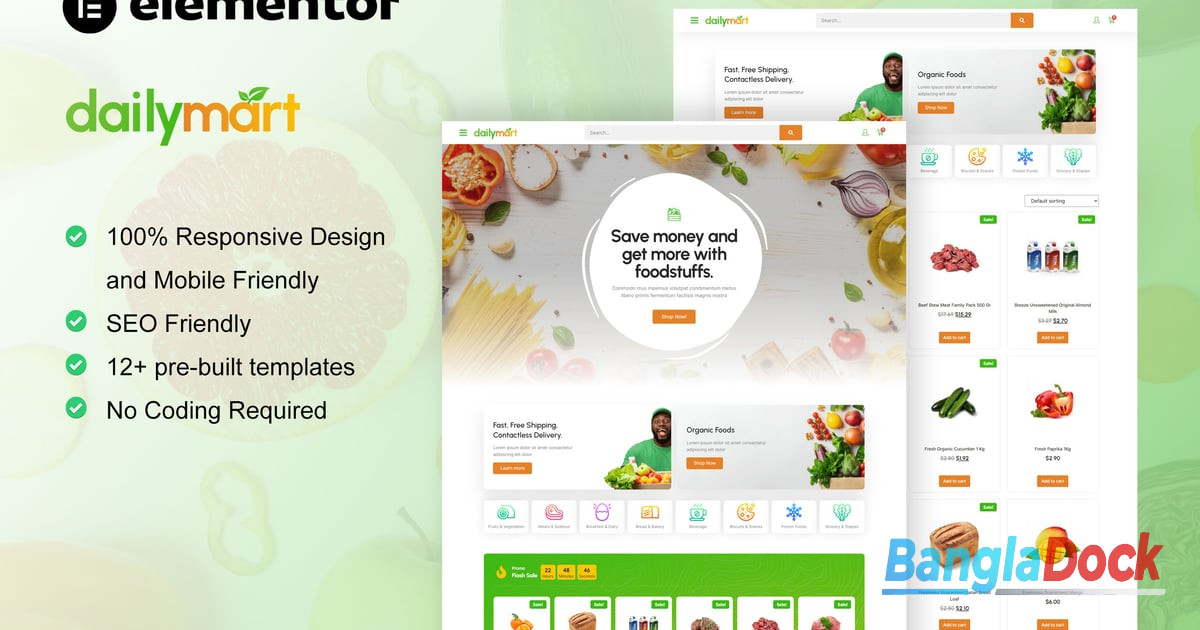
Online stores need extra caution with theme updates WordPress ecommerce templates rely on. Template overrides, shipping logic, checkout scripts, and payment gateways can all be affected. If you run a niche store design, such as the DailyMart – Grocery Store Elementor Template Kit for WooCommerce-style storefront builds, test category layouts, cart flows, and mobile product pages after updates.
Contract and Approval Workflows
Sites handling agreements, onboarding, or internal approvals often depend on digital signature functionality. In those cases, update windows should include document creation, signing flows, and email notifications. For example, users relying on WP E-Signature – Bundle with all addons for WordPress document signing should validate the full signature process after plugin and core updates.
Common Mistakes to Avoid
- Updating directly on a live high-traffic site: This increases the chance of visible errors during customer sessions.
- Ignoring minor security releases: A small version number can still include a serious WordPress security patch.
- Bulk-updating without review: This makes it harder to identify which plugin caused a conflict.
- Skipping backups: Recovery becomes slower and riskier when rollback options are unclear.
- Forgetting custom code: Snippets in child themes, mu-plugins, or custom plugins may break after updates.
- Assuming the front page is enough testing: Problems often appear in forms, checkout pages, gated content, or admin workflows.
Troubleshooting After a Failed Update
Even with a careful process, update conflicts happen. The key is to diagnose quickly and methodically.
Signs Something Broke
- White screen or fatal error message
- Missing styling or broken layout
- JavaScript features stop responding
- 404 errors on custom content
- Checkout, login, or form submission failures
- Admin dashboard becomes inaccessible
Diagnostic Steps
- Enable debugging on staging: Use WordPress debug logging to capture PHP notices and fatal errors.
- Check server error logs: Hosting logs often reveal memory issues, deprecated functions, or plugin conflicts.
- Deactivate recent changes selectively: Roll back or disable the most recently updated plugin first.
- Clear all caches: Purge plugin cache, server cache, CDN cache, and browser cache before assuming the update failed.
- Inspect console errors: Browser developer tools can expose blocked scripts or dependency failures.
- Review template overrides: Theme files that override plugin templates may need adjustment after major releases.
If you need a deeper diagnostic process, the article Master WordPress Debugging: Fix is a useful next read for structured troubleshooting.
Best Practices for Ongoing WordPress Maintenance
- Schedule maintenance windows: Pick low-traffic times for production updates.
- Keep a change log: Note what was updated, when, and what was tested.
- Use staging for complex sites: This is standard practice for stores, memberships, LMS sites, and multilingual builds.
- Prioritize security fixes: Apply any WordPress security patch as soon as your backup and staging process is ready.
- Audit unused plugins and themes: Remove what you no longer use to reduce attack surface and maintenance load.
- Test SEO-critical pages: Check canonical tags, metadata output, sitemaps, redirects, and structured content generated by plugins.
- Watch plugin sourcing: Use reputable providers and understand licensing. For context, read WordPress GPL License Explained: What It Means and Why It Matters in 2025.
Should You Enable Automatic Updates?
Automatic updates can be helpful, but they are not a full maintenance strategy. They work best when you understand the risk profile of the site.
For brochure sites with a lean plugin stack, automatic minor core updates and selected plugin auto-updates can be reasonable. For revenue-generating or highly customized sites, a supervised workflow is usually safer. You want control over timing, rollback, and testing.
An effective compromise is to automate low-risk updates while manually reviewing major plugin releases, page builder changes, theme updates, and anything tied to checkout, forms, memberships, or custom code.
Build a Repeatable Update Policy
The best maintenance workflow is the one your team can follow consistently. Document your process for backups, staging, update order, testing, rollback, and reporting. That turns WordPress updates from a reactive task into a stable operational routine.
When you consistently update WordPress plugins, review theme updates WordPress sites depend on, and treat every WordPress security patch as part of broader site maintenance SEO, you reduce technical debt and protect the business value of the site.
WordPress remains flexible because of its ecosystem. Keeping that ecosystem current is what preserves speed, security, and trust over time.
Frequently Asked Questions
How often should I update WordPress plugins and themes?
Check for updates at least weekly on standard business sites, and more often on high-traffic or ecommerce sites. Security-related updates should be reviewed as soon as possible. A good routine is to batch normal maintenance into scheduled windows while still fast-tracking urgent security patches.
Is it safe to use automatic updates for WordPress plugins?
It can be safe for low-risk plugins on simpler sites, especially when you have reliable backups and monitoring. For stores, membership platforms, heavily customized themes, or plugins tied to checkout, forms, and user accounts, manual review and staging tests are usually the better choice.
What should I do if a plugin update breaks my WordPress site?
Start with a recent backup or staging copy, then identify the last updated plugin or theme. Check debug logs, server logs, browser console errors, and caching layers. If needed, disable the conflicting plugin, restore the previous version, and test again before applying a permanent fix or replacement.