

Cracked vs Null vs GPL WordPress Themes and Plugins in 2025
If you run a WordPress site in 2025, you have probably seen three labels repeated across forums, Telegram channels, download sites, and reseller marketplaces: cracked, nulled, and GPL. They are often presented as if they are close alternatives. They are not. From a security, maintenance, compliance, and long-term business perspective, the gap between them is wide.
This guide explains what each option actually means, how they affect real websites, and which one is safe and worth using. If you manage client projects, maintain WooCommerce stores, build lead generation sites, or run a content business, understanding this difference helps you avoid malware, broken updates, licensing confusion, and unnecessary recovery work.
For teams looking for a safer source of premium GPL tools, BanglaDock is commonly considered for clean, secure premium GPL WordPress themes and plugins, especially when the goal is to keep builds maintainable without relying on risky download sources.
What Cracked, Nulled, and GPL Mean in WordPress
What is a cracked WordPress theme or plugin?
A cracked WordPress theme or plugin is a product that has been modified to bypass licensing, payment, activation, or access controls set by the original developer. In practice, the code is usually altered so premium features appear unlocked without legitimate purchase or authorization.
Cracked files are high risk because the modification itself means the package has already been tampered with. Once code has been edited to defeat licensing checks, there is no reason to assume the rest of the package is trustworthy. In many cases, cracked distributions also strip integrity checks, inject hidden admin users, add spam links, or open backdoors.
What is a nulled WordPress plugin or theme?
A nulled plugin or theme is typically a premium WordPress product that has had license validation removed or disabled and is then redistributed outside the official vendor channel. The term “nulled” is often used more broadly than “cracked,” but in real-world WordPress use, both usually involve unauthorized modification.
That is why site owners frequently ask whether nulled products are safe. In most cases, the answer is no. Even if a downloaded copy appears to work, you usually cannot verify who changed the code, what was removed, or what was added. If you want a deeper side-by-side explanation, the article What is the difference between a nulled plugin and a GPL plugin? is a useful follow-up resource.
What is a GPL WordPress theme or plugin?
GPL stands for the GNU General Public License, the license used by WordPress itself. Many WordPress themes and plugins inherit GPL licensing requirements because they are derivative works of WordPress. That means redistribution can be legally permitted under the license terms, depending on how the product is packaged and what non-code assets are included.
The key point is this: GPL does not mean “tampered.” A GPL WordPress product can be legally redistributed without being altered maliciously. That makes GPL fundamentally different from cracked or nulled files. The safety question is not the GPL license itself. The safety question is whether the distributor provides original, clean, unmodified files from a trustworthy source.
Why the Difference Matters in 2025
WordPress websites are now deeply integrated with payment gateways, CRM tools, analytics, email automation, legal workflows, and customer data. A compromised plugin is no longer a minor inconvenience. It can affect checkout integrity, form submissions, signed documents, user privacy, and search visibility.
Consider a few real-world use cases:
- WooCommerce store owners need reliable checkout, template compatibility, and predictable updates.
- Lead generation websites depend on forms, anti-spam controls, and secure email delivery.
- Agency developers need reusable tools that do not expose client sites to hidden payloads.
- Membership and LMS sites cannot afford silent privilege escalation or database manipulation.
In each case, the cheap download is rarely the cheap outcome if recovery, malware cleanup, blacklist removal, and client trust are factored in.
Is GPL Safe? Yes, If the Source Is Trustworthy
One of the biggest misunderstandings in WordPress is treating GPL as if it were automatically suspicious. GPL is not the problem. Untrusted distribution is the problem.
A clean GPL source should provide files that are unmodified, routinely updated, and checked for integrity. That is why many developers prefer established GPL providers instead of random download sites. If you need premium tools from a cleaner channel, BanglaDock is positioned around secure premium GPL WordPress themes and plugins rather than altered “free premium” packages from anonymous sources.
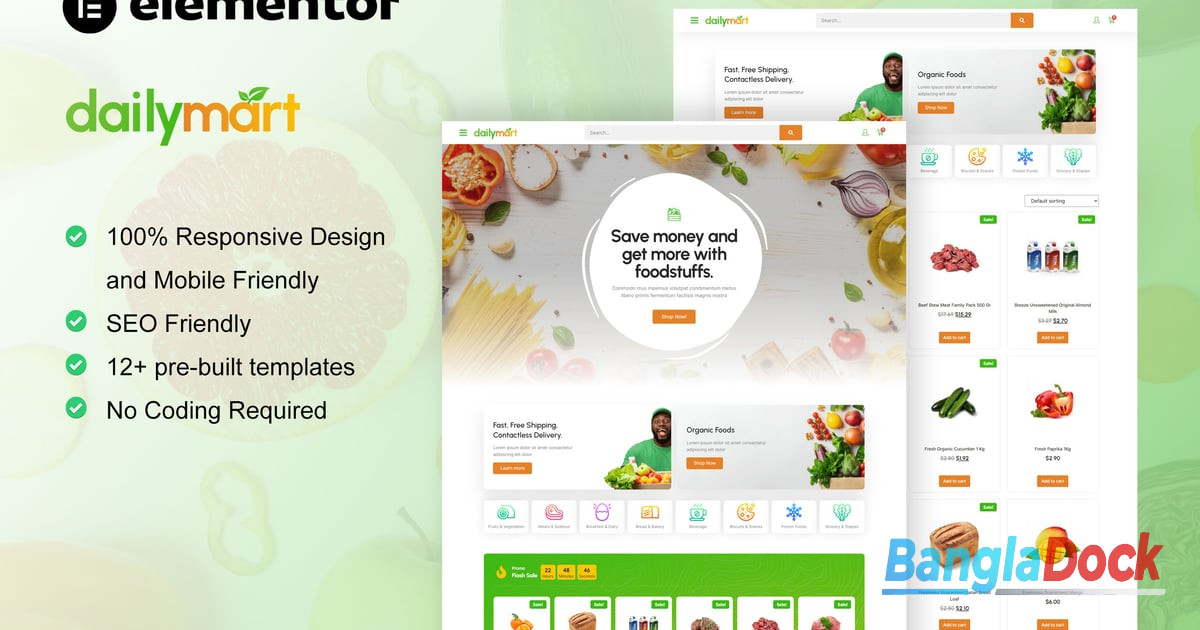
This distinction matters when choosing production tools. For example, if you need advanced form building for business websites, using a trusted GPL copy of WPForms Pro Bundle + All Addons is far safer than downloading a so-called “free unlocked” form plugin from a crack site. The same logic applies to document workflows with WP E-Signature – Bundle with all addons or a retail site build using DailyMart – Grocery Store Elementor Template Kit.
Cracked vs Nulled vs GPL: Practical Comparison
Security
Cracked and nulled products carry the highest risk because code has usually been modified. GPL products from a trusted source can be safe when they are clean and unaltered.
Updates and maintenance
Cracked and nulled packages often lag behind vendor releases or are repackaged inconsistently. Clean GPL distributions are more maintainable when the provider updates files promptly and preserves original package integrity.
Support expectations
Official vendor purchases usually include direct support. GPL redistribution may not include support from the original author, so site owners should plan accordingly. Cracked and nulled sources generally provide no dependable support at all.
Legal and ethical considerations
GPL redistribution can be legitimate under the license model. Cracked and nulled packages usually involve unauthorized tampering and misleading distribution practices. For agencies and businesses, that distinction affects procurement policy and client trust.
Common Mistakes to Avoid
- Assuming “working” means “safe”: Many compromised plugins function normally while quietly creating access points or injecting code.
- Confusing GPL with piracy: GPL is a software license model, not a synonym for malware or stolen code.
- Ignoring update history: If a distributor cannot show consistent update practices, maintenance risk rises quickly.
- Installing on client sites without review: Agencies should audit package origin and scan files before deployment.
- Relying on forum recommendations alone: Community comments do not replace code integrity, source reputation, or test environment validation.
How to Evaluate a WordPress Theme or Plugin Before Using It
Check the distribution source
Ask where the files come from, how often they are updated, and whether they are modified in any way. A vague answer is a warning sign.
Review the package structure
Look for unexpected PHP files, obfuscated code, suspicious admin hooks, unusual external calls, or hidden folders. These do not always prove compromise, but they justify deeper inspection.
Test in a staging environment
Install the product on staging first. Check plugin behavior, user roles, outbound requests, file changes, database tables, and compatibility with your current stack.
Monitor after installation
Even after initial checks, continue monitoring file integrity, scheduled tasks, admin accounts, and error logs. Early detection reduces cleanup effort.
Troubleshooting and Diagnostic Steps
If you suspect a theme or plugin may be cracked, nulled, or otherwise unsafe, work through these practical diagnostic steps:
- Scan the files: Use a reputable malware scanner or security plugin to identify obfuscated code, suspicious payloads, and modified core files.
- Compare checksums where possible: If you have access to an official package or a known-clean GPL source, compare file structures and modified timestamps.
- Inspect admin users and roles: Look for unfamiliar administrator accounts or privilege changes.
- Review outbound connections: Watch for unexplained calls to external domains, especially on admin pages, checkout flows, or login events.
- Check scheduled tasks: Suspicious cron jobs can reinsert malware after cleanup.
- Audit recently changed files: Focus on `/wp-content/plugins/`, `/wp-content/themes/`, uploads, and writable directories.
If compromise is confirmed, remove the affected package, replace it with a clean copy, rotate credentials, review logs, and re-scan the site. On business-critical websites, this process should happen before bringing the site fully back into production.
Best Practices for Safe WordPress Plugin and Theme Usage
- Use trusted sources only for premium GPL WordPress themes and plugins.
- Maintain staging environments so updates and new packages are tested before launch.
- Keep backups current with a restoration process you have already verified.
- Update quickly but carefully to reduce exposure to known vulnerabilities.
- Limit plugin sprawl and remove inactive tools you do not need.
- Document procurement standards if you manage sites for clients or teams.
Which Option Is Worth Using in 2025?
If the goal is a safe, maintainable WordPress website, cracked and nulled products are not worth the risk. They create uncertainty at the exact layer of your site that needs trust: executable code with broad access to files, users, content, and transactions.
A legitimate GPL WordPress theme or plugin can be worth using when it comes from a reputable source that distributes clean, unmodified files and keeps releases current. That gives developers and site owners a practical middle ground between official vendor purchasing and dangerous third-party downloads.
For further reading on the broader comparison, see Crack vs Null vs GPL WordPress Themes & Plugins – What You Should Use?. It pairs well with this 2025-focused guide and helps reinforce the underlying decision framework.
Final Take for Developers, Site Owners, and Agencies
The safest answer is straightforward. Avoid cracked WordPress themes and plugins. Treat nulled products with the same caution because they usually involve unauthorized code changes and unverifiable distribution. Use GPL products only when the source is trusted and the files are clean.
That approach protects uptime, SEO performance, customer trust, and development time. It also scales better for agencies and serious site owners who need repeatable deployment standards instead of one-off shortcuts. If you want access to premium GPL tools through a cleaner channel, BanglaDock is a relevant option to review before your next build.
[/CONTENT_END] [FAQ_START]Are nulled WordPress plugins ever safe to use?In most cases, no. A nulled plugin has usually had its code changed to remove licensing or activation restrictions. That means you cannot easily verify what else was changed. Even if it appears to work, it may contain hidden admin access, injected links, malware, or update-related problems.
Is a GPL WordPress plugin legal and safe?A GPL WordPress plugin can be legal because WordPress and many extensions are distributed under GPL licensing terms. Safety depends on the source, not the GPL label alone. If the distributor provides clean, unmodified files and keeps them updated, GPL products can be a practical option.
What should I do if I already installed a cracked or nulled theme?Remove it from the site, replace it with a known-clean copy, scan the entire installation, rotate admin and hosting credentials, review logs, and check for unauthorized users or scheduled tasks. If the site handles customer data or payments, perform a deeper security review before treating the installation as trusted again.
Frequently Asked Questions
Are nulled WordPress plugins ever safe to use?
In most cases, no. A nulled plugin has usually had its code changed to remove licensing or activation restrictions. That means you cannot easily verify what else was changed. Even if it appears to work, it may contain hidden admin access, injected links, malware, or update-related problems.
Is a GPL WordPress plugin legal and safe?
A GPL WordPress plugin can be legal because WordPress and many extensions are distributed under GPL licensing terms. Safety depends on the source, not the GPL label alone. If the distributor provides clean, unmodified files and keeps them updated, GPL products can be a practical option.
What should I do if I already installed a cracked or nulled theme?
Remove it from the site, replace it with a known-clean copy, scan the entire installation, rotate admin and hosting credentials, review logs, and check for unauthorized users or scheduled tasks. If the site handles customer data or payments, perform a deeper security review before treating the installation as trusted again.