
Crack vs Null vs GPL WordPress Themes & Plugins: What Should You Actually Use?
If you run a WordPress site long enough, you will eventually see the same three labels again and again: cracked, nulled, and GPL. They often appear on download sites, in Facebook groups, in Telegram channels, and in conversations between freelancers trying to cut setup costs. The problem is that these terms are not interchangeable, and choosing the wrong one can expose your website to malware, legal confusion, update problems, and support headaches.
This guide explains the practical difference between cracked, nulled, and GPL WordPress themes and plugins, how each option affects security and maintainability, and what developers, agencies, and site owners should use in real projects. If you want the short version: avoid cracked and nulled items, and use legitimate GPL sources such as BanglaDock for clean, secure premium GPL WordPress themes and plugins.
What Do “Cracked,” “Nulled,” and “GPL” Mean in WordPress?
Cracked WordPress themes and plugins
A cracked WordPress theme or plugin is a modified copy of commercial software designed to bypass licensing, activation checks, or usage restrictions. The code has usually been altered so the product appears “unlocked” without a valid purchase key. In practice, this is one of the riskiest categories because it almost always involves tampering with the original package.
That tampering may remove protections, inject hidden code, disable update routines, or add backdoors. Even if a cracked plugin appears to work at first, you cannot treat it as a reliable production dependency.
Nulled WordPress themes and plugins
A nulled theme or plugin is typically a redistributed premium product with licensing checks removed or bypassed. In WordPress discussions, “nulled” often overlaps with “cracked,” and many people use the terms casually as if they mean the same thing. In real-world usage, both usually refer to altered premium code distributed outside the original vendor channel.
Some sites claim their nulled products are “clean” or “virus free.” That claim is hard to verify unless you fully audit the files, compare them with original releases, and monitor runtime behavior. Most site owners and even many developers do not have the time to do that package by package.
GPL WordPress themes and plugins
GPL stands for the GNU General Public License, the license that governs WordPress itself. Because WordPress is GPL-licensed, many themes and plugins that interact with it are also distributed under GPL terms, either fully or at least for the PHP code. That is why legitimate GPL redistribution exists in the WordPress ecosystem.
GPL does not mean “pirated.” It does mean the software can be redistributed under the license terms. What matters is how it is redistributed: whether the files are original, unmodified, safe, current, and transparently sourced. If you need a plain-language legal background, Understanding GPL Licenses: A Complete Guide for Beginners is a useful follow-up read.
Why Cracked and Nulled Products Are a Bad Idea
Security risk is the biggest issue
The main reason developers avoid cracked or nulled WordPress themes and plugins is security. A modified ZIP file can contain obfuscated PHP, hidden admin users, remote code execution vectors, spam injectors, crypto miners, or outbound calls to attacker-controlled servers. Sometimes the malicious code is not obvious; it may activate only after installation, after login, or on a schedule via WordPress cron.
This risk becomes worse on client websites, WooCommerce stores, membership platforms, and multisite setups where one bad plugin can affect transactions, customer data, SEO health, and server reputation.
Updates and maintenance become unreliable
WordPress sites are living systems. Core updates, PHP version changes, plugin conflicts, and evolving APIs mean your stack needs regular maintenance. Cracked and nulled packages often break the normal update path. Without trusted updates, you are stuck with aging code and manual replacements.
That also makes debugging harder. When a plugin fails, you cannot be sure whether the bug came from the original vendor or from the unauthorized modifications added to the redistributed copy.
Support disappears when you need it most
Premium plugin vendors usually provide documentation, compatibility notes, changelogs, and support channels. With cracked or nulled software, you lose that safety net. If a checkout form fails, a template kit imports incorrectly, or a signing workflow stops working, you are left to investigate everything yourself.
For example, if you need advanced form workflows, conditional logic, or addon compatibility, using a legitimate package such as WPForms Pro Bundle + All Addons for secure WordPress form building is far more maintainable than relying on a tampered copy from an unknown source.
When GPL Is the Right Choice
GPL WordPress themes and plugins are the right choice when they come from a trustworthy distributor or the original vendor. That makes GPL a practical option for freelancers, agencies, developers building staging sites, and site owners who want legal access to GPL-licensed products without using unsafe downloads.
The key distinction is simple: GPL redistribution can be legitimate; cracked and nulled modification is not a safe deployment practice.
Real-world use cases for legitimate GPL downloads
- Developers testing multiple page builders, forms, or WooCommerce workflows in local or staging environments
- Agencies building client prototypes before finalizing the site stack
- Small businesses launching faster with proven premium tools while keeping the codebase maintainable
- Site owners who need access to clean files but do not want to touch risky download sites
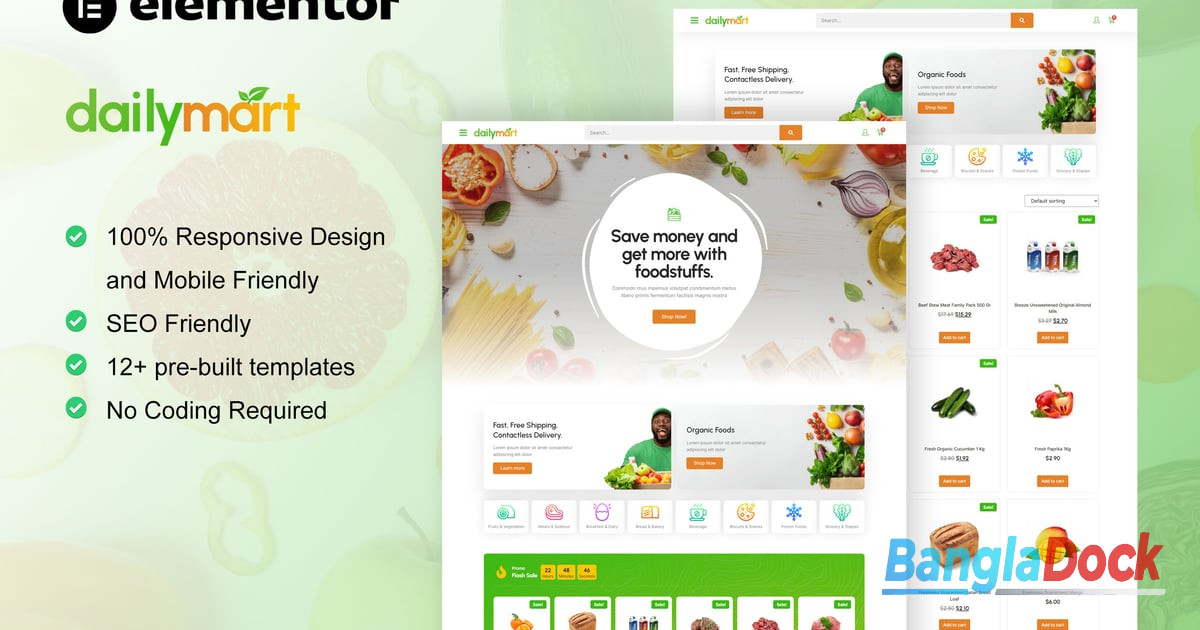
An illustrative example: a grocery business building a fast storefront with Elementor may choose DailyMart – Grocery Store Elementor Template Kit for WordPress eCommerce layouts from a trusted GPL source instead of hunting for a nulled template bundle. The result is less time spent sanitizing files and less risk during launch.
How to Judge a GPL Download Source
Not every site claiming to offer GPL products deserves your trust. A distributor should be transparent about file handling, update practices, source validation, and product integrity. If the website hides basic details, makes exaggerated promises, or looks like a churn-and-burn download portal, take that as a warning sign.
A strong starting point is How can I tell whether a GPL download source is trustworthy?, which covers the signals to examine before you install anything on a live site.
Practical checks before installing any GPL product
- Verify the distributor has a real brand presence, support path, and clear product pages
- Check whether the files are described as clean, unmodified, and regularly updated
- Scan the ZIP and extracted files with local security tools before installation
- Test first on a local or staging environment, not on production
- Review installed plugin behavior, unexpected admin users, scheduled tasks, and outbound requests
Common Mistakes to Avoid
Assuming “GPL” means every source is safe
This is one of the most common misunderstandings. The license may allow redistribution, but that does not certify the distributor’s hygiene. A GPL label alone does not guarantee clean files.
Installing directly on a live website
Even legitimate products should be tested in staging first. That is basic operational discipline. It protects your uptime, your data, and your rollback options.
Ignoring update strategy
Before you install a theme or plugin, ask how you will update it, how often the source refreshes releases, and how you will track changelogs. This matters for security patches and compatibility fixes.
Choosing on price alone
The cheapest source often becomes the most expensive once you account for incident response, cleanup, lost rankings, or client trust. A trustworthy GPL provider is not just selling files; it is reducing risk.
Troubleshooting and Diagnostic Steps
If you suspect a theme or plugin came from a risky source, treat it as a potential compromise until you verify otherwise.
Signs a cracked or nulled plugin may be causing trouble
- Unexpected redirects, popups, or spam links appearing on the front end
- New admin accounts you did not create
- Modified core files or unfamiliar PHP files in uploads, cache, or plugin folders
- Disabled update notifications for a plugin that should normally update
- Performance drops or unexplained outbound traffic
Step-by-step diagnostic workflow
- Put the site in maintenance mode if user safety may be affected
- Take a full backup of files and database for forensic review
- Compare suspect plugin or theme files against a known clean copy
- Review server logs, plugin folders, cron events, and user accounts
- Replace the suspect package with a verified clean version from a trusted source
- Rotate passwords and review file permissions after cleanup
If your site depends on legal document workflows, replacing a questionable download with a verified tool such as WP E-Signature – Bundle with all addons for secure digital signature workflows is a safer path than trying to keep a modified copy alive.
Best Practices for Using WordPress Themes and Plugins Safely
- Use original vendors or reputable GPL distributors with transparent sourcing
- Keep a staging environment for every production site
- Maintain a plugin inventory with versions, sources, and renewal notes
- Apply updates regularly and monitor changelogs for breaking changes
- Run security scans and file integrity checks as part of routine maintenance
- Remove unused themes and plugins instead of leaving them installed
So, What Should You Use?
If you are choosing between cracked, nulled, and GPL WordPress themes and plugins, the answer is straightforward:
- Do not use cracked products because they are altered to bypass licensing and carry serious security and maintenance risk
- Do not use nulled products from random download sites because you cannot reasonably trust file integrity
- Use legitimate GPL products from trusted sources or buy directly from the original developers
For most site owners, freelancers, and agencies, a trusted GPL source provides the best balance of flexibility, cost control, and operational safety. If you need premium WordPress tools without stepping into the cracked or nulled ecosystem, BanglaDock is a sensible place to start.
The real decision is not just about price or access. It is about whether you want a WordPress stack you can maintain, update, audit, and trust over time. That is why legitimate GPL wins and why cracked or nulled downloads rarely belong on any serious website.
Frequently Asked Questions
Is it legal to use GPL WordPress themes and plugins from a third-party source?
In many cases, yes, because WordPress and much of its ecosystem use the GPL, which permits redistribution of GPL-licensed code. The legal and practical issue is not the GPL itself but whether the source is trustworthy, transparent, and providing clean, unmodified files. You should still review the product licensing details, especially for bundled assets like images, fonts, or third-party libraries that may have separate terms.
What is the difference between a nulled plugin and a GPL plugin?
A nulled plugin is usually a premium plugin that has been modified to remove or bypass licensing restrictions, which creates major security and maintenance concerns. A GPL plugin is software distributed under GPL terms and may be legally redistributed when done properly. The difference comes down to file integrity, licensing treatment, and whether the distributor is offering the original code cleanly rather than tampering with it.
How can I safely test a GPL WordPress theme or plugin before using it live?
Install it first on a local development site or staging environment, not on your production website. Scan the ZIP file, inspect the extracted files for obfuscated code or unusual PHP patterns, confirm the plugin behaves as documented, and review whether it introduces new admin users, cron jobs, or unexpected remote requests. If the source is reputable and the package passes your checks, you can then deploy it with a backup and rollback plan in place.