

Why Choosing the Right WordPress Theme Matters for Your Store
Building a digital marketplace or grocery store on WordPress requires more than just installing WooCommerce and adding products. The theme you select serves as the architectural foundation of your entire eCommerce operation. A poorly coded theme can slow down your checkout process, conflict with essential plugins, and create a frustrating user experience that drives customers away.
Whether you are launching a multi-vendor digital marketplace selling software downloads or a local grocery delivery service, the right theme integrates seamlessly with WooCommerce, supports multivendor plugins like Dokan or WCFM, and provides the specialized layouts your business model demands. If you are just getting started, our guide on Start Your WordPress Website: A covers the foundational setup process. For those newer to the platform, the WordPress for Beginners resource offers valuable context.
Key Features to Evaluate Before Choosing a Theme
Before diving into specific theme recommendations, you need to understand the technical criteria that separate a professional eCommerce theme from a generic blog template dressed up with shop styling.
WooCommerce and Multivendor Compatibility
The theme must declare explicit compatibility with the current version of WooCommerce. For digital marketplaces, you need themes tested with popular multivendor plugins. This ensures vendor dashboards, product submission forms, and commission calculations display correctly without CSS conflicts.
Performance and Core Web Vitals
Google measures your store's speed using Core Web Vitals. Themes bloated with unnecessary JavaScript libraries, render-blocking CSS, and unoptimized image loading will fail these metrics. Look for themes that support lazy loading, critical CSS generation, and minimal DOM node counts.
Specialized Layouts for Digital and Physical Goods
Grocery stores need quick-view modals, add-to-cart from category pages, and delivery slot selectors. Digital marketplaces require download button styling, license key display areas, and vendor rating widgets. Your theme should offer these layout options out of the box.
Top 10 WordPress Themes for Digital Marketplaces and Grocery Stores
1. Martfury - WooCommerce Marketplace Theme
Martfury stands out as one of the most comprehensive marketplace themes available. It supports multi-vendor configurations out of the box, with dedicated layouts for vendor stores, product comparison tables, and advanced search filtering. The theme works with Dokan, WCFM, and WC Vendors, making it a solid choice for digital product marketplaces where multiple sellers offer software, plugins, or design assets.
2. DailyMart - Grocery Store Elementor Template Kit
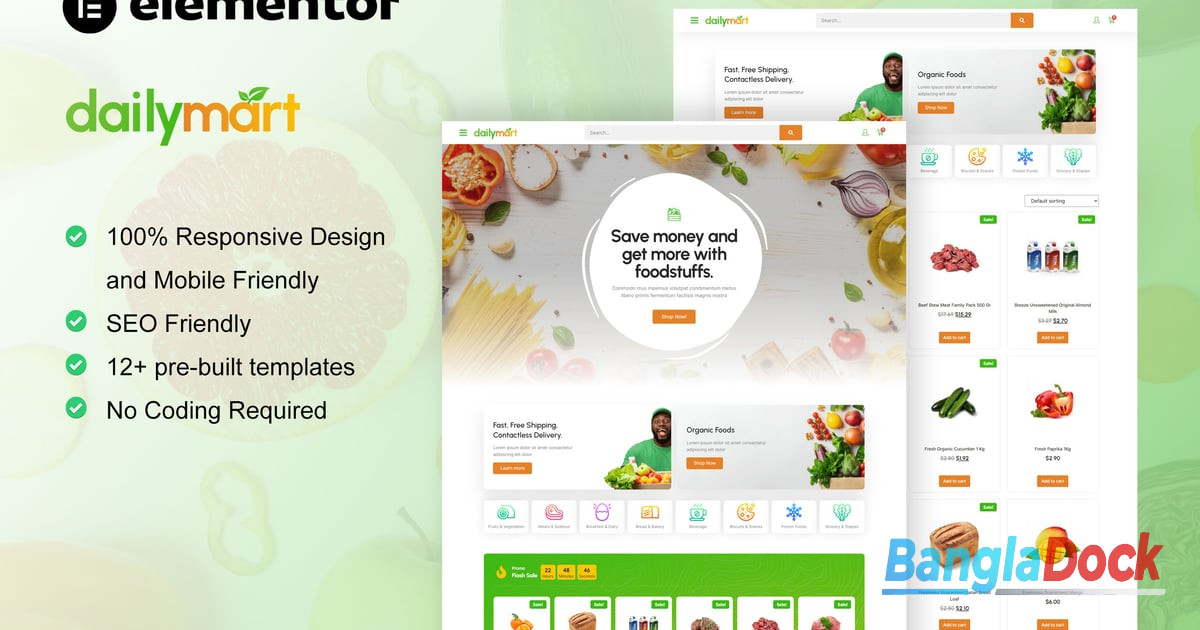
For grocery store owners who prefer Elementor's visual editing workflow, DailyMart – Grocery Store Elementor Template Kit provides specialized grocery layouts including product grids optimized for perishable goods, delivery time slot displays, and category-based navigation that mirrors how physical grocery aisles are organized. The kit includes pre-built pages for fresh produce, dairy, frozen foods, and household essentials.
3. Electro - Electronics Store WooCommerce Theme
While originally designed for electronics retailers, Electro works exceptionally well for digital marketplaces selling tech products, software licenses, and digital downloads. Its product comparison feature and advanced filtering system help customers evaluate multiple digital products side by side before making a purchase decision.
4. Flatsome - Multi-Purpose WooCommerce Theme
Flatsome remains a top choice for store owners who want flexibility. The built-in UX Builder allows you to create custom layouts for both digital downloads and physical grocery products without touching code. Its lightweight architecture keeps page load times fast, which is critical for mobile shoppers browsing grocery catalogs on cellular connections.
5. Woodmart - WooCommerce Theme
Woodmart offers over seventy pre-built demos, several of which are designed specifically for grocery stores and digital marketplaces. The theme includes advanced AJAX filtering, which lets customers narrow down grocery products by dietary restrictions, brand, or price range without page reloads. This creates a shopping experience similar to native mobile applications.
6. Basel - eCommerce WordPress Theme
Basel provides clean, minimalist layouts that work well for digital marketplaces where product imagery and descriptions need to take center stage. The theme supports WooCommerce variations beautifully, making it suitable for grocery stores that sell products in multiple sizes, weights, or packaging options.
7. Shopkeeper - eCommerce WP Theme
Shopkeeper focuses on conversion optimization. Its checkout layout minimizes distractions, and the product page templates include built-in trust signals, urgency timers, and social proof displays. For digital marketplaces, these features help increase download purchase completion rates.
8. XStore - WooCommerce Theme
XStore includes over one hundred demos and works with both Elementor and WPBakery. The theme offers specialized layouts for food delivery and grocery stores, including features like order scheduling and pickup location selection. Its compatibility with WooCommerce Subscriptions also makes it viable for digital marketplaces offering recurring software licenses.
9. Wcfm Marketplace Compatible Themes
If you are building a multivendor marketplace, themes explicitly tested with WCFM Marketplace provide the most stable experience. These themes include vendor registration forms, commission dashboards, and order management interfaces that integrate cleanly with WooCommerce core functionality.
10. Custom Builds with Starter Themes
For developers who need complete control, building a custom theme using a starter like Underscores or Sage, combined with WooCommerce blocks and a page builder, offers maximum flexibility. This approach requires more development time but eliminates the bloat that comes with multipurpose themes. You can source clean, secure premium GPL WordPress themes and plugins from BanglaDock to accelerate this process.
Real-World Technical Use Cases
Use Case 1: Local Grocery Delivery Service
A local grocer needs same-day delivery scheduling, postal code validation for delivery zones, and product substitution preferences. Using a theme like Woodmart combined with WooCommerce Delivery Slots plugins creates a system where customers select a delivery window, confirm their address falls within the service area, and specify substitution instructions for out-of-stock items.
Use Case 2: Digital Software Marketplace
A marketplace selling WordPress plugins, HTML templates, and stock photos needs vendor onboarding, automated license key delivery, and commission splitting. Martfury paired with Dokan and a digital download manager plugin handles this workflow. When importing large product catalogs, the WooCommerce Customer Order Coupons CSV Import Suite streamlines bulk data migration without manual entry errors.
Use Case 3: Subscription-Based Digital Services
For marketplaces offering subscription-based design services or ongoing software access, you need themes compatible with WooCommerce Subscriptions. XStore and Flatsome both handle subscription product pages well, displaying renewal information, billing schedules, and account management interfaces cleanly.
Common Mistakes to Avoid
- Choosing themes based solely on appearance: A beautiful demo means nothing if the theme loads slowly or conflicts with essential WooCommerce extensions. Always test the theme on a staging environment with your actual plugin stack before committing.
- Ignoring mobile checkout optimization: Over sixty percent of grocery orders come from mobile devices. If your theme's mobile checkout requires excessive scrolling or form field zooming, abandonment rates will spike.
- Overloading with unnecessary demo content: Importing every demo page and then deleting unused ones leaves orphaned data in your database. Import only the specific layouts you need.
- Neglecting multivendor plugin compatibility testing: Just because a theme works with WooCommerce does not mean it works with Dokan, WCFM, or WC Vendors. Check the theme documentation for explicit multivendor plugin support statements.
- Skipping legal compliance features: Digital marketplaces often need terms of service acceptance, vendor agreements, and digital signature capabilities. Integrating WP E-Signature – Bundle with all addons ensures vendor contracts are legally binding without manual paperwork.
Troubleshooting and Diagnostic Steps
Theme Conflicts with WooCommerce Updates
When WooCommerce releases a major update, your theme may throw PHP notices or display broken layouts. Follow these diagnostic steps:
- Enable WP_DEBUG in your wp-config.php file and review the error log for deprecated function calls.
- Temporarily switch to a default theme like Twenty Twenty-Four. If the issue resolves, the problem lies in your theme's WooCommerce template overrides.
- Check the theme's /woocommerce/ directory against the current WooCommerce template version. Outdated template files are the most common cause of post-update breakage.
- Contact the theme developer if template updates are not released within a reasonable timeframe after WooCommerce updates.
Slow Cart and Checkout Performance
If your cart page takes more than two seconds to load, run these checks:
- Use Query Monitor plugin to identify slow database queries during cart rendering.
- Disable AJAX cart fragments if your theme loads them unnecessarily on non-shop pages.
- Audit your active plugins. SEO, caching, and security plugins sometimes hook into WooCommerce cart calculations and create performance bottlenecks.
- Verify your hosting environment meets WooCommerce minimum requirements, including PHP version and memory limits.
Vendor Dashboard Display Issues
When vendor dashboards show unstyled content or broken layouts:
- Clear your caching plugin, including object cache if enabled.
- Check for JavaScript errors in your browser console that may indicate script conflicts between the theme and multivendor plugin.
- Ensure the theme's CSS is not overriding vendor dashboard styles with higher specificity selectors.
Practical Best Practices
- Use a child theme: Never modify parent theme files directly. A child theme preserves your customizations through theme updates.
- Implement a staging environment: Test theme updates, new plugin installations, and WooCommerce upgrades on a staging site before pushing changes to production.
- Optimize images before upload: Grocery stores with hundreds of product images need WebP conversion and properly sized thumbnails. Configure WooCommerce image dimensions in your theme settings before uploading products.
- Set up a content delivery network: Digital marketplaces serving downloadable files benefit from CDN distribution for both product images and the digital files themselves.
- Regularly audit your theme's performance: Run PageSpeed Insights monthly and track your Core Web Vitals scores over time. Theme updates can introduce performance regressions.
- Document your customizations: Keep a record of all CSS overrides, template file changes, and function additions. This documentation saves hours when troubleshooting or migrating to a new theme.
Selecting the right WordPress theme for your digital marketplace or grocery store requires balancing aesthetics, performance, and compatibility with your specific business workflow. Test thoroughly on staging environments, prioritize WooCommerce and multivendor plugin compatibility, and never sacrifice checkout performance for visual flair. Your customers care about finding products quickly and checking out smoothly far more than they care about animated sliders or parallax effects.
Frequently Asked Questions
What makes a WordPress theme suitable for both digital marketplaces and grocery stores?
A suitable theme must support WooCommerce core functionality, offer flexible product display layouts for both downloadable files and physical goods, and maintain compatibility with multivendor plugins like Dokan or WCFM. The theme should also handle varied product data types, including license keys for digital products and delivery scheduling for grocery orders.
Do I need a multivendor plugin if I am the only seller on my grocery store?
No, if you are the sole vendor, a standard WooCommerce-compatible theme is sufficient. Multivendor plugins like Dokan or WCFM are only necessary when multiple independent sellers need their own dashboards, product management interfaces, and commission tracking systems within your marketplace.
How often should I update my WordPress eCommerce theme?
You should update your theme whenever the developer releases a new version, but always test updates on a staging environment first. Theme updates often include security patches, WooCommerce compatibility fixes, and performance improvements. Delaying updates leaves your store vulnerable to security vulnerabilities and compatibility breaks with newer WooCommerce versions.