

Choosing the right theme is one of the highest-leverage decisions you can make when building an online store. Your theme controls page speed, checkout flow, product presentation, and mobile responsiveness — all factors that directly affect conversion rates. As shopping trends shift toward faster, more visual, and mobile-first experiences in 2025, picking a WordPress eCommerce theme that keeps pace with these expectations is essential.
This guide walks through the best WordPress eCommerce themes to grow your store this year, plus practical tips on customization, common pitfalls, and how to pair them with the right plugins. If you're sourcing premium GPL themes and extensions, BanglaDock offers a clean, well-maintained catalog worth exploring.
What Makes a Great eCommerce Theme in 2025?
Before jumping into specific themes, it helps to understand the core criteria modern online stores need. A stunning demo isn't enough — the underlying architecture matters just as much as the visual polish.
- Performance and Core Web Vitals: Lightweight code, lazy loading, and optimized assets help maintain fast LCP and low CLS scores.
- WooCommerce compatibility: Deep integration with WooCommerce hooks, blocks, and cart/checkout templates.
- Mobile-first design: Sticky add-to-cart bars, touch-optimized navigation, and responsive product galleries.
- Conversion-focused UX: Quick view, wishlist, upsell blocks, sales badges, and abandoned cart-friendly checkouts.
- Builder support: Elementor, Gutenberg blocks, or WPBakery compatibility for flexible layouts.
- Accessibility (WCAG): Semantic HTML and keyboard navigation for wider reach and SEO benefits.
Top WordPress eCommerce Themes to Consider in 2025
Here's a curated look at proven, high-performing WooCommerce themes that continue to dominate the ecosystem — plus what makes each one suited to specific store types.
1. Woodmart
Woodmart remains a favorite among developers who need a flexible, high-performance foundation for fashion, electronics, and multi-vendor marketplaces. It ships with dozens of pre-built demos, an AJAX-powered shop, and product page layouts optimized for conversions. Its native Elementor integration and custom widgets speed up development significantly. For a deeper walkthrough, this Woodmart theme easy to build your website guide covers real setup workflows.
2. Flatsome
Flatsome is a long-standing bestseller thanks to its UX Builder, which lets non-developers assemble product pages visually. Its lightweight core and mobile-first defaults make it a strong choice for lean stores, dropshipping brands, and single-product landing pages.
3. Astra Pro
If speed is your priority, Astra's minimal footprint is hard to beat. It pairs well with Elementor, Gutenberg, and Beaver Builder, and its starter templates include several WooCommerce-ready designs. Ideal for niche stores where fast load times drive organic traffic.
4. Blocksy
Blocksy has grown rapidly by combining a native Gutenberg workflow with detailed WooCommerce controls — including product card layouts, quick view, and off-canvas mini-cart. It's a smart pick for stores planning to lean into the block editor long-term.
5. Porto
Porto targets larger catalogs and B2B stores. It offers extensive shop layouts, product filters, and mega menus, making it suitable for electronics, industrial supply, and wholesale operations.
6. Shoptimizer
Built specifically for conversion, Shoptimizer includes sticky add-to-cart buttons, trust badges, and streamlined checkout by design. It's a strong option for single-brand stores where every percentage point of conversion matters.
7. DailyMart (Grocery-Focused Template Kit)
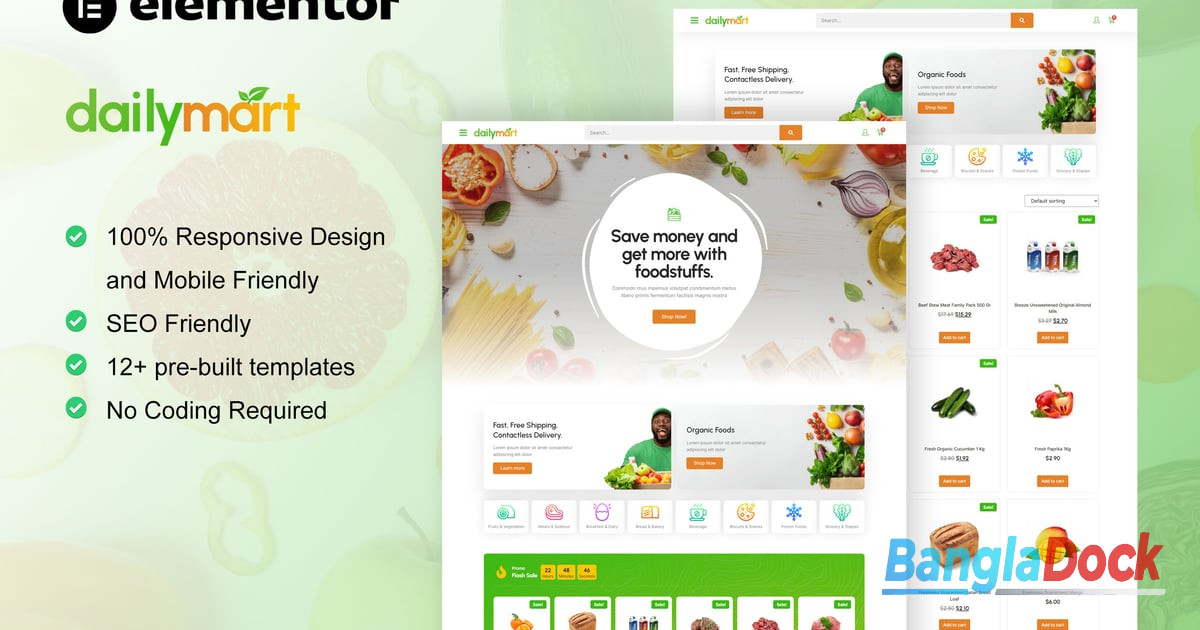
For grocery, produce, or local delivery stores, a niche template kit like the DailyMart – Grocery Store Elementor Template Kit can save weeks of design work. It provides category-driven layouts, deal sections, and product cards purpose-built for fast-moving consumer goods.
For a broader comparison, this roundup of top 10 eCommerce WordPress themes examines additional alternatives worth evaluating alongside these picks.
Real-World Use Cases: Matching Themes to Store Types
Not every theme fits every business model. Aligning your theme to your product category and traffic pattern is more productive than chasing whichever theme looks trendiest.
- Fashion and lifestyle brands: Woodmart or Flatsome for rich visuals, lookbooks, and Instagram-style galleries.
- Single-product stores: Shoptimizer or Astra for conversion-optimized landing pages.
- Grocery and hyperlocal delivery: DailyMart template kit for category-heavy navigation.
- Wholesale/B2B: Porto for advanced filters, bulk pricing tables, and quote requests.
- Marketplaces: Woodmart with Dokan or WC Vendors for multi-seller storefronts.
Recommended Plugins to Pair With Your Theme
A theme handles presentation, but plugins expand functionality. Here are tools that pair well with virtually any WooCommerce theme.
- Affiliate programs: The AffiliateWP Multi-Tier Commissions Addon enables tiered referral structures — useful for influencer campaigns and MLM-style referral rewards.
- Bulk coupon management: The WooCommerce Customer Order Coupons CSV Import Suite makes large coupon campaigns and post-order rewards manageable through CSV imports.
- Caching and performance: WP Rocket, LiteSpeed Cache, or FlyingPress to complement lightweight themes.
- SEO: Rank Math or Yoast SEO with WooCommerce extensions for product schema.
Best Practices for Theme Setup
Even the best theme underperforms when configured carelessly. Use these practices as a baseline every time you launch a new store.
- Use a child theme for any code-level modifications, so updates don't overwrite your work.
- Only import the demo you actually need. Full demo imports can bloat your database with unused pages and images.
- Audit third-party scripts. Disable widgets, sliders, and Google Fonts you don't use.
- Test checkout on real mobile devices, not just browser emulators.
- Enable HTTPS, HTTP/2 or HTTP/3, and image optimization at the hosting or CDN level.
- Pre-load critical fonts and defer non-critical JavaScript to protect Core Web Vitals.
Common Mistakes to Avoid
These are patterns that repeatedly cause performance and conversion issues after theme installation:
- Stacking too many builders (e.g., WPBakery + Elementor + Gutenberg blocks) on the same site.
- Ignoring theme update cycles. Outdated themes create security risks and break with newer WooCommerce releases.
- Overusing sliders and video backgrounds on product pages, which hurts LCP.
- Skipping accessibility audits. Low-contrast buttons and missing alt text cost sales and SEO ranking.
- Editing parent theme files directly instead of using a child theme or code snippets.
Troubleshooting: Diagnosing Theme-Related Issues
When a store starts loading slowly, breaking on mobile, or throwing conflicts after a theme change, work through this diagnostic sequence:
- Deactivate plugins one by one to isolate conflicts. Test checkout and cart after each toggle.
- Switch temporarily to a default theme (Storefront or Twenty Twenty-Four) to determine whether the issue originates from the theme or a plugin.
- Check the browser console for JavaScript errors — especially on product and checkout pages.
- Run PageSpeed Insights and WebPageTest to identify render-blocking scripts, unused CSS, and oversized images.
- Review the WooCommerce status page (WooCommerce → Status) for template overrides that may be outdated.
- Enable WP_DEBUG in wp-config.php temporarily to reveal PHP notices and deprecated function calls.
- Verify theme and WooCommerce compatibility versions with each update before deploying to production.
These steps are illustrative diagnostic patterns — actual results will depend on your hosting stack, plugin mix, and traffic profile.
Making the Final Decision
The "best" theme depends less on popularity and more on how well it aligns with your product catalog size, target audience, and internal team's technical skill level. A boutique fashion brand doesn't need Porto's B2B feature set, and a wholesale supplier doesn't benefit from Flatsome's minimalist product cards.
Shortlist two or three themes, build a staging environment, and run each through the same test checkout flow with sample products. Measure load times, tap targets on mobile, and how easily your team can update banners or add landing pages. Whichever theme wins that practical test is the right one for your store — and the one most likely to lift your 2025 sales numbers.