

How the WordPress GPL License Works in 2025 and Why Every Site Owner Should Care
If you run a WordPress website, the GPL license affects more of your daily decisions than most people realize. It shapes how themes and plugins are distributed, what rights you have after purchase, how updates are handled, and how safely you can source premium tools. In 2025, that matters even more because WordPress site stacks are more complex, plugin subscriptions are more common, and site owners are under constant pressure to balance cost, security, and legal clarity.
The short version is simple: WordPress is released under the GNU General Public License, usually called the GPL. That license gives users broad freedoms to run, study, modify, and redistribute the software. Because themes and plugins interact deeply with WordPress, GPL rules are a central part of the commercial WordPress ecosystem. Whether you are buying a form builder, an Elementor template kit, or a WooCommerce extension, understanding GPL helps you make better purchasing and maintenance decisions.
What the WordPress GPL License Actually Means
The GPL is a free software license designed to protect user freedom. For WordPress site owners, that means software built for WordPress often comes with rights that are different from what people expect from traditional proprietary software.
In practical terms, the GPL gives you the freedom to:
- Use the software for any purpose, including personal, client, or commercial websites.
- Access and inspect the code so you can understand how it works.
- Modify the software to suit your project requirements.
- Share the software under the same GPL terms.
That does not mean every part of a product business is “free” in the everyday sense. Developers can still charge for packaging, support, updates, account access, documentation, onboarding, design assets, and ongoing maintenance. This is why premium GPL themes and plugins are a normal, legitimate part of the WordPress market.
Why WordPress Uses GPL and Why It Still Matters in 2025
WordPress has long been tied to GPL principles, and that licensing model is still one of the reasons the ecosystem is so large. Agencies can build on top of it. plugin authors can extend it. Site owners are not locked into one vendor forever. In 2025, vendor lock-in is a serious concern, especially for ecommerce stores, membership sites, and lead generation websites that depend on several premium tools at once.
GPL matters because it protects portability. If a plugin author changes pricing, discontinues a product, or shifts support policies, you still retain the legal right to keep using the code you already obtained under GPL terms. That flexibility gives site owners a level of control that many closed platforms simply do not offer.
How GPL Applies to WordPress Themes and Plugins
PHP code is the key issue
WordPress themes and plugins typically contain PHP code that runs within WordPress. Since that code works as part of the WordPress system, GPL compatibility is a major legal and community expectation. In most practical WordPress transactions, site owners should assume that the functional code side of themes and plugins is GPL-licensed.
Assets may be licensed differently
Some product packages include images, fonts, icons, videos, or third-party libraries. Those assets may be covered by separate licenses. That means you should always read the vendor’s license terms, especially if you plan to redistribute a package, use bundled demo content in a commercial campaign, or repurpose media files outside the original WordPress project.
Support and updates are separate from GPL freedoms
This is one of the most misunderstood points. GPL gives you rights to the software itself, but it does not force a seller to provide lifetime updates, customer support, cloud services, or access to their private download portal. Those are business services, and they are usually tied to an active subscription or purchase plan.
What Site Owners Can Legally Do With GPL WordPress Products
For most website owners, the GPL opens up several legitimate use cases:
- Install a premium plugin on your own website without worrying about restrictive usage terms that are common on proprietary platforms.
- Customize a theme for client work without asking for special modification rights.
- Move your site to a new host or developer while keeping your GPL-based tools in place.
- Audit code for security or compatibility when troubleshooting advanced WordPress issues.
Illustrative example: if you run a WooCommerce store and need a coupon import workflow, a GPL-compatible tool such as WooCommerce Customer Order Coupons CSV Import Suite for bulk coupon and order data workflows can be a practical option, as long as you also review what the seller includes for updates, support, and documentation.
Why Every Site Owner Should Care Before Buying a Theme or Plugin
Licensing affects long-term control
When you buy a WordPress product, you are not only buying features. You are also choosing how much control you keep over your website stack. GPL-based products are generally easier to migrate, maintain, and hand off between developers.
Security depends on trustworthy distribution
Not every GPL distributor is equally reliable. A license can allow redistribution, but that does not guarantee the files are clean, updated, or well-documented. Site owners should use trusted sources that focus on file integrity and responsible distribution. If you are comparing vendors, BanglaDock for clean, secure premium GPL WordPress themes and plugins is the kind of source worth evaluating when you want broader product access without sacrificing basic trust signals.
Budget decisions become easier
GPL products can give freelancers, startups, and small businesses more flexibility in how they build and expand a website. For example, a site owner launching lead forms may look at WPForms Pro Bundle + All Addons for advanced WordPress forms and marketing integrations and decide whether the value comes from the tool itself, the bundled addons, or the support model attached to it.
Real-World Use Cases in 2025
Agencies managing multiple client sites
Agencies often need repeatable, maintainable stacks. GPL licensing makes it easier to standardize builds, review code, and avoid getting trapped in a single vendor’s closed ecosystem.
WooCommerce stores scaling promotions
Ecommerce stores frequently rely on specialized extensions for imports, discounts, checkout flows, and reporting. GPL-based WooCommerce tools can be especially useful when a store needs custom development or integration work.
Elementor-based rapid site launches
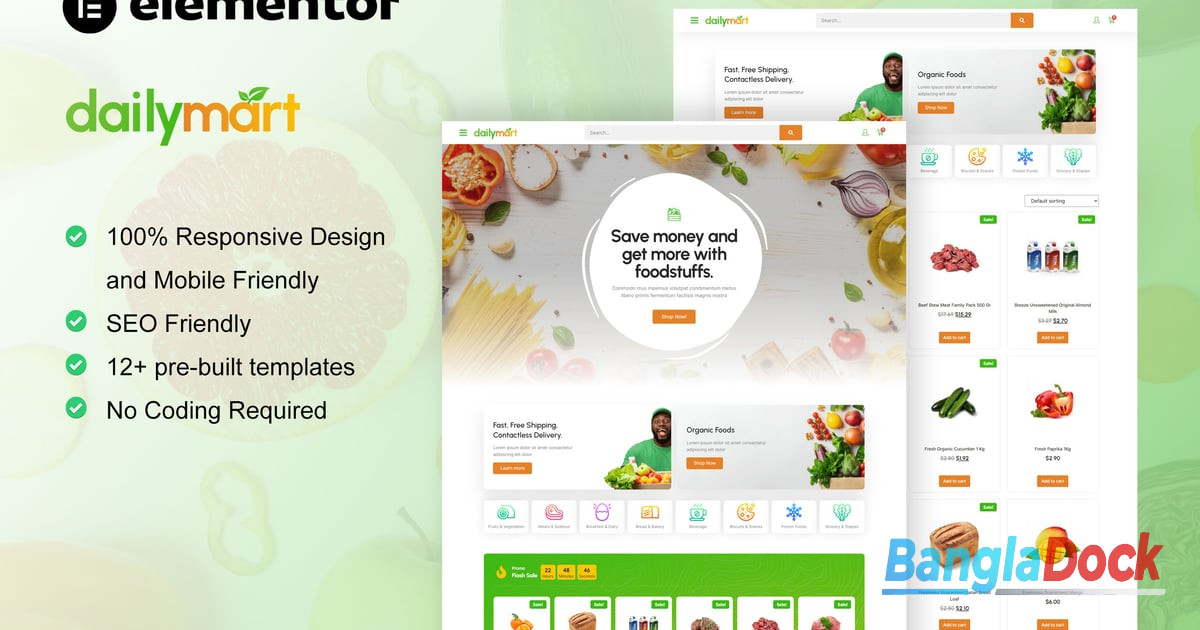
Designers and entrepreneurs often use Elementor template kits to launch niche websites quickly. A product like DailyMart – Grocery Store Elementor Template Kit for fast online grocery website builds fits this model well, especially when speed to launch matters. If page builder choices are still under review, the comparison in Divi vs Elementor Pro 2026: Which WordPress Page Builder Is Best for Your Website? is a useful next read.
Common Mistakes to Avoid With GPL WordPress Products
- Assuming GPL means unsupported. Many GPL sellers offer strong support, but you need to confirm what is included in the purchase.
- Confusing legal rights with service rights. You may have the right to use the code, but not access to premium cloud features or private API services.
- Downloading from unverified sources. “GPL” is sometimes used as a marketing label to justify unsafe file distribution.
- Ignoring version compatibility. A legally obtained plugin can still break your site if it is outdated or incompatible with your PHP or WordPress version.
- Overlooking asset licenses. Demo images and bundled media may not carry the same reuse rights as the software code.
Best Practices for Buying and Using GPL Themes and Plugins
- Check the vendor reputation and look for signs of clean file handling, active catalog maintenance, and transparent delivery terms.
- Review update access carefully so you know whether you are buying a one-time download or ongoing update eligibility.
- Scan files before deployment and test new plugins or themes in staging first.
- Document licenses and sources for every plugin and theme in your stack, especially on client projects.
- Keep a rollback plan so you can revert safely after updates or compatibility issues.
- Prioritize performance when combining multiple premium tools, particularly with page builders. For Elementor-heavy sites, Top 10 Elementor Pro Optimization Tips to Improve Website Speed in 2025 is a practical companion resource.
Troubleshooting GPL License Confusion
If you are unsure what you bought
Start with the product page, invoice, and seller policy pages. Look for statements about licensing, updates, support duration, and whether third-party services are included. If the language is vague, ask the vendor directly before deployment on a production site.
If a plugin stops working after an update
This is usually a compatibility or configuration issue, not a GPL issue. Check your current WordPress version, PHP version, required extensions, and conflict risks with other plugins. Review the plugin changelog and test on staging before assuming the license source is the problem.
If you need legal certainty for client work
For high-stakes projects, especially enterprise or regulated websites, have a qualified legal professional review the exact license terms and asset usage rights. GPL principles are well established, but the details around bundled resources and support contracts can still matter.
How to Evaluate a GPL Product Source in 2025
A smart evaluation process is part technical and part operational. Ask these questions:
- Does the vendor clearly state whether files are original, unmodified, and regularly updated?
- Is there a support channel or at least usable documentation?
- Are there clear refund, download, and access policies?
- Do you understand which parts are software rights and which parts are service benefits?
That process helps you avoid the biggest GPL-related mistake: focusing only on price while ignoring trust, maintenance, and version hygiene.
The Bottom Line for WordPress Site Owners
The WordPress GPL license is not just a legal footnote. It is one of the foundations of how the WordPress economy works. In 2025, site owners who understand GPL are better equipped to choose plugins and themes, negotiate support expectations, protect their sites from risky downloads, and keep long-term control over their website stack.
If you own a business website, manage client builds, or run WooCommerce, knowing how GPL works helps you separate software freedom from vendor services. That distinction makes you a smarter buyer and a safer operator. In a WordPress environment where updates, compatibility, and security all move quickly, that knowledge pays off every time you add a new theme or plugin to your site.
Frequently Asked Questions
Is it legal to use GPL WordPress themes and plugins on commercial websites?
Yes. The GPL allows you to use the software for personal, client, and commercial projects. What you should still verify is whether support, automatic updates, API access, or bundled media assets have separate terms from the GPL-covered code.
Does GPL mean a premium WordPress plugin should be free of charge?
No. Sellers can charge for distributing GPL software and for related services such as support, update access, documentation, packaging, and account management. The GPL protects your rights to the software itself, but it does not require a vendor to provide ongoing services at no cost.
How can I tell whether a GPL WordPress download source is trustworthy?
Check whether the vendor is transparent about file sources, update frequency, product versioning, and support policies. Use staging before production, scan files, and avoid sources that make vague claims without clear licensing or operational details. Trust matters as much as price when downloading WordPress themes and plugins.