

Divi vs Elementor Pro 2026: which WordPress page builder fits your project?
If you are choosing between Divi vs Elementor Pro, you are really deciding how you want to build, manage, and scale a WordPress website over time. Both tools are mature, widely used, and capable of producing professional results. Still, they approach design systems, performance, pricing, and workflow in different ways.
This WordPress page builder comparison is written for site owners, freelancers, agencies, and developers who need more than a feature checklist. The better option depends on what you are building: a brochure site, a WooCommerce store, a client template system, or a dynamic content-driven platform.
In 2026, the decision is less about whether either builder is “good” and more about whether its ecosystem matches your workflow. Elementor Pro usually appeals to users who want a broad add-on ecosystem, flexible theme building, and tight integration with marketing tools. Divi stands out for its bundled value, visual editing style, and built-in design controls under a single membership.
Quick verdict: Divi builder review vs Elementor Pro
If you want the short answer, Elementor Pro is often the better fit for users who need a flexible WordPress theme builder, advanced form integrations, dynamic templates, and a large library of third-party tools. Divi is a strong option for users who prefer an all-in-one membership, built-in A/B testing, and a design-first editing experience without relying on as many external add-ons.
- Choose Elementor Pro if you build landing pages, WooCommerce stores, membership sites, or dynamic WordPress projects.
- Choose Divi if you want a bundled design system with one vendor handling the theme, builder, and many visual features.
- Choose based on workflow, not hype. The best builder is the one your team can maintain efficiently six months from now.
Editor experience and ease of use
Elementor Pro: flexible and modular
Elementor Pro uses a front-end visual editor with a left sidebar, drag-and-drop widgets, responsive controls, motion effects, popup building, and theme templates. For many WordPress professionals, the interface feels predictable because page structure, widgets, and styling are clearly separated.
That clarity becomes useful on larger builds. You can create headers, footers, single post templates, archive layouts, popups, and WooCommerce templates from one place. Users who work with repeatable systems often find Elementor easier to standardize across client projects.
Divi: polished visual design workflow
Divi’s editor is also visual, but its controls are more embedded into the page canvas. Some users love that immersive experience, especially designers who want to tweak spacing, typography, animations, and section-level styling quickly. A typical Divi builder review praises its design controls and the convenience of getting many features from one membership.
The trade-off is personal preference. Some users find Divi’s inline editing elegant. Others prefer Elementor’s panel-driven structure when working on more complex page hierarchies.
Design flexibility and theme building
Elementor Pro has the edge for dynamic site architecture
When comparing Divi vs Elementor Pro for custom layouts, Elementor Pro usually goes further for dynamic websites. Its theme builder lets you assign templates to specific content types and conditions, which is ideal for blogs, directories, service sites, online stores, and content-heavy projects.
This gets even stronger when paired with custom fields. If you build sites with ACF-powered data entry, listings, or front-end submissions, ACF Frontend Pro For Elementor is a smart addition. It is a 100% clean, virus-free premium GPL alternative available at an affordable price of ৳490 with lifetime updates on BanglaDock. For developers and power users, that can turn Elementor into a far more capable content workflow tool.
Divi offers strong layout control for standard business sites
Divi supports theme building too, and for many business websites that is enough. You can build custom global headers, blog templates, and page structures without much friction. If your project is a corporate site, portfolio, agency site, or local business website, Divi’s visual system is often more than capable.
Where Elementor tends to pull ahead is in ecosystem depth for dynamic and marketing-heavy builds. That matters when your content model grows beyond static pages.
Performance and page speed considerations
No honest WordPress page builder comparison should promise blanket speed winners. Real performance depends on hosting, image optimization, theme choice, plugin load, layout complexity, and script management. Both Divi and Elementor Pro can become heavy when users stack animations, large template libraries, sliders, popups, and third-party extensions.
Elementor has a large user base focused on performance tuning, which means there are many practical workflows for reducing front-end weight. If you choose Elementor, these resources are worth reviewing for optimization strategies: Top 10 Elementor Pro Optimization Tips to Improve Website Speed in 2025 and Top 10 Ways to Speed Up Elementor Pro for Better Performance in 2025.
Divi users should also pay close attention to caching, critical CSS handling, image formats, and the number of modules on each page. In both ecosystems, disciplined page building matters more than marketing claims.
WooCommerce and marketing use cases
Elementor Pro works especially well for conversion-focused stores
For WooCommerce, Elementor Pro is often the more flexible choice. It supports custom product templates, shop archives, promotional popups, lead capture, and more targeted design conditions. This makes it attractive for brands that frequently run campaigns or seasonal landing pages.
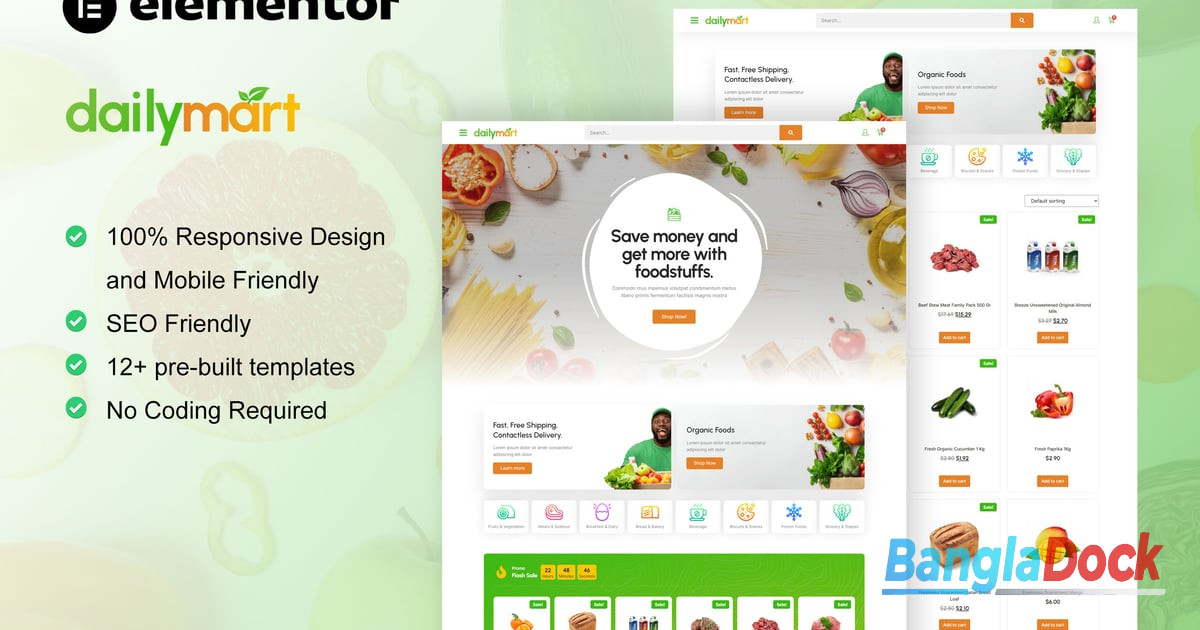
If you are building a grocery or local delivery storefront, a ready-made kit like DailyMart – Grocery Store Elementor Template Kit can speed up launch time while keeping the design aligned with Elementor’s workflow.
For order and coupon operations, store owners may also benefit from tools like WooCommerce Customer Order Coupons CSV Import Suite, especially when promotions and customer order data need more structured handling.
Divi is effective for elegant storefront presentation
Divi can absolutely support WooCommerce stores and polished product pages. It is often a good match for smaller catalogs, boutique brands, and businesses that care heavily about visual storytelling. If your store does not rely on many advanced third-party workflows, Divi may feel simpler to manage.
Forms, lead generation, and integrations
Elementor Pro includes a capable form builder, which can be enough for many landing pages and contact workflows. Still, some projects need payment fields, advanced conditional logic, marketing automation connections, or broader add-on support. In those cases, WPForms Pro Bundle + All Addons is a practical companion plugin for WordPress sites that need more robust form handling.
Divi also supports lead generation well, but Elementor’s ecosystem usually provides more options when you need to mix forms, popups, custom fields, dynamic templates, and campaign-specific page variations.
Pricing and long-term value
Pricing often shapes the Divi vs Elementor Pro decision as much as features do. Divi is known for strong bundled value because one membership covers the builder and related tooling from the same vendor. That can be appealing for freelancers who want predictable costs and fewer product decisions.
Elementor Pro’s value comes from flexibility and ecosystem reach. If your projects rely on add-ons, custom field workflows, WooCommerce templates, and marketing integrations, the extra modularity often justifies the spend. The actual cost picture depends on how many companion tools you need and whether you prefer a tightly bundled stack or a customizable one.
Common mistakes to avoid when choosing a builder
- Picking based on demos alone: polished demo pages do not show how easy a builder is to maintain across dozens of templates.
- Ignoring plugin compatibility: test your SEO, caching, WooCommerce, multilingual, and form plugins before committing.
- Overloading third-party add-ons: too many extensions can create conflicts and bloat in both Divi and Elementor setups.
- Skipping template planning: define headers, single content templates, archives, and mobile behavior before building pages.
- Underestimating content workflows: if editors need repeatable fields or front-end submission forms, plan for that from day one.
Troubleshooting and diagnostic steps
When a site built with Divi or Elementor Pro feels slow or unstable, a structured diagnostic process saves time.
- Check plugin conflicts: deactivate non-essential plugins on a staging site and test the editor and front end again.
- Review asset loading: inspect scripts, fonts, sliders, popups, and animation libraries that load site-wide.
- Audit template conditions: overlapping headers, archives, or popup rules can cause unexpected rendering issues.
- Test on clean hosting variables: low memory limits, outdated PHP versions, and weak caching setups often look like builder problems.
- Measure real pages, not homepages only: product pages, blog templates, and landing pages often reveal hidden performance costs.
Illustrative example: if an Elementor WooCommerce store feels delayed on product pages, the issue may come from image size, variation scripts, third-party review widgets, or global popup triggers rather than Elementor itself. The same logic applies to Divi: a slow page may be caused by layout decisions and plugin stack complexity, not only the builder core.
Best practices for a scalable WordPress builder setup
- Use a lightweight foundation: start with clean hosting, optimized images, and a minimal plugin stack.
- Create reusable templates: standardize sections, product blocks, and global elements to reduce maintenance overhead.
- Limit visual effects: animations, parallax, and layered motion should support the page goal, not distract from it.
- Build with mobile first in mind: responsive spacing and typography decisions are easier when planned early.
- Document your system: agencies and teams should record naming rules, template logic, and approved widgets or modules.
Final recommendation: which WordPress theme builder should you choose?
For most advanced users in 2026, Elementor Pro is the stronger all-around choice if your site depends on a flexible WordPress theme builder, dynamic content, marketing workflows, and WooCommerce customization. Its ecosystem gives you more room to grow, especially when you combine it with tools like ACF Frontend Pro For Elementor for custom field-driven experiences and front-end content workflows.
Divi remains a compelling option for designers, freelancers, and business owners who want an integrated design platform with strong visual controls and straightforward bundled value. If your priority is a polished business website with less reliance on external add-ons, Divi can still be the better fit.
The most practical way to decide is to map your real project needs: content structure, store complexity, form requirements, editing team, and long-term maintenance. In a side-by-side Divi vs Elementor Pro decision, the winner is the builder that matches those needs without forcing unnecessary complexity.
Frequently Asked Questions
Is Elementor Pro better than Divi for beginners?
Elementor Pro is often easier for beginners who like a clear sidebar-based interface and want access to many tutorials, add-ons, and ready-made templates. Divi can also work well for beginners, especially those who prefer a more visual on-canvas editing style. The better choice depends on which interface feels more natural after a short hands-on test.
Which is better for WooCommerce: Divi or Elementor Pro?
Elementor Pro is usually the stronger choice for WooCommerce stores that need custom product templates, promotional landing pages, popups, dynamic content, and broader third-party integrations. Divi works well for smaller stores and visually driven shop designs, but Elementor Pro generally offers more flexibility for conversion-focused ecommerce builds.
Can I use ACF with Elementor Pro for dynamic WordPress sites?
Yes. ACF works well with Elementor Pro for dynamic templates, custom fields, and structured content workflows. If you need front-end content submission or advanced field-driven interactions, ACF-focused extensions can expand what Elementor can do. A practical option is ACF Frontend Pro For Elementor, which is available on BanglaDock as a 100% clean, virus-free premium GPL alternative for ৳490 with lifetime updates.