

How a WooCommerce Sales Funnel Can Help You Target 30% More Revenue in 2026
A well-built WooCommerce sales funnel is not a single plugin, a discount popup, or a fancy checkout page. It is the full buying path: how shoppers discover a product, compare options, add items to cart, complete payment, accept relevant offers, and return for future purchases.
The “30% revenue increase” goal is realistic as a planning target when your store has existing traffic, product-market fit, and measurable conversion leaks. It should not be treated as a guaranteed result. In practice, revenue growth comes from improving three levers: conversion rate, average order value, and repeat purchase rate. A high-converting funnel works because it improves all three without relying only on more ad spend.
For WooCommerce store owners in 2026, the winning approach is technical and strategic: faster pages, clearer product positioning, a custom checkout flow, relevant order bumps, post-purchase upsells, affiliate-driven traffic, secure forms, and proper diagnostics. This guide walks through a developer-friendly framework you can use to build a practical sales booster system for your store.
Start with the Revenue Math Before Installing Plugins
Before touching your theme or adding another extension, map your current funnel numbers. You need a baseline for sessions, product page views, add-to-cart rate, checkout started, completed orders, average order value, refund rate, and repeat customer rate.
For example, an illustrative WooCommerce store with consistent traffic may find that many users add products to cart but abandon checkout. Another store may convert well but have a low average order value because it never recommends bundles, warranties, subscriptions, or complementary products. The right WooCommerce conversion optimization plan depends on the leak.
Key Funnel Metrics to Track
- Product page conversion: Are visitors moving from browsing to cart?
- Cart abandonment: Are shipping costs, coupon fields, or account requirements causing hesitation?
- Checkout completion: Is the checkout form too long or technically unstable?
- Average order value: Are you offering relevant add-ons before and after purchase?
- Customer lifetime value: Are buyers returning through email, affiliates, or loyalty campaigns?
Design the Ideal WooCommerce Sales Funnel
A profitable WooCommerce sales funnel usually has five stages: acquisition, product education, cart commitment, checkout completion, and post-purchase monetization. Each stage should remove friction and present the next logical step.
1. Acquisition: Bring in Qualified Buyers
Traffic quality matters more than raw volume. Search visitors, affiliate referrals, email subscribers, and retargeted shoppers behave differently. If your store sells digital products, templates, groceries, or services, build landing pages that match the buyer’s intent rather than sending everyone to the same shop archive.
Affiliate marketing can be a practical growth channel when your product margins support commissions. For stores that want to connect WooCommerce with 2Performant-style affiliate workflows, WooCommerce 2Performant Affiliates WordPress-2PA is worth considering as a 100% clean, virus-free premium GPL alternative available at an affordable price of ৳490 with lifetime updates on BanglaDock. It can support an affiliate-powered revenue strategy while keeping your WooCommerce stack budget-conscious.
2. Product Education: Make the Offer Easy to Understand
Your product page should answer the buyer’s main questions quickly: what it is, who it is for, what is included, what problem it solves, how delivery works, and what happens after purchase. Strong product pages use benefit-led headings, concise specs, real screenshots where applicable, clear pricing, trust badges, FAQs, and visible support policies.
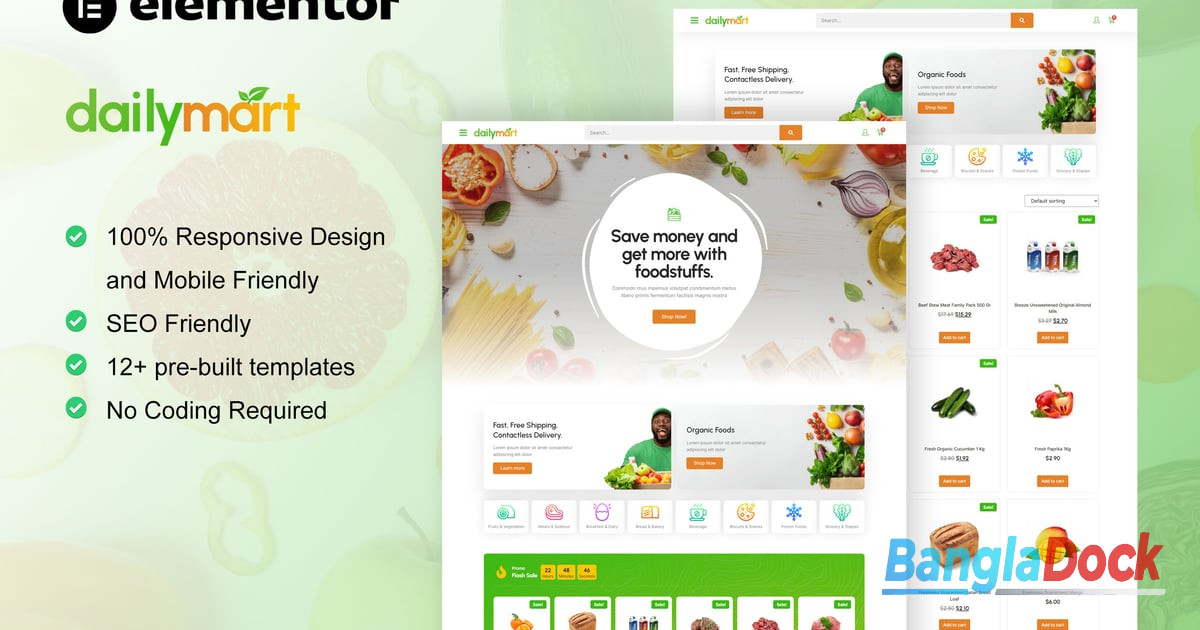
For niche stores, design also affects trust. A grocery or local delivery store, for instance, needs a layout that makes categories, delivery windows, and offers easy to scan. A template such as DailyMart – Grocery Store Elementor Template Kit can be useful when building a focused WooCommerce storefront with Elementor and product-first landing sections.
3. Cart Commitment: Reduce Doubt Before Checkout
The cart page is where many shoppers pause. They may compare shipping, hunt for coupons, or question whether the product is right. Use the cart to reinforce confidence, not distract users with unrelated offers.
- Show shipping or delivery expectations before the final payment step.
- Display accepted payment methods and security indicators.
- Recommend only closely related products, not random bestsellers.
- Make coupon behavior clear so users do not leave to search for codes.
- Keep the “Proceed to checkout” button visually dominant.
Build a Custom Checkout Flow That Converts
A custom checkout flow is one of the highest-impact areas in WooCommerce because it sits closest to revenue. Small improvements here can produce meaningful gains when your store already has qualified traffic.
What to Remove from Checkout
Remove fields that do not support fulfillment, compliance, or customer communication. If you sell digital downloads, you may not need a full shipping address. If you sell local grocery delivery, you may need address fields but not company name. The goal is to collect the minimum required information without creating operational gaps.
What to Add to Checkout
Add trust and clarity near the payment button. This may include refund policy links, delivery notes, secure payment messaging, support availability, and order summary details. For service businesses or legally sensitive transactions, digital agreements may be part of the purchase workflow. In that case, WP E-Signature – Bundle with all addons can help support signed documents and agreement-based workflows in a WordPress environment.
Use Order Bumps Without Damaging Trust
Order bumps work best when they are inexpensive, relevant, and easy to understand. Examples include gift wrapping for physical products, installation support for software, recipe packs for grocery boxes, or priority support for digital downloads. Avoid forcing add-ons or hiding the final price. A good bump feels helpful; a bad one feels manipulative.
Increase Average Order Value with Upsells and Cross-Sells
Revenue growth does not always require more customers. If customers already trust your store, you can increase average order value through smart bundles, volume pricing, product kits, and post-purchase offers.
Use pre-purchase cross-sells for complementary items shoppers may need before checkout. Use post-purchase upsells for offers that do not interrupt the initial payment. For example, after a customer buys a WordPress template kit, you might offer installation support. After a customer buys grocery staples, you might suggest a weekly essentials bundle.
Practical Upsell Rules
- Match intent: Recommend products related to the item in the cart.
- Keep pricing logical: The upsell should not feel larger than the original decision unless it is a clear upgrade.
- Limit choices: Too many offers slow the buyer down.
- Measure acceptance: Track which offers add revenue and which create abandonment.
- Respect mobile users: Make every offer readable and easy to skip on small screens.
Capture Leads Before Visitors Leave
Not every visitor is ready to buy. Lead capture gives you a second chance to convert shoppers through email, coupons, product guides, waitlists, or quote requests. This is especially useful for higher-ticket products, services, B2B orders, or stores with seasonal demand.
Forms should be fast, simple, and connected to a clear promise. A plugin such as WPForms Pro Bundle + All Addons can support newsletter forms, quote forms, surveys, payment forms, and conditional logic when you need more than a basic contact form.
Optimize Performance and Security Before Scaling Traffic
A funnel cannot perform well if pages load slowly, checkout breaks, or customers do not trust the site. Performance and security are part of WooCommerce conversion optimization, not separate maintenance tasks.
Review caching, image optimization, database cleanup, CDN configuration, and plugin bloat. If you use WP Rocket, avoid common setup mistakes that can break carts or slow key pages; this guide on Top 10 WP Rocket Setup Errors Slowing Down Your WordPress Site in 2026 is a useful follow-up for store owners tuning performance.
Security also affects buyer confidence and operational risk. Strong login protection, malware scanning, firewall rules, secure admin accounts, and regular updates are basic requirements for any revenue-focused WooCommerce store. For a deeper security checklist, review How to Protect Your WordPress Online Store with Wordfence Premium in 2026.
Real-World WooCommerce Funnel Use Cases
Digital Product Store
A digital product store can use SEO landing pages, comparison tables, instant delivery messaging, a simplified checkout, and post-purchase setup services. The funnel should reduce uncertainty around compatibility, licensing, updates, and support.
Grocery and Local Delivery Store
A grocery store funnel should highlight delivery zones, freshness, minimum order rules, subscription boxes, and frequently purchased bundles. Category navigation and mobile checkout are especially important because many customers reorder quickly from phones.
Service-Based WooCommerce Store
A service store may sell consultations, retainers, audits, or digital agreements. The funnel may include a lead form, paid booking, signed agreement, onboarding questionnaire, and follow-up email sequence.
Troubleshooting a Low-Converting WooCommerce Sales Funnel
If your funnel is not producing expected results, diagnose it step by step instead of replacing your whole stack.
- Check analytics accuracy: Confirm purchase events, checkout events, and referral tracking are firing correctly.
- Test checkout manually: Place test orders using multiple payment methods, devices, and browsers.
- Review mobile layout: Inspect product pages, cart, checkout fields, and upsell modules on real devices.
- Disable conflicts safely: Use staging to test whether caching, checkout, payment, or optimization plugins conflict.
- Analyze abandonment points: Compare cart starts, checkout starts, payment attempts, and completed orders.
- Inspect error logs: Look for PHP errors, failed webhooks, payment gateway issues, and JavaScript console errors.
Common Funnel Mistakes to Avoid
- Adding too many plugins: Every funnel feature should justify its performance, security, and maintenance cost.
- Copying another store’s checkout: Your checkout fields should match your products, fulfillment, and audience.
- Overusing discounts: Constant coupons can train customers to delay purchases.
- Ignoring returning buyers: Repeat customers often need faster reorder paths, not the same first-time buyer funnel.
- Hiding fees until checkout: Surprise shipping, tax, or service charges can break trust near payment.
- Skipping QA after updates: WooCommerce, theme, plugin, and payment updates can affect funnel behavior.
Best Practices for a High-Converting Sales Booster System
- Build one clear funnel for each major product category or customer segment.
- Use dedicated landing pages for paid traffic, affiliate campaigns, and seasonal offers.
- Keep checkout short, transparent, mobile-friendly, and compatible with your payment gateways.
- Use order bumps and upsells only when they are relevant to the cart contents.
- Track revenue per visitor, average order value, and repeat purchase rate alongside conversion rate.
- Run changes through staging before deploying to a live WooCommerce store.
- Review performance, security, and analytics after every major plugin or theme change.
A Practical 2026 Funnel Stack for WooCommerce
Your exact stack depends on your store model, but a lean setup usually includes a fast WooCommerce theme or template kit, a reliable form plugin, a checkout customization tool, analytics, email marketing, security, backups, and affiliate tracking where appropriate.
For affiliate-driven growth, the WooCommerce 2Performant Affiliates WordPress-2PA plugin for WooCommerce sales funnel growth is a practical option to evaluate, especially if you want an affordable premium GPL alternative from BanglaDock with lifetime updates. Pair it with strong product pages, clear attribution, and realistic commission rules so affiliates promote offers that can remain profitable.
The best WooCommerce sales funnel in 2026 is not the most complex one. It is the funnel that helps the right customer buy the right product with the least confusion, then gives them a strong reason to return. Start with the biggest leak, measure the change, and keep improving one stage at a time.
Frequently Asked Questions
What is a WooCommerce sales funnel?
A WooCommerce sales funnel is the complete path a shopper follows from first discovering your store to completing a purchase and buying again. It usually includes traffic sources, landing pages, product pages, cart, checkout, order bumps, upsells, email follow-ups, and retention campaigns. A strong funnel removes friction, answers buyer questions, and increases revenue by improving conversion rate, average order value, and repeat purchases.
Can a custom checkout flow increase WooCommerce revenue?
Yes, a custom checkout flow can increase WooCommerce revenue when it reduces unnecessary fields, improves mobile usability, clarifies shipping or delivery details, and builds trust near the payment button. The impact depends on your current checkout problems, traffic quality, product type, and payment setup. Always measure checkout starts, payment attempts, completed orders, and abandonment before and after making changes.
Which tools help build a high-converting WooCommerce funnel?
Useful tools depend on your business model, but common categories include checkout customization plugins, form builders, affiliate tracking tools, analytics, email marketing platforms, security plugins, caching tools, and conversion-focused templates. For affiliate campaigns, WooCommerce 2Performant Affiliates WordPress-2PA can be considered. For lead capture, WPForms Pro is useful, while template kits such as DailyMart can help build focused storefront layouts.