

Why Astra Pro Headers and Footers Still Matter in 2026
Your website header and footer are not decorative leftovers. They control navigation, trust signals, conversions, search visibility, and mobile usability. In WordPress projects, especially business websites, WooCommerce stores, membership portals, and service landing pages, a weak header layout can make the entire site feel unfinished.
The Astra Pro header builder gives WordPress developers, agencies, and site owners a practical way to design responsive headers without hard-coding templates. Pair it with an Astra Pro custom footer, and you can create a consistent site structure that feels premium while staying lightweight.
If you want access to the premium Astra features without paying the official recurring price, BanglaDock offers the Astra Pro WordPress Plugin as a 100% clean, virus-free premium GPL alternative at an affordable price of ৳990 with lifetime updates. For developers building multiple client websites, that makes Astra Pro a budget-friendly foundation for professional WordPress header layout and footer customization.
Understanding the Astra Pro Header Builder
The Astra Pro header builder uses a visual drag-and-drop interface inside the WordPress Customizer. Instead of editing PHP files, you arrange header elements across rows and columns. This is especially useful for developers who need to ship clean, maintainable WordPress sites without locking every design decision inside a page builder.
Core Header Areas
Astra’s header system is built around three main rows:
- Above Header: Useful for contact details, announcements, language switchers, social icons, or secondary menus.
- Primary Header: Best for your logo, main navigation, search icon, account link, and call-to-action button.
- Below Header: Helpful for category menus, promotional bars, WooCommerce navigation, or supporting links.
Each row can be configured separately for desktop, tablet, and mobile. That matters because a desktop-friendly navigation menu can quickly become unusable on smaller screens. A strong 2026 WordPress header layout must be adaptive, not merely responsive.
Header Elements You Can Add
The Astra Pro header builder supports common website elements such as logos, menus, buttons, search, HTML blocks, social icons, WooCommerce cart icons, account links, and widgets. The practical benefit is speed: you can build most client-ready header layouts without custom code.
For example, an agency site might use a logo on the left, navigation in the center, and a “Book a Call” button on the right. A WooCommerce store might replace that button with a search bar, cart icon, and account login. A legal or consulting site might add a phone number in the above header and a document-signing call-to-action that pairs well with WP E-Signature – Bundle with all addons for digital agreement workflows.
How to Customize Astra Pro Headers Step by Step
1. Plan the Header Before Opening the Customizer
Before dragging elements into place, define the header’s job. Ask what the visitor should do next. A restaurant needs reservations or ordering. A SaaS company needs demo requests. A local service business needs calls. A blog needs topic discovery and email signups.
A practical header plan should include:
- Primary action: Call, buy, subscribe, book, request a quote, or log in.
- Navigation depth: Simple top-level menu or dropdown-heavy structure.
- Mobile priority: Which links stay visible and which move inside the off-canvas menu.
- Brand requirements: Logo size, colors, spacing, and sticky behavior.
2. Configure the Main Header Layout
Go to Appearance > Customize > Header Builder. Start with the primary header row because it carries the most important navigation elements. Add your site logo, main menu, and one conversion-focused element such as a button, cart, or account link.
For most business sites, a clean layout works better than a crowded one. Keep the logo visually stable, avoid oversized menu text, and make the call-to-action button obvious without making it aggressive. If your site uses Astra templates customization, make sure the header design matches your imported starter template instead of fighting against it.
3. Create a Mobile-First Header
Mobile behavior deserves separate attention. In the Astra Pro header builder, switch to tablet and mobile preview modes. Decide whether to use a hamburger menu, off-canvas panel, visible call button, or mobile account/cart icons.
For WooCommerce stores, keeping the cart icon visible on mobile often improves usability. For service businesses, a tap-to-call button may be more useful than showing the full navigation menu. For content-heavy websites, the search icon can be more valuable than a secondary button.
4. Use Sticky and Transparent Headers Carefully
Astra Pro supports sticky headers and transparent headers, both of which can look polished when used correctly. A sticky header keeps navigation available while users scroll. A transparent header overlays the hero section and works well on landing pages with strong visual design.
Use these features with restraint. Sticky headers should not consume too much vertical space on mobile. Transparent headers need enough color contrast against the background image. If your hero section changes between pages, test the header on each major template before publishing.
Building an Astra Pro Custom Footer That Converts
The footer is often where users go when they need proof, support, policies, or a final decision point. A well-planned Astra Pro custom footer can support SEO, trust, compliance, and conversion without overwhelming the visitor.
Footer Sections That Work Well
A professional custom footer usually includes several purposeful sections:
- Brand summary: A short description of what the business does and who it helps.
- Navigation links: Services, pricing, blog, contact, support, and account pages.
- Trust links: Privacy policy, refund policy, terms, licensing, and documentation.
- Contact details: Address, email, phone number, or support channel.
- Conversion element: Newsletter signup, quote request, product link, or consultation button.
If you collect inquiries, pairing your footer with the WPForms Pro Bundle + All Addons gives you advanced forms for lead capture, support requests, surveys, and payment-connected forms. This works especially well when the footer includes a compact “Request a Quote” or “Contact Sales” form.
Footer Design Tips for Different Site Types
For service websites, focus on contact details, service area pages, and trust links. For blogs, highlight categories, author pages, and newsletter signup. For WooCommerce stores, include shipping, returns, payment information, product categories, and support links.
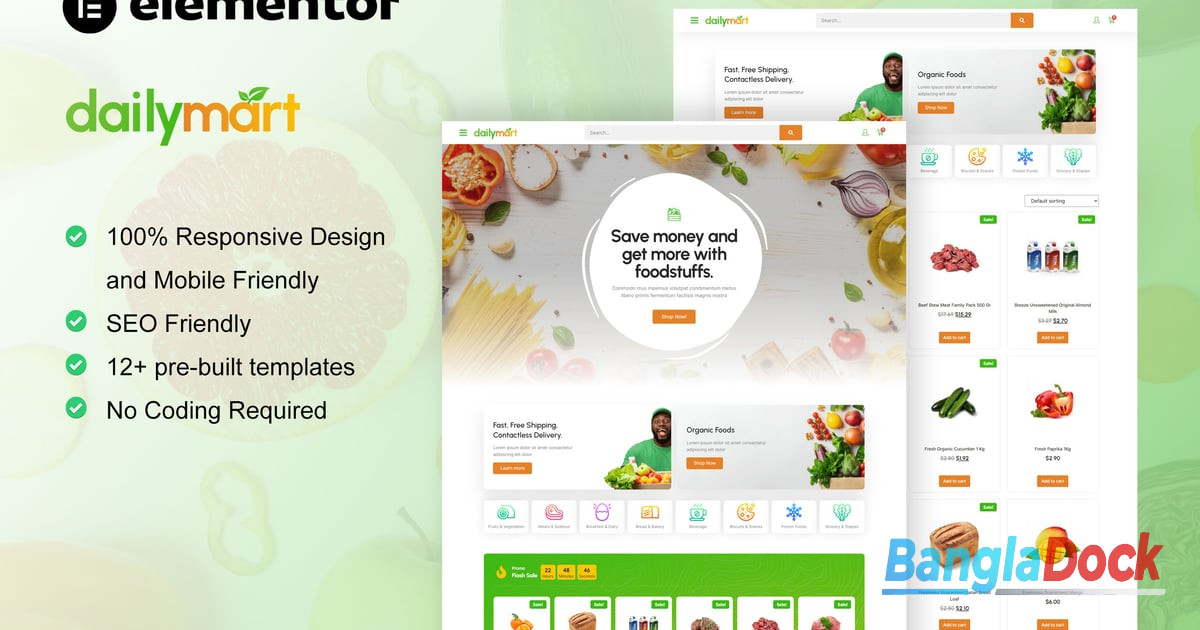
If you are building a grocery or local commerce website with Elementor, a template kit such as DailyMart – Grocery Store Elementor Template Kit can speed up visual page design while Astra Pro handles the global header and footer foundation. This separation keeps your global structure consistent even when individual landing pages are built with Elementor.
Astra Templates Customization: Matching Headers and Footers to Starter Sites
Astra templates customization is one of the fastest ways to launch a site, but imported templates often need brand-specific refinement. The header and footer are the first places to adjust because they appear across the site.
After importing a starter template, review the following:
- Logo dimensions: Replace the sample logo and check spacing on desktop and mobile.
- Menu labels: Remove generic pages and align navigation with actual user intent.
- Button destination: Connect the header CTA to a real booking, checkout, quote, or contact page.
- Footer links: Replace placeholder links with valid legal, support, and conversion pages.
- Typography: Match menu and footer text to your site’s design system.
If you enjoy comparing builder workflows, the article How to Design Custom Single Post Templates with Divi Builder in 2026 is a useful companion for understanding how template-level design decisions differ across WordPress builders.
Real-World Technical Use Cases
WooCommerce Store Header
A WooCommerce store should prioritize product discovery and checkout flow. A practical header might include a logo, category menu, search icon or search bar, account link, cart icon, and a promotional strip above the header. On mobile, keep the cart and menu accessible while reducing visual clutter.
Local Service Business Header
A plumber, clinic, law office, or repair company needs fast contact. Use the above header for phone and service area details, the primary header for the logo and navigation, and a strong “Get a Quote” or “Book Appointment” button. The footer should repeat contact options and include service pages for local SEO.
Membership or Course Website Header
For membership sites, logged-in and logged-out experiences may need different priorities. Public visitors need pricing, benefits, and signup links. Members need dashboard, account, and support links. Astra Pro can handle the global structure, while membership plugins control access and user-specific content.
Performance and SEO Considerations
Astra is known for lightweight architecture, but header and footer choices still affect perceived speed and usability. Avoid loading unnecessary widgets, large logo files, heavy icon libraries, and excessive third-party scripts in global areas. Anything placed in the header or footer may load across many pages.
Use properly compressed logo images, limit font variations, and test sticky headers on real mobile devices. If your site also uses Elementor, review Top 10 Elementor Pro Speed Optimization Techniques for a Lightning-Fast Site in 2025 for practical optimization ideas that also apply to template-heavy WordPress builds.
Common Mistakes to Avoid
- Overloading the header: Too many links, icons, buttons, and badges weaken the main action.
- Ignoring mobile spacing: A header that looks clean on desktop may feel cramped on a phone.
- Using transparent headers everywhere: They can reduce readability when page backgrounds vary.
- Forgetting footer compliance links: Privacy, terms, refund, and licensing pages build trust and reduce confusion.
- Mixing too many design systems: Astra, Elementor, and imported templates should share typography, colors, and spacing.
- Leaving starter content unchanged: Placeholder menu links and generic footer text damage credibility.
Troubleshooting Astra Pro Header and Footer Issues
Header Changes Not Showing
Clear your WordPress cache, browser cache, and any CDN cache. If you use a performance plugin, purge generated CSS files. Then check whether you edited the correct header area for desktop, tablet, or mobile.
Mobile Menu Looks Broken
Open the Customizer’s responsive preview and inspect the off-canvas settings. Check menu item length, dropdown behavior, spacing, and icon alignment. Long menu labels often create wrapping problems, so shorten labels where possible.
Sticky Header Covers Page Content
If a sticky header overlaps anchor sections or hero content, adjust sticky header height, top spacing, or anchor offset settings in your builder. Test pages with jump links, table of contents links, and form confirmation anchors.
Footer Widgets Appear Misaligned
Check column widths, padding, typography, and widget content length. A footer column with a long paragraph beside short link lists may look visually unbalanced. Keep copy concise and use consistent heading styles.
Best Practices for Astra Pro Header Builder in 2026
- Design mobile first: Decide what must be visible on small screens before perfecting desktop layout.
- Use one primary CTA: Give users a clear next step instead of competing buttons.
- Keep global elements lightweight: Avoid loading unnecessary scripts, widgets, or oversized media in headers and footers.
- Align with search intent: Use menu labels that match what visitors expect, such as Services, Pricing, Shop, Blog, and Contact.
- Audit after template imports: Astra templates customization should always include header, footer, mobile, and legal-link checks.
- Test logged-in states: For stores, courses, and memberships, review account, cart, and dashboard links as different user roles.
Recommended Setup for Professional WordPress Builds
For most 2026 WordPress projects, Astra Pro is a strong base theme because it gives you layout control without forcing every global element into a heavy page builder. The Astra Pro WordPress Plugin from BanglaDock is especially attractive for budget-conscious developers because it is offered as a 100% clean, virus-free premium GPL alternative for ৳990 with lifetime updates.
A practical toolkit might include Astra Pro for global headers and footers, WPForms Pro for lead capture, Elementor template kits for fast page production, and WP E-Signature for document workflows when a project needs client approvals or contracts. Used together with discipline, these tools can create fast, polished, conversion-ready WordPress websites without unnecessary complexity.
The best Astra Pro header builder setup is not the most elaborate one. It is the one that helps visitors understand where they are, where they can go next, and why they should trust the site. Start with a clear structure, refine the mobile experience, keep the footer useful, and test every global element before launch.
Frequently Asked Questions
Is the Astra Pro header builder suitable for non-developers?
Yes. The Astra Pro header builder is visual and works inside the WordPress Customizer, so non-developers can create professional header layouts without editing theme files. Developers still benefit because it reduces custom template work and keeps global layout changes easier to maintain.
What should I include in an Astra Pro custom footer?
A strong Astra Pro custom footer should include a short brand summary, important navigation links, contact details, legal pages, support links, and one useful conversion element such as a newsletter form, quote request, or product link. The exact structure should match the site type and user intent.
Can I use Astra Pro with Elementor templates?
Yes. Astra Pro works well with Elementor templates because Astra can manage the global WordPress header layout and custom footer while Elementor handles page-level design. This setup is useful when you want consistent navigation across the site while still building flexible landing pages.