

How to Design a Divi Custom Single Post Layout in 2026
A well-designed blog post template does more than make content look polished. It improves readability, strengthens brand consistency, supports SEO, and gives editors a predictable publishing experience. With the Divi theme builder, you can create a reusable Divi custom single post layout that automatically applies to all blog posts, selected categories, specific authors, or custom post types.
In 2026, WordPress sites are expected to feel fast, structured, accessible, and visually distinctive. Using Divi Builder for WordPress custom post design gives you control over the post title, featured image, author box, content area, related posts, calls to action, forms, sidebar elements, and conversion blocks without editing PHP template files.
This guide walks through the full process: planning the layout, building it in Divi Theme Builder, using dynamic content correctly, optimizing for SEO, and troubleshooting common issues developers and site owners often face.
Why Use Divi Theme Builder for Blog Post Templates?
Traditional WordPress themes often control single post design through files such as single.php or template parts. That approach is powerful, but it requires theme development knowledge. The Divi theme builder makes the same concept visual. You define a template once, assign it to posts, and let WordPress populate each post with its own title, content, image, categories, tags, and metadata.
A custom post template is especially useful for:
- Editorial blogs that need consistent typography, spacing, and author presentation.
- Affiliate websites that require reusable product comparison sections and disclosure blocks.
- Business blogs that use strategic CTAs, service links, and lead forms inside every post.
- Documentation sites where readability, navigation, and structured content are priorities.
- Niche publishing sites that need category-specific layouts for tutorials, reviews, news, or guides.
If you already use Divi, adding Divi Booster – Supercharge Your Divi Theme with 100+ Customizations can make advanced customizations easier. It is available on BanglaDock as a 100% clean, virus-free premium GPL alternative at an affordable price of ৳490 with lifetime updates, making it practical for developers and site owners who want more control without bloating the workflow.
Plan Your WordPress Custom Post Design Before Building
Before opening the visual builder, define what the template needs to accomplish. A good Divi custom single post layout balances content, navigation, trust signals, and conversion opportunities. Avoid designing only for appearance; design for how readers actually move through a long article.
Essential Sections for a High-Quality Single Post Template
- Hero area: Include the dynamic post title, featured image, category, author, and publish date.
- Main content area: Keep the post body wide enough for readability but not so wide that lines become difficult to scan.
- Table of contents: Useful for long-form tutorials, documentation, and pillar content.
- Author box: Adds expertise and trust, especially for technical or product-led content.
- Related posts: Helps internal linking and keeps users engaged with relevant Divi blog templates.
- Call to action: Promote a lead magnet, product, service, newsletter, or consultation.
- Comments or discussion: Useful for community-driven blogs, but optional for business sites.
For example, a WordPress agency may create one template for tutorials, another for product reviews, and another for company updates. Each template can use the same brand system while changing CTA placement, sidebar behavior, and related content modules.
Step-by-Step: Build a Divi Custom Single Post Layout
1. Open the Divi Theme Builder
From your WordPress dashboard, go to Divi > Theme Builder. Select Add New Template, then choose where the layout should apply. You can assign it to all posts, posts in specific categories, posts with specific tags, or individual posts.
For most blogs, start with All Posts. Once you understand the workflow, create specialized templates for high-value categories such as tutorials, reviews, case studies, or news updates.
2. Create a Custom Body
Inside the template, choose Add Custom Body and launch the Divi Builder. The custom body controls the main post layout. Your global header and footer can remain separate, which keeps sitewide navigation easier to manage.
A common layout structure is:
- Full-width hero section with title and featured image.
- Two-column content section with article content and sidebar.
- CTA section after the article body.
- Related posts or category-based recommendations.
- Author bio and comment area if needed.
3. Add Dynamic Post Content
Dynamic content is the core of a Divi single post template. Instead of typing a fixed title or image, use Divi’s dynamic content options so every post displays its own data.
Use dynamic fields for:
- Post Title for the H1 heading.
- Featured Image for the hero image or article thumbnail.
- Post Content for the main article body.
- Post Excerpt for intro text or summary blocks.
- Author, Publish Date, Categories, and Tags for metadata.
Be careful with heading hierarchy. The dynamic post title should usually be the only H1 on the page. Use H2 and H3 headings inside the article content. This creates a cleaner structure for readers, accessibility tools, and search engines.
4. Style the Hero Section
The hero area sets the first impression. Use enough contrast between text and background, avoid oversized metadata, and keep the featured image responsive. If you place the post title over the featured image, test it with bright, dark, and busy images to ensure the text remains readable.
For developer-oriented blogs, a practical hero design often includes:
- Category label above the title.
- Clear dynamic H1 title.
- Short excerpt or subtitle.
- Author name and updated date.
- Featured image below or beside the title for better mobile behavior.
5. Build the Article Content Area
The article body should be the easiest part of the page to read. Set comfortable line height, predictable heading spacing, and enough white space between paragraphs. Avoid placing too many modules between sections of the post content, as that can interrupt the reading flow.
If you use a sidebar, keep it useful. Good sidebar content includes newsletter signup forms, popular posts, category navigation, or a short product recommendation. For forms, the WPForms Pro Bundle + All Addons is a strong choice when your Divi blog template needs contact forms, newsletter forms, file uploads, or lead capture workflows.
Advanced Layout Ideas for Divi Blog Templates
Category-Specific Post Templates
One of the best uses of the Divi theme builder is creating category-specific templates. A tutorial category might need a table of contents and code-friendly typography. A review category might need product summary boxes, pros and cons, affiliate disclosures, and comparison CTAs. A news category may use a simpler layout with stronger related-post navigation.
This approach keeps your Divi blog templates relevant to the intent of each content type rather than forcing every post into the same format.
Custom Post Types and Business Workflows
Divi templates can also be applied to custom post types, depending on your setup. For example, a service provider might create custom layouts for case studies, documentation, properties, recipes, or product knowledge base entries. A legal or contract-focused site could pair custom post design with WP E-Signature – Bundle with all addons when document signing workflows are part of the customer journey.
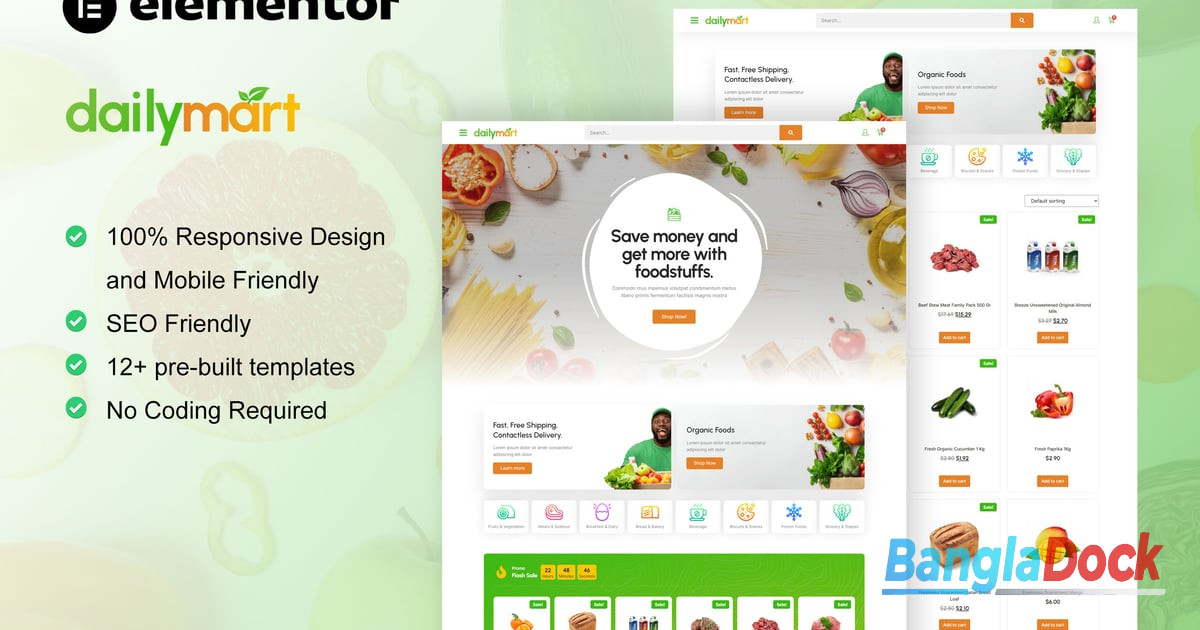
For eCommerce or template-driven stores, visual consistency matters across every entry point. If you are building a grocery or retail experience outside Divi, DailyMart – Grocery Store Elementor Template Kit is a useful reference for structured product-focused page design, especially when planning category pages, offer sections, and conversion blocks.
SEO Best Practices for a Divi Custom Single Post Layout
A beautiful template still needs technical discipline. Search engines evaluate the rendered page, not your intent inside the builder. Your template should support clean content structure, fast loading, internal linking, and crawlable elements.
Keep the Heading Structure Clean
Use one H1 for the post title. Inside the article, use H2 for main sections and H3 for subsections. Avoid styling text modules to look like headings without using actual heading tags. This is a common mistake in visual builders and can weaken content structure.
Add Internal Links Naturally
Your single post layout can include related articles, category links, and contextual recommendations. For performance-focused readers, reference technical guides like Top 10 Elementor Pro Speed Optimization Techniques for a Lightning-Fast Site in 2025. For search appearance and structured data planning, point readers to How to Add Rich Snippets with Schema Markup in WordPress and 2X Your Organic Clicks (2025).
Use Schema Through Trusted Tools, Not Manual Scripts in the Template
For most WordPress sites, schema should be handled by an SEO plugin, theme integration, or a dedicated schema tool. Avoid placing raw structured data scripts directly inside Divi layout modules unless you have a controlled reason and understand the maintenance risk. Template-level schema mistakes can repeat across every post.
Optimize Images and Layout Assets
Use appropriately sized featured images, descriptive alt text, and modern image formats where your stack supports them. Avoid uploading oversized images and relying only on CSS resizing. If your template includes backgrounds, overlays, icons, and animations, test performance on mobile devices and slower network conditions.
Common Mistakes to Avoid
- Using static content in dynamic areas: If the title, image, or author name is typed manually, every post may show the same content.
- Adding multiple H1 headings: This often happens when the theme, builder, and post content all output titles.
- Overloading the sidebar: Too many widgets, ads, or forms can distract readers and slow the page.
- Ignoring mobile spacing: A layout that looks refined on desktop can feel cramped on phones if margins are not adjusted.
- Designing without real content: Always test with short posts, long posts, multiple headings, lists, images, embeds, and comments.
- Forgetting template assignment rules: A template may not display if another Divi Theme Builder template has more specific conditions.
Troubleshooting Divi Single Post Template Issues
Template Does Not Apply to Posts
Check the template assignment inside Divi Theme Builder. If you have multiple templates, review priority and exclusions. A template assigned to a specific category can override a general all-posts template.
Post Content Is Missing
Make sure the layout includes the Post Content module or a module configured to output dynamic post content. Without it, the template may show the title and image but not the article body.
Featured Image Looks Cropped or Blurry
Review the image module settings, background image settings, and WordPress thumbnail sizes. Cropping can happen when using background images with fixed-height sections. For editorial layouts, an image module is often more predictable than a background image.
Layout Breaks on Mobile
Use Divi’s responsive controls to adjust padding, column stacking, font sizes, and image order. Test the template with real posts rather than placeholder content. Long titles, wide tables, embedded videos, and code snippets are common causes of mobile overflow.
Page Feels Slow After Adding the Template
Review unnecessary animations, large background images, third-party embeds, form scripts, and excessive modules. Disable anything that does not support the reader’s goal. If you use optimization plugins, clear caches after changing Theme Builder templates.
Practical Best Practices for 2026
- Design system first: Define typography, button styles, spacing, and colors before building multiple templates.
- Use dynamic content consistently: Titles, images, excerpts, dates, and author data should come from WordPress whenever possible.
- Create templates by intent: Tutorials, reviews, announcements, and resources may deserve separate layouts.
- Keep CTAs contextual: Match product recommendations or forms to the topic of the post.
- Audit accessibility: Check color contrast, keyboard navigation, alt text, heading order, and link clarity.
- Document your template rules: Note which categories use which templates so future editors do not accidentally break the system.
Recommended Divi Workflow for Professional Sites
For a professional build, create the template in a staging environment first. Use a small set of real posts to test different content scenarios. Once the template is stable, apply it to broader post groups. Save reusable sections, such as CTA bands and author boxes, to the Divi Library so they can be updated consistently.
If you need additional Divi controls without writing custom snippets for every adjustment, Divi Booster – Supercharge Your Divi Theme with 100+ Customizations is worth considering. Its clean, virus-free premium GPL availability on BanglaDock, affordable ৳490 pricing, and lifetime updates make it a practical enhancement for Divi users who want faster customization options while keeping the site maintainable.
A strong Divi custom single post layout is not just a design asset. It becomes part of your publishing system. When the template handles structure, branding, and conversion elements correctly, writers can focus on content quality while the site maintains a consistent, search-friendly presentation across every post.
Frequently Asked Questions
Can I create a Divi custom single post layout without coding?
Yes. Divi Theme Builder lets you create a custom single post template visually. You can add dynamic modules for the post title, featured image, post content, author, date, categories, and tags without editing PHP files. Developers can still add custom CSS or child theme code when needed, but a complete blog post template can be built using Divi’s visual interface.
Why is my Divi single post template not showing on blog posts?
The most common cause is template assignment. Open Divi Theme Builder and confirm the template is assigned to All Posts, a specific category, or the intended post type. Also check whether another template has a more specific condition that overrides it. If the template appears but the article text is missing, make sure the Post Content module is included in the custom body layout.
What should a high-quality Divi blog post template include?
A strong Divi blog post template usually includes a dynamic H1 post title, featured image, author and date metadata, readable post content styling, related posts, an author box, contextual calls to action, and mobile-optimized spacing. For SEO, keep one H1, use clear H2 and H3 headings, optimize images, and add internal links naturally inside the content.