

Divi Builder vs Elementor Pro: Which One is the Ultimate Page Builder in 2026?
In the dynamic world of WordPress development, page builders have become indispensable tools, empowering users to create stunning, functional websites without writing a single line of code. Two titans have consistently dominated this space: Divi Builder and Elementor Pro. As we look towards 2026, the question remains: which of these robust platforms truly stands out as the ultimate WordPress page builder?
This comprehensive WordPress page builder comparison will dive deep into their features, performance, user experience, and ecosystems, helping you make an informed decision for your next project.
Understanding Divi vs Elementor Pro: A Core Comparison
Both Divi and Elementor Pro offer powerful visual drag-and-drop interfaces, extensive design options, and full theme building capabilities. However, their approaches, philosophies, and feature sets present distinct advantages.
User Interface and Experience
- Divi Builder: Divi, developed by Elegant Themes, offers a front-end visual builder that allows you to see your changes in real-time. Its interface is context-sensitive; clicking on an element reveals its settings. Divi provides a clean canvas, with options appearing as needed. It's renowned for its global styling options and a unique "undo/redo" history panel that makes experimentation less daunting.
- Elementor Pro: Elementor Pro, on the other hand, features a distinct left-hand sidebar editor. This sidebar houses all widgets, settings, and global options, providing a consistent workspace. Users drag widgets from the sidebar onto the canvas. Elementor's interface is often lauded for its intuitive layout and rapid workflow, especially for those who prefer a dedicated panel for controls.
The choice here often comes down to personal preference: Divi's "click and edit" immersive experience versus Elementor's structured sidebar approach.
Features and Functionality
When comparing Divi vs Elementor Pro, their feature sets are both extensive, covering everything from basic content to advanced dynamic data.
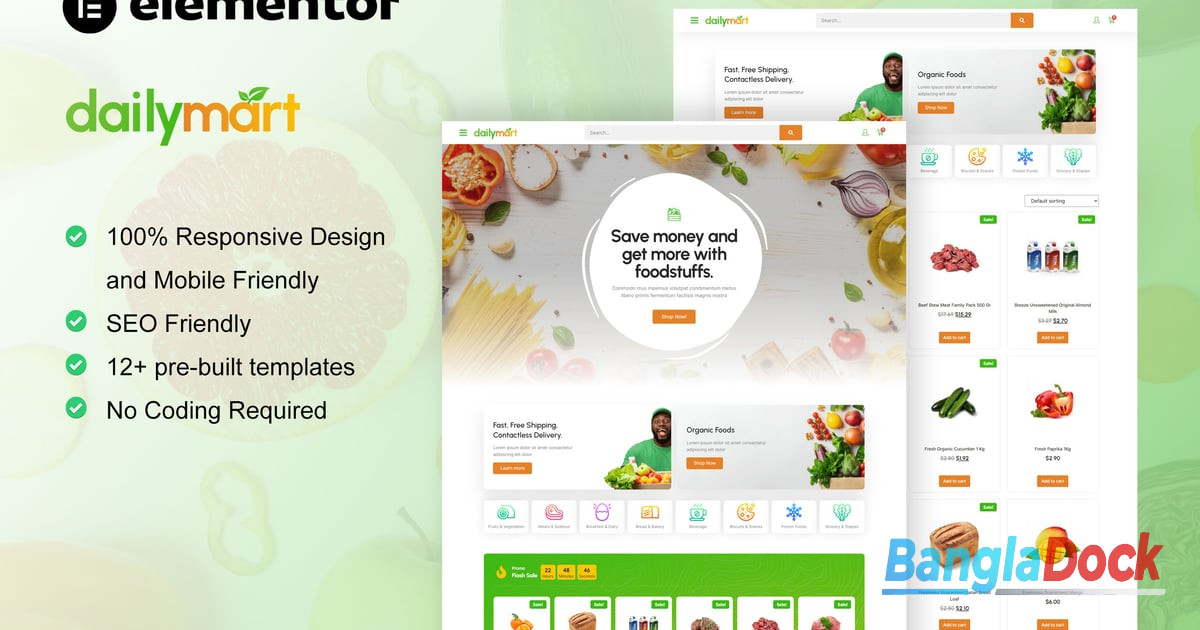
- Modules and Widgets: Both builders boast a vast array of modules (Divi) and widgets (Elementor Pro) for every conceivable website element – text, images, videos, forms, testimonials, and more. Elementor Pro excels with its dedicated WooCommerce widgets, allowing for deep customization of product pages, archives, and checkout flows. For those building e-commerce solutions, tools like Grocery Mart – Grocery Vegitables and Organic Elementor WooCommerce Store or Elocart – Multipurpose Electronics Store Elementor WooCommerce Responsive Theme demonstrate Elementor's robust capabilities in this area.
- Theme Building: Both Divi and Elementor Pro offer comprehensive theme building functionalities, allowing you to design headers, footers, single post templates, archive pages, and even custom 404 pages. This means you're not just building pages, but an entire WordPress theme from scratch visually.
- Pop-up Builder: Elementor Pro includes a powerful pop-up builder, enabling you to create various types of pop-ups (modal, slide-in, sticky, etc.) with advanced trigger and display conditions. Divi achieves similar results through its built-in modules and third-party integrations, though not with a dedicated pop-up builder feature.
- Dynamic Content: Both builders allow you to pull dynamic content from custom fields, post meta, and other sources. Elementor Pro integrates seamlessly with ACF (Advanced Custom Fields), offering dynamic tags for almost any element. For enhanced dynamic content capabilities with Elementor, considering a solution like ACF Frontend Pro For Elementor, available as a 100% clean, virus-free premium GPL alternative at an affordable price (৳490) with lifetime updates on BanglaDock, can significantly extend your options.
Performance and Speed
Website speed is crucial for SEO and user experience. Both Divi and Elementor Pro have made significant strides in performance optimization.
- Divi: Elegant Themes has invested heavily in Divi's performance, introducing dynamic CSS, critical CSS generation, and improved asset loading. A Divi builder review often highlights its efforts to reduce file sizes and optimize scripts, aiming for faster load times.
- Elementor Pro: Elementor also offers performance features like optimized DOM output, improved asset loading, and a built-in experiment panel for trying new optimizations. While page builders inherently add some overhead, both platforms are continuously working to minimize their footprint. The key to speed often lies more in how the builder is used (e.g., image optimization, efficient structure) and overall server configuration rather than the builder itself.
Design Flexibility and Customization
Both builders offer unparalleled design control, but with slightly different approaches.
- Divi: Known for its extensive styling options baked into every module. You can customize virtually anything – spacing, typography, colors, shadows, animations, and responsive settings. Divi's global defaults and "Extend Styles" feature allow for rapid, consistent design across a site.
- Elementor Pro: Provides granular control over every aspect of an element. Its "Style" tab is incredibly detailed, offering precise adjustments for typography, backgrounds, borders, and more. Elementor's Global Styles and Theme Builder ensure design consistency. The ability to integrate custom CSS directly into any element or page is also a significant advantage for advanced users.
Ecosystem and Integrations
A builder's ecosystem includes its community, third-party add-ons, and compatibility with other WordPress plugins.
- Divi: Has a robust marketplace for child themes, layouts, and plugins that extend its functionality. Its community is vast and supportive.
- Elementor Pro: Boasts perhaps the largest third-party add-on market, with hundreds of plugins dedicated to extending its widgets and capabilities. Its popularity has led to widespread integration with many other WordPress plugins, making it a highly versatile choice.
Real-World Use Cases for Divi and Elementor Pro
Understanding the strengths of each builder helps in choosing the right one for specific projects.
Building E-commerce Stores
For online shops, both builders offer WooCommerce integration. Elementor Pro, with its dedicated WooCommerce Builder and extensive set of widgets, provides precise control over every aspect of your shop, from product archives to individual product pages. You can even follow a step-by-step guide on how to build a custom WooCommerce shop page with Elementor Pro. Divi also integrates well, offering WooCommerce modules and design options within its builder.
Creating Business and Portfolio Websites
Both Divi and Elementor Pro are excellent choices for business and portfolio sites. Divi's extensive library of pre-made layouts and its intuitive global styling make it fast to set up professional-looking sites. Elementor Pro's template kits and theme builder allow for highly customized and branded experiences, ideal for agencies or creatives showcasing their work. For businesses requiring secure document handling, integrating tools like WP E-Signature – Bundle with all addons can be crucial, and both builders support such essential plugin integrations.
Developing Blogs and Content-Heavy Sites
While often seen as overkill for simple blogs, both builders can design stunning blog layouts, single post templates, and archive pages. Elementor Pro's dynamic content capabilities shine here, allowing you to create beautiful, consistent layouts for your articles. Divi's blog modules offer various display styles, making it easy to present content attractively.
Common Mistakes to Avoid with Page Builders
Even with powerful tools like Divi and Elementor Pro, certain pitfalls can hinder your site's performance and maintainability.
- Overloading Pages with Elements: Using too many complex modules, animations, or large images can bloat your page size and slow down loading times.
- Neglecting Responsive Design: Failing to optimize layouts for different screen sizes (mobile, tablet, desktop) leads to a poor user experience and can negatively impact SEO.
- Inconsistent Styling: Without using global styles or theme builder features, your site can look disjointed. Leverage the global settings both builders provide to maintain consistency.
- Ignoring Accessibility: Ensure your designs are accessible to all users, including those with disabilities. Pay attention to color contrast, keyboard navigation, and proper heading structures.
- Skipping Performance Optimization: Assuming the builder handles everything is a mistake. Always optimize images, use caching plugins, and consider a lightweight theme base.
Troubleshooting and Diagnostic Steps
When issues arise, a systematic approach can help resolve them quickly.
- Builder Not Loading/White Screen:
- Increase PHP Memory Limit: Page builders are resource-intensive. Increase your WordPress PHP memory limit (e.g., to 256M or 512M) in your
wp-config.phpfile. - Plugin Conflict Check: Deactivate all other plugins and see if the builder loads. Reactivate them one by one to identify the culprit.
- Theme Conflict: Temporarily switch to a default WordPress theme (like Twenty Twenty-Four) to rule out theme conflicts.
- Clear Cache: Clear your browser cache, WordPress caching plugin cache, and CDN cache.
- Increase PHP Memory Limit: Page builders are resource-intensive. Increase your WordPress PHP memory limit (e.g., to 256M or 512M) in your
- Layout Breaks/Styling Issues:
- Check Responsive Settings: Ensure your element's responsive settings are correctly configured for different devices.
- CSS Conflicts: Inspect the element using browser developer tools to see if conflicting CSS rules are being applied, possibly from your theme or another plugin.
- Builder Cache: Both Divi and Elementor Pro have their own internal cache. Clear it from their respective settings panels.
- Performance Degradation:
- Image Optimization: Use a plugin or service to compress and optimize all images.
- Caching: Implement a robust caching solution (e.g., WP Rocket, LiteSpeed Cache).
- Minification: Minify CSS and JavaScript files.
- Reduce External Scripts: Limit the number of third-party scripts (e.g., tracking codes, social media widgets).
Practical Best Practices for Using WordPress Page Builders
To truly harness the power of Divi or Elementor Pro, adopt these best practices:
- Start with a Lightweight Theme: Use a minimal, performant theme (like Hello Elementor for Elementor, or Divi's own theme) as your base to ensure optimal speed and avoid conflicts.
- Leverage Global Styles: Define global colors, fonts, and button styles early on. This saves time and ensures design consistency across your site.
- Optimize Images Always: Before uploading, compress your images. Use next-gen formats like WebP where possible.
- Regularly Update: Keep your page builder, WordPress core, themes, and plugins updated. This ensures security, compatibility, and access to the latest features.
- Prioritize Responsive Design: Always design with mobile-first in mind. Test your layouts rigorously on various devices.
- Use a Staging Environment: Never make major changes directly on a live site. Use a staging site for testing updates and new features.
- Consider GPL Alternatives: For premium plugins and themes, explore reputable GPL providers. For example, you can get ACF Frontend Pro For Elementor as a 100% clean, virus-free premium GPL alternative at an affordable price (৳490) with lifetime updates on BanglaDock. This can significantly reduce development costs while maintaining access to quality tools.
- Backup Your Site Regularly: Essential for any WordPress site, especially when making significant design changes.
Divi vs Elementor Pro: Which One is Ultimate in 2026?
After a thorough WordPress page builder comparison, it's clear that both Divi Builder and Elementor Pro are exceptionally powerful tools, constantly evolving and pushing the boundaries of what's possible with visual website building. There isn't a single "ultimate" winner, as the best choice depends heavily on individual needs, workflow preferences, and project requirements.
- Choose Divi if you prefer an all-in-one solution with its own theme and builder, appreciate a highly visual, immersive editing experience, and value extensive global styling options. Its lifetime license option is also a significant draw for many.
- Opt for Elementor Pro if you prefer a dedicated sidebar editor, rely heavily on third-party add-ons and integrations, need robust pop-up building capabilities, or are deeply invested in the Elementor ecosystem for e-commerce or dynamic content projects.
Both builders continue to innovate, ensuring they remain at the forefront of web development. Whichever you choose, investing time in mastering its features will undoubtedly empower you to create professional, high-performing WordPress websites well into 2026 and beyond.
Frequently Asked Questions
What are the main differences in user interface between Divi and Elementor Pro?
Divi Builder offers a highly visual, front-end editing experience where you click directly on elements to reveal their settings on the canvas. Elementor Pro features a distinct left-hand sidebar containing all widgets and settings, providing a consistent workspace separate from the canvas. The choice often depends on whether you prefer an immersive, context-sensitive editor (Divi) or a structured, dedicated control panel (Elementor Pro).
Can both Divi and Elementor Pro be used for full WordPress theme building?
Yes, both Divi Builder and Elementor Pro offer comprehensive theme building capabilities. This means you can design not just individual pages, but also custom headers, footers, single post templates, archive pages, and even custom 404 pages directly within their visual interfaces, effectively creating an entire WordPress theme without coding.
How do Divi and Elementor Pro handle performance optimization?
Both builders have invested significantly in performance. Divi includes features like dynamic CSS, critical CSS generation, and optimized asset loading. Elementor Pro offers optimized DOM output, improved asset loading, and a dedicated experiments panel for performance enhancements. While page builders add some overhead, their continuous optimization efforts, combined with good practices like image optimization and caching, help maintain fast website speeds.